
An operations lead at a 300-person furniture retailer must update 900 live product listings with new sustainability labels. Errors risk supplier fines, the team wants to review the mapping logic once before any bulk edit, and they do not want to approve each listing individually. Which agent work mode best fits this need for upfront validation with efficient execution?
Select an answer to reveal the explanation.
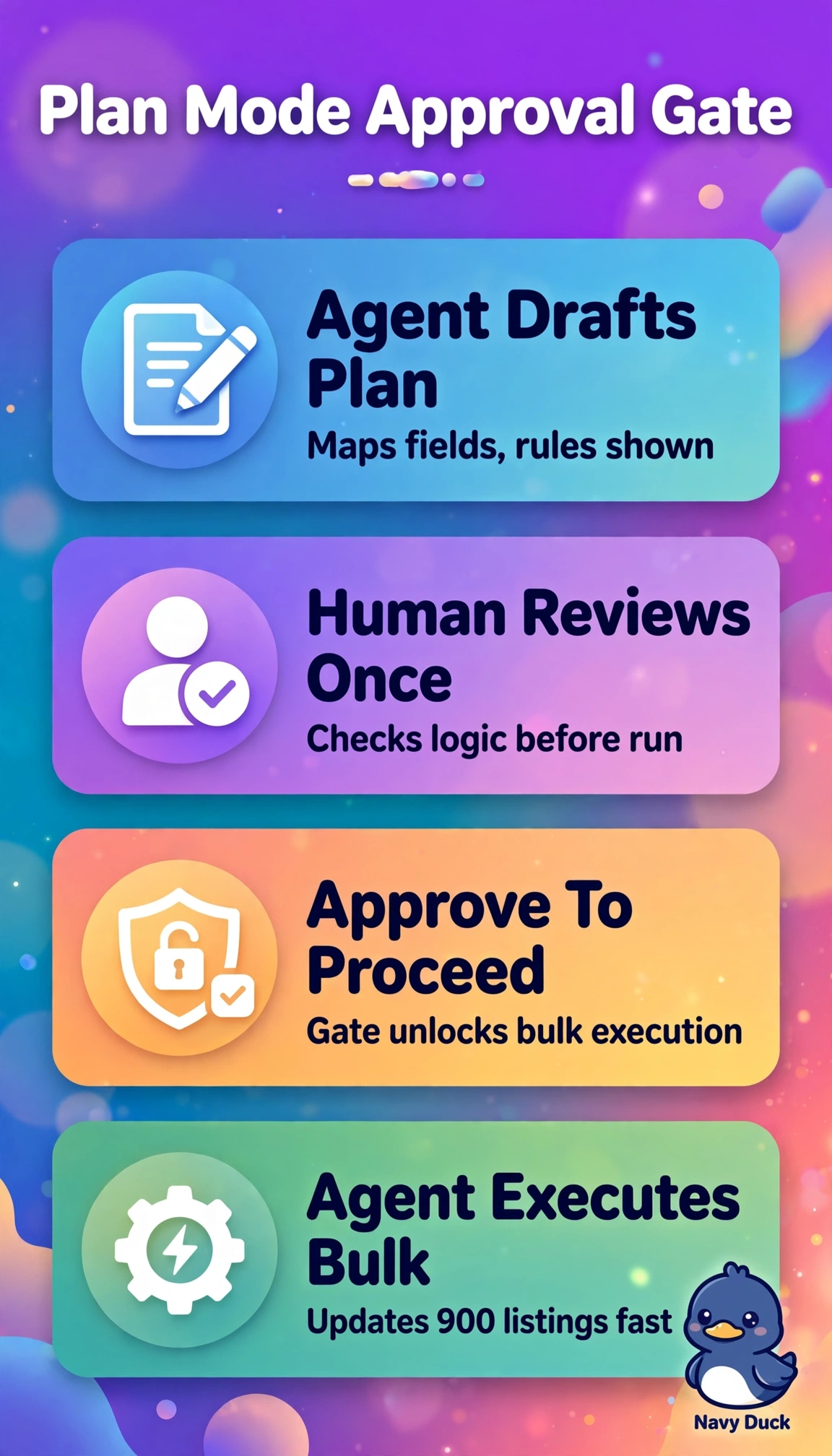
Short Explanation
You're getting speed without losing control here. Plan mode lets you bless the recipe before the kitchen cooks 900 dishes, and approval-gate is your safety net.
Full Explanation
Plan mode is correct because it separates proposing from doing, which matches the stated need for one upfront review of mapping logic followed by efficient bulk execution without per-item approval, preserving speed while preventing fines from incorrect live edits. Interactive mode with per-listing confirmation fails by concept because continuous back-and-forth maximizes oversight but destroys efficiency at 900 items and was explicitly unwanted. Autopilot with only a post-run log fails by concept because full autonomy optimizes throughput but removes the required upfront validation gate for high-risk external content. Interactive mode framed as ask-once-then-self-direct fails by concept because it blurs the approval boundary and provides no inspectable plan artifact to validate before bulk changes. Exam caveat is that plan mode still requires a competent reviewer who understands mapping rules, not a rubber stamp, and practical check is to confirm the plan artifact shows source fields, target labels, and exception handling before you approve execution.