
A program manager uses an agent to draft customer refund decisions from order history, warranty terms, and sentiment. Refunds over $500 need finance approval, fraud signals appear occasionally, and customers can appeal. Which critical decision point requires mandatory human judgment before the agent acts?
Select an answer to reveal the explanation.
Short Explanation
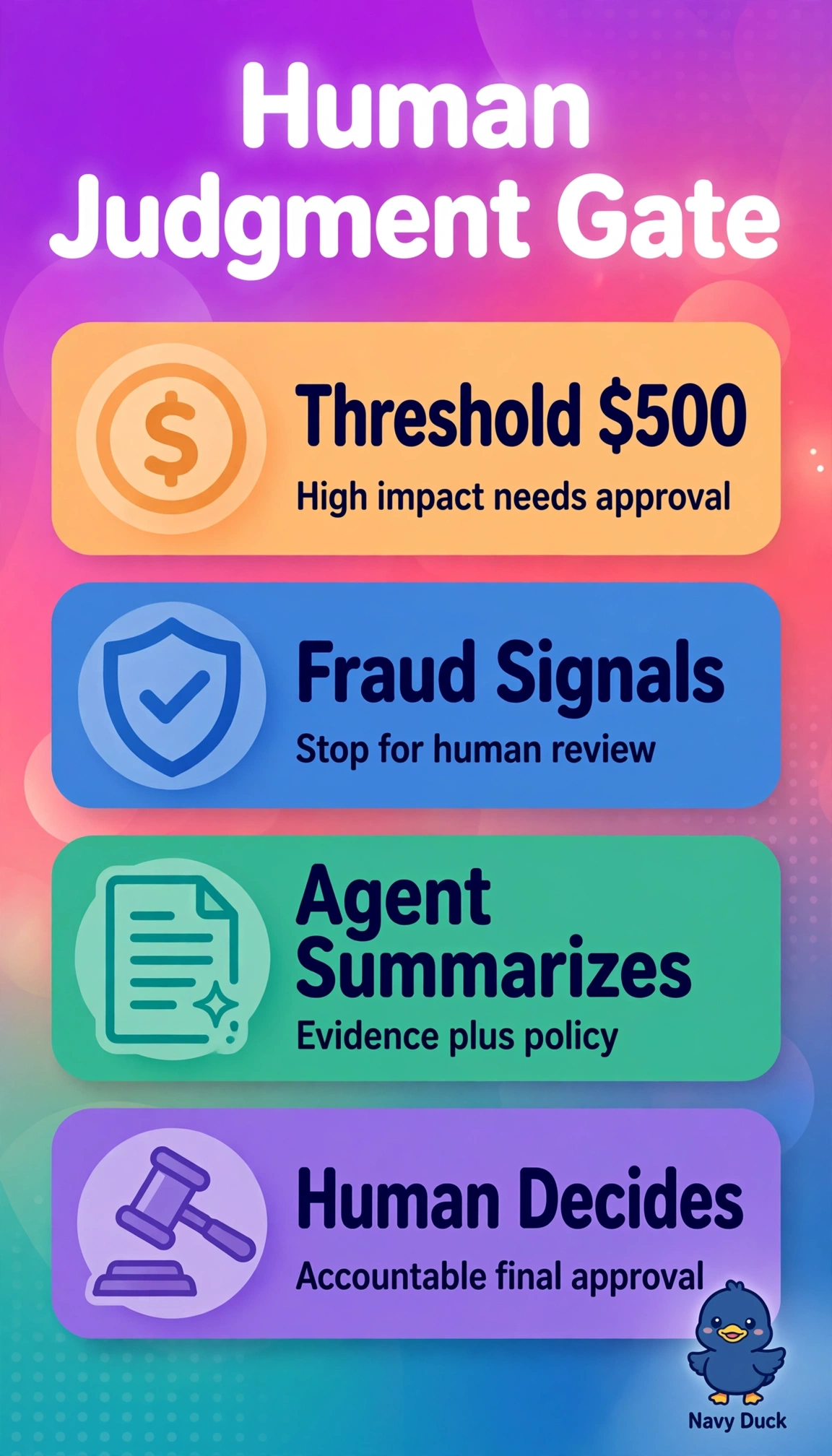
You keep a person in the loop when money and trust are on the line. Require human approval for refunds over $500 or possible fraud flags: that oversight is like asking a manager to open the big safe.
Full Explanation
Human judgment is required before the agent acts on refunds over $500 or refunds flagged for possible fraud. The amount exceeds delegated authority and requires finance approval; possible fraud independently raises financial, legal, and reputational risks that order history, warranty terms, and sentiment alone cannot resolve. Having a person review the agent’s evidence summary and policy basis creates accountability and an auditable decision before funds move. Routine refunds under $500 with no fraud signals, after warranty and order-history checks, are low-risk, policy-clear cases suited to logged automation and sampling rather than mandatory pre-action review. Human approval for refunds over $500 based only on warranty, order history, and policy misses the independent fraud trigger, allowing an anomalous transaction to proceed if it meets the value rule. Rechecking warranty terms and prior evidence to uphold or overturn appealed denials supports redress, but examining only those materials may leave new context or financial and fraud risks unaddressed. Exam caveat: when the scenario joins triggers with “or,” do not treat a high-value-only or appeal-only review as sufficient. Practical check: block execution whenever the amount exceeds $500 or a possible-fraud flag appears, route the evidence and policy summary for human review, and log the approver and rationale.