
Which two practices help GitHub Enterprise support tickets get appropriate handling? (Choose two)
Select all correct answers, then click Submit.
Short Explanation
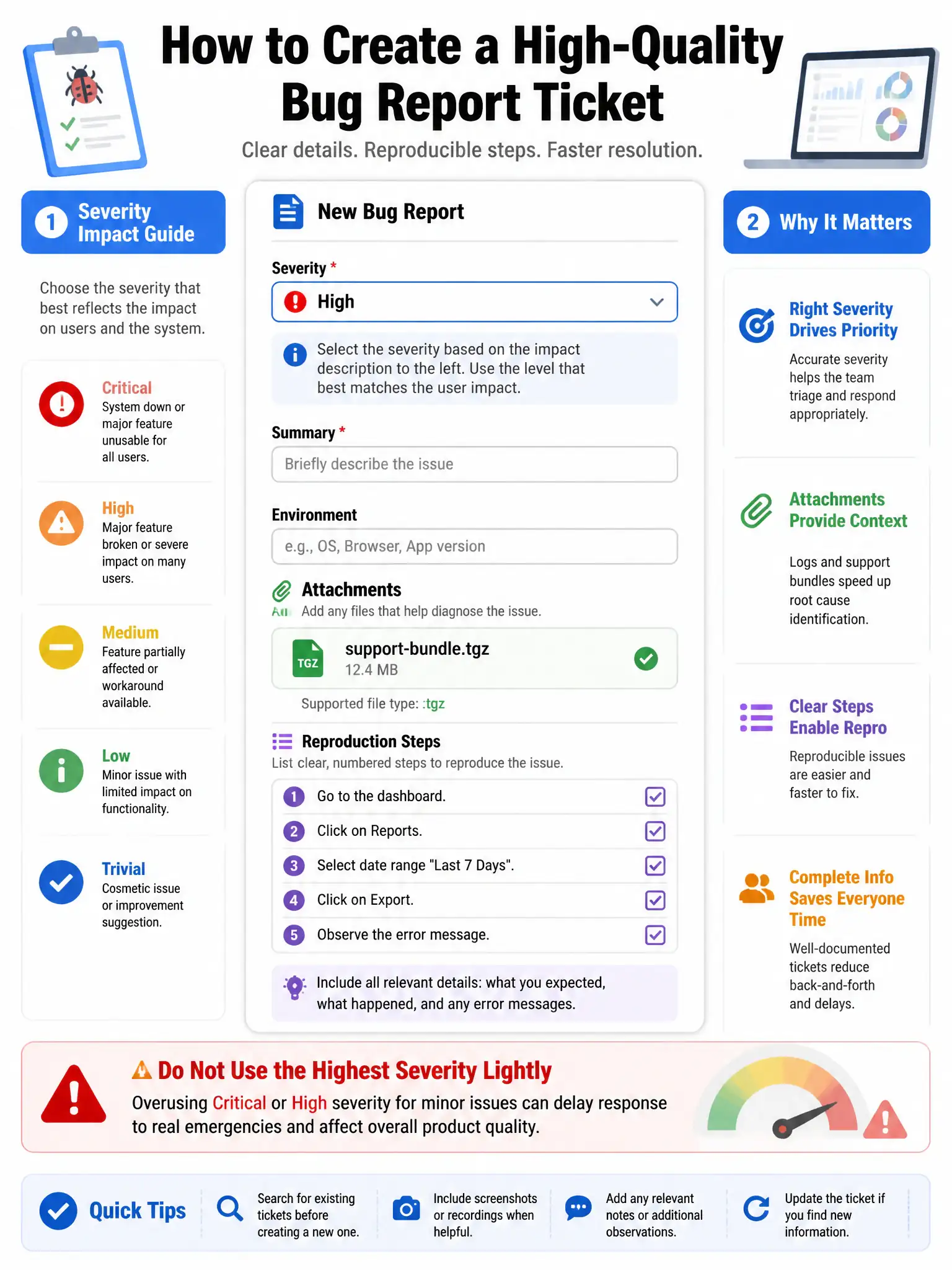
You get better handling when severity matches the real business impact and the ticket includes evidence like repro steps, timestamps, correlation IDs, and a support bundle. Marking everything as highest severity just trains support to ignore you, and leaving out error messages slows everyone down.
Full Explanation
The correct practices are choosing a severity that matches business impact, such as production outage versus a general question, and including reproduction steps, timestamps, correlation IDs, and a support bundle when relevant. Premium support processes route tickets based on impact, so accurate severity selection and rich diagnostic context help support prioritize and troubleshoot correctly. The practice of marking every ticket as the highest severity regardless of impact creates noise, undermines trust, and can delay attention for real emergencies. The practice of omitting error messages to keep the ticket short removes the most useful troubleshooting data and slows resolution. Maintain an internal runbook for when to open tickets, who may set severity, and how to collect a support bundle safely. Include enterprise hostname, version, approximate UTC times, and whether the issue is intermittent or a complete outage so support can prioritize correctly.