
In a GHES deployment fronted by a load balancer for high availability, what should health checks primarily verify before sending user traffic to a node?
Select an answer to reveal the explanation.
Short Explanation
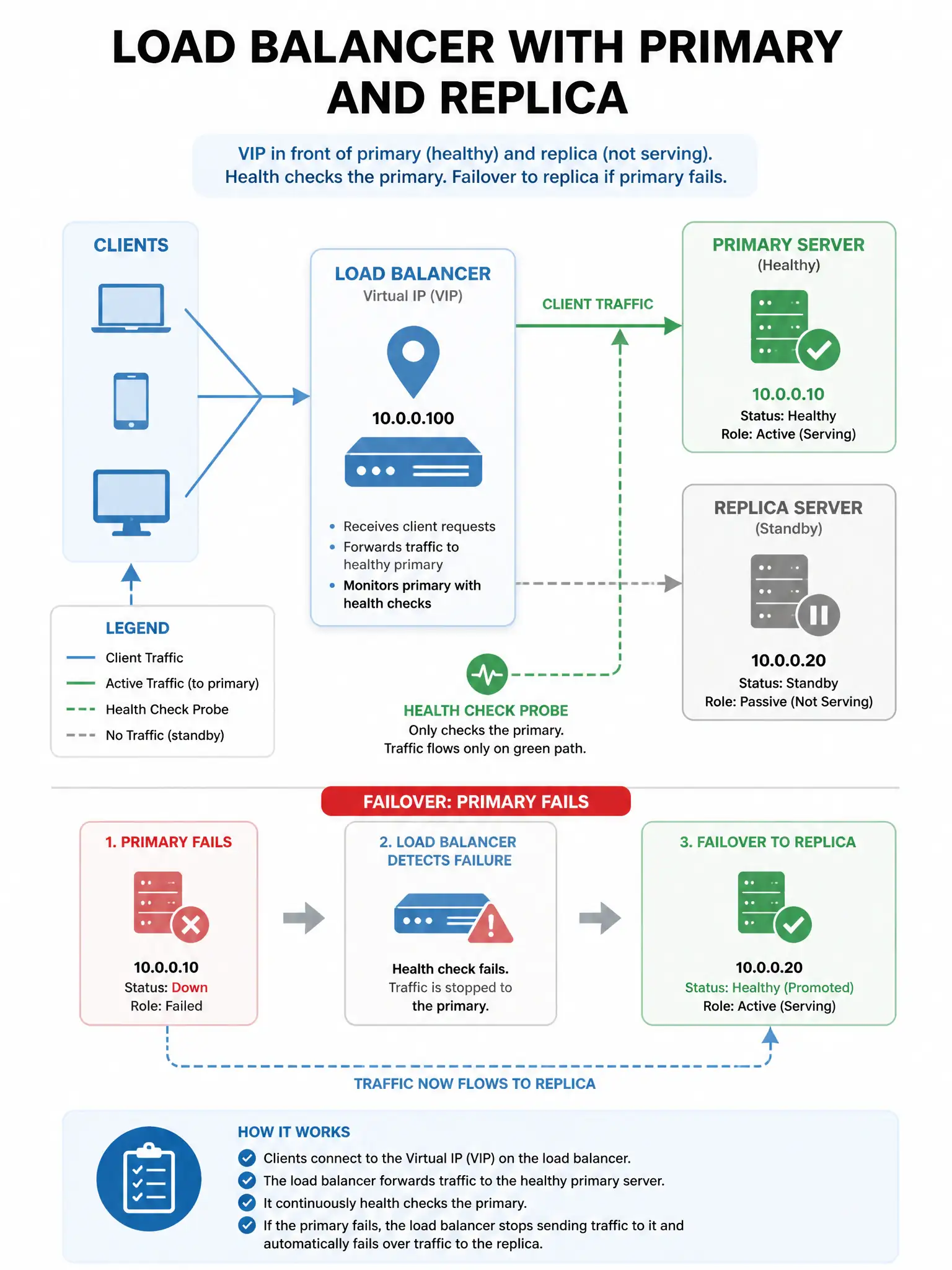
You should only send users to a node that is healthy and ready to serve production application traffic. Wire health checks to GHES-supported health endpoints or status, and remove failed nodes quickly so clients do not get half-broken sessions during failover.
Full Explanation
The correct answer is that the node is healthy and appropriate to receive production application traffic. Load balancers in GHES HA designs must avoid routing users to failed nodes or to roles that should not serve primary traffic. Health checks should align with GitHub's guidance for appliance readiness so failover or recovery does not black-hole requests. The check that the node can resolve arbitrary public internet hostnames is irrelevant to whether the appliance should serve enterprise traffic. The check that the node's Management Console password matches the primary confuses Management Console credential parity with runtime health. The check that the node is the designated Actions runner only confuses Actions runner topology with the main GHES application tier. Combine health checks with DNS or VIP cutover procedures documented for ghe-repl-promote scenarios, and test failure injection carefully in non-production first.