
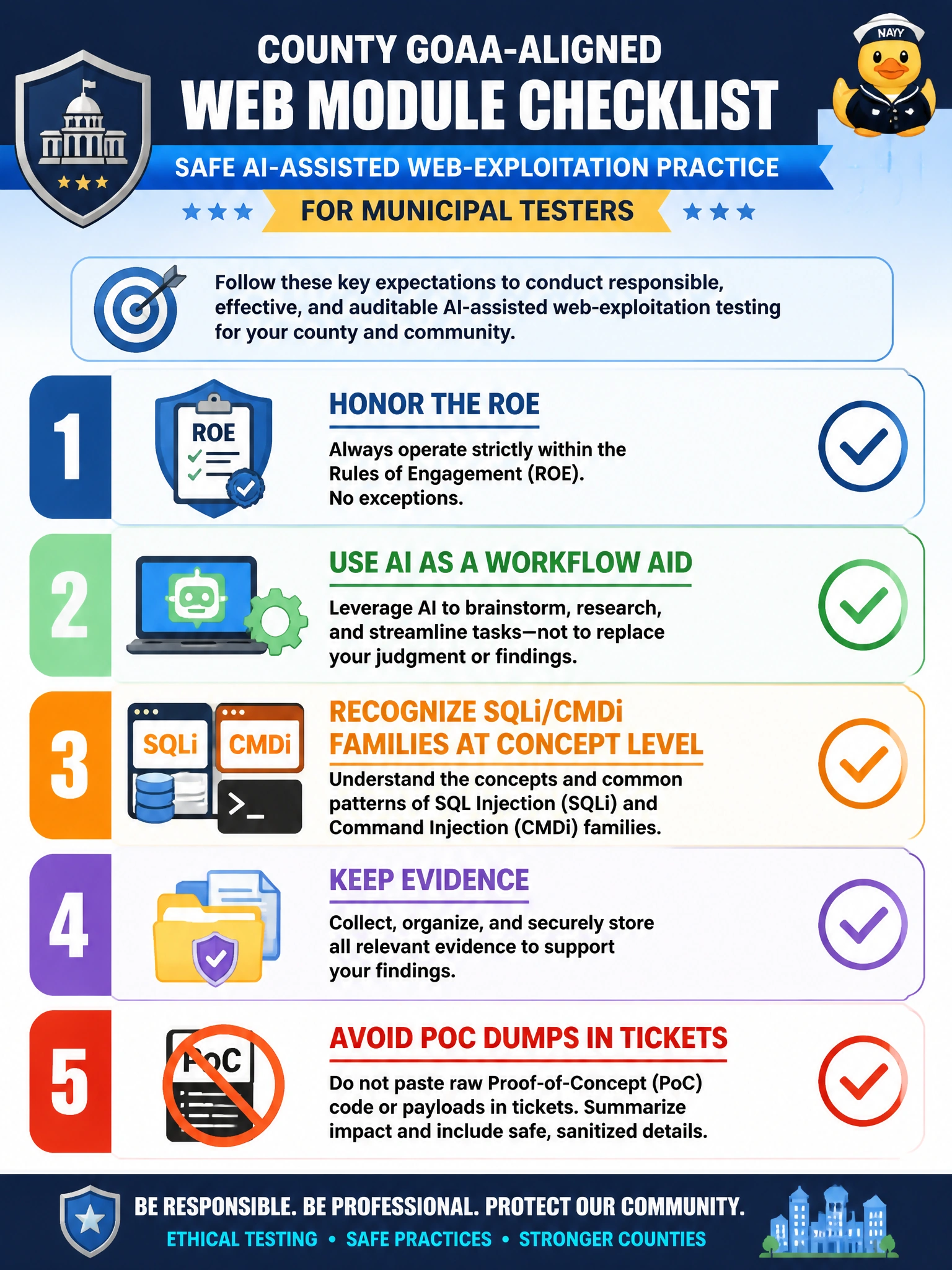
A county GOAA-aligned web module checklist summarizes safe AI-assisted web-exploitation practice for municipal testers. Which set of expectations best belongs on that checklist?
Select an answer to reveal the explanation.
Short Explanation
Pin the checklist where everyone can see it: ROE on, AI as helper not autopilot, know your injection families, bag the evidence, and keep PoC dumps out of the ticket stream. High-confidence shortcuts are not a policy.
Full Explanation
A county GOAA-aligned checklist for safe AI-assisted web-exploitation practice should capture durable expectations: honor ROE; use AI as a workflow aid rather than an autopilot; recognize SQLi and command-injection families at concept level; keep evidence; and avoid dumping full exploit PoCs into tickets where they create redistribution and misuse risk. That set matches municipal authorized-testing culture and exam learning outcomes without turning tickets into weaponized cookbooks.
Auto-exploiting production nightly and pasting full exploit recipes into public tickets violates ROE, change control, and safe reporting norms. Skipping ROE whenever AI confidence is high and omitting evidence for speed elevates model confidence over authorization and auditability. Treating CyberLive lab answer keys as copy-paste content for municipal tickets confuses training keys with real engagement artifacts and can introduce inaccurate or unauthorized material into city records.
Exam caveat: summary-checklist items reward the ROE + AI-as-aid + concept families + evidence + no-PoC-dump bundle. Operational check: publish the checklist to the test team, gate production actions on ROE/change tickets, require evidence for each finding, keep AI assistive, and strip exploit-recipe dumps from ticket bodies in favor of controlled evidence stores.