
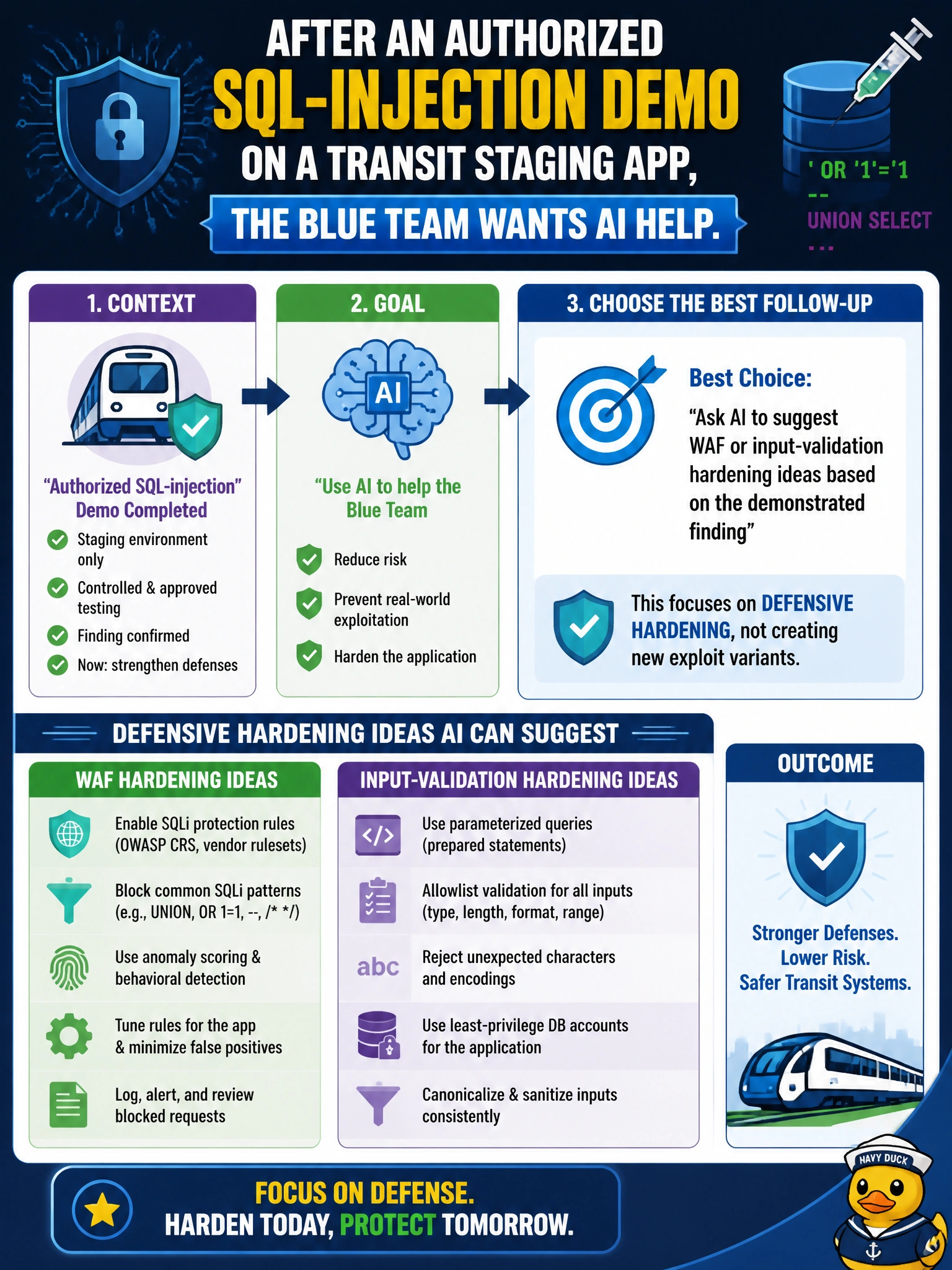
After an authorized SQL-injection demo on a transit staging app, the blue team wants AI help. Which follow-up use best prefers defensive hardening over new exploit variants?
Select an answer to reveal the explanation.
Short Explanation
Demo's done—now ask AI how to bolt the door, not how to invent cooler crowbars. WAF and validation ideas beat production exploit tourism and ransomware fanfic.
Full Explanation
After an authorized SQL-injection demo on transit staging, the preferred AI follow-up is defensive: ask the model for WAF rules, input-validation patterns, parameterized-query guidance, or monitoring ideas grounded in the demonstrated finding. That use converts purple-team evidence into blue-team hardening instead of expanding offensive novelty against riders. Preferring defense after a successful demo is aligned with municipal improvement goals and reduces the chance the same class of bug returns in adjacent rider-facing APIs.
Asking AI for novel exploit chains to try on production riders next expands impact beyond the authorized demo and targets citizens using live transit services. Using AI to generate unpaid ransomware notes referencing the demo is unethical and unrelated to hardening. Prompting AI to invent vulnerabilities that were never demonstrated fabricates a backlog and wastes remediation focus that should stay on the proven finding.
Exam caveat: post-demo AI-use questions reward hardening suggestions tied to the demonstrated finding, not new production exploit tourism. Operational check: feed (non-sensitive) demonstrated finding context into AI for WAF/validation ideas, validate suggestions with engineers, implement and retest on staging, track closure, and refuse production exploit-expansion prompts.