
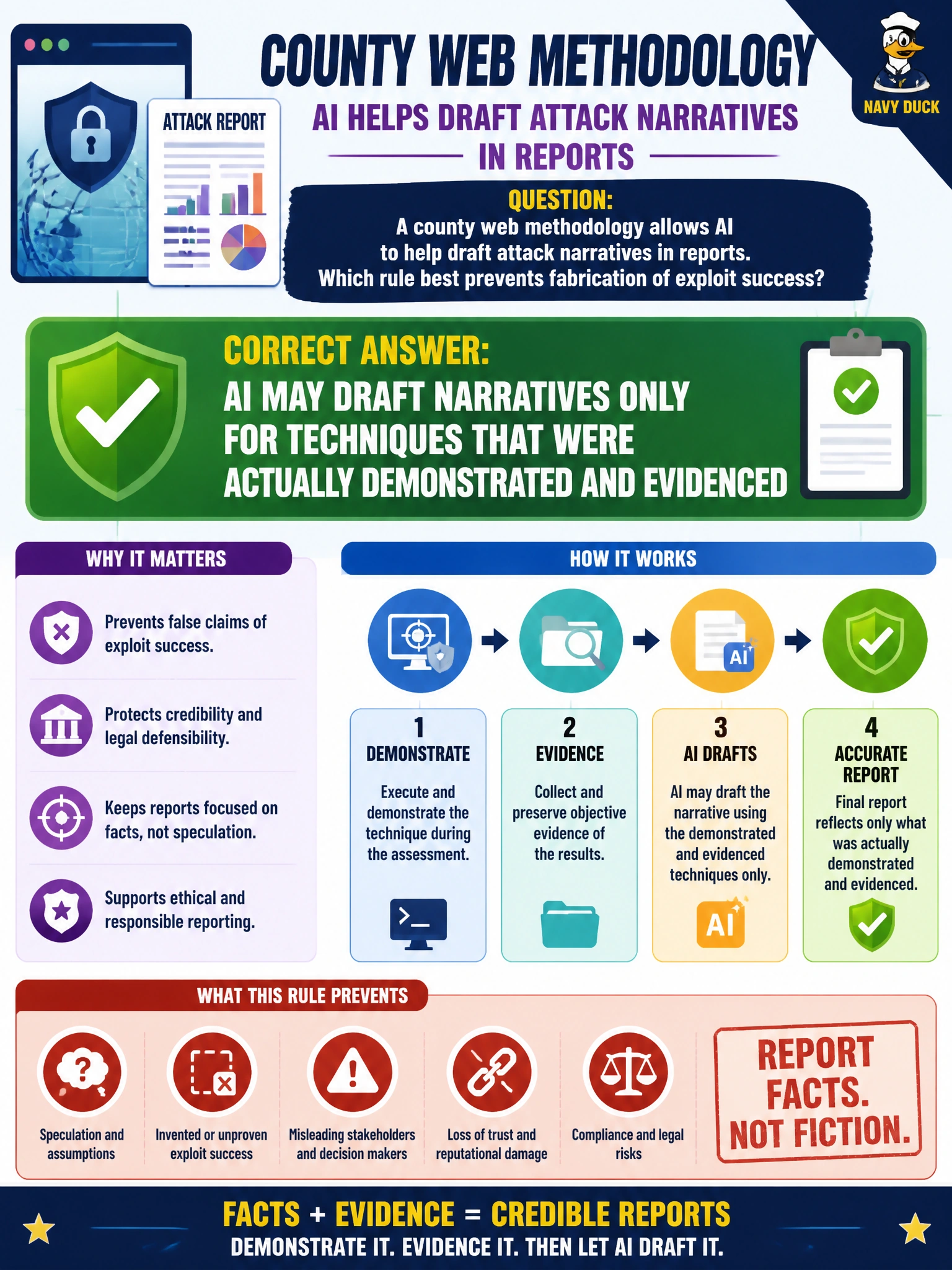
A county web methodology allows AI to help draft attack narratives in reports. Which rule best prevents fabrication of exploit success?
Select an answer to reveal the explanation.
Short Explanation
AI can polish the story of what you really did—not invent movie endings. Missing screenshots do not unlock fiction mode. Evidence first, narrative second.
Full Explanation
When AI helps draft attack narratives in county web reports, fabrication risk is the core failure mode. The correct rule allows AI to draft narratives only for techniques that were actually demonstrated and evidenced. Narrative assistance may improve clarity for municipal owners, but it must remain tethered to screenshots, logs, and reproducible steps. Evidence-first reporting preserves trust with change boards, auditors, and application owners who must prioritize scarce remediation time.
Allowing AI to invent successful exploits when screenshots are missing fills gaps with fiction and creates false remediation urgency that crowds out real defects. Letting narrative flair outweigh evidence because severity scores look high prioritizes theater over truth and can distort risk registers. Omitting evidence folders whenever AI writes the story section institutionalizes unverifiable reporting and makes peer review impossible.
Exam caveat: AI narrative-drafting questions reward evidence-bound drafting and forbid invented exploit success. Operational check: write or generate narrative text only after evidence exists for that technique, link each claim to artifacts, peer-review AI-drafted wording for invented steps, and reject any AI-suggested 'success' that was never demonstrated.