
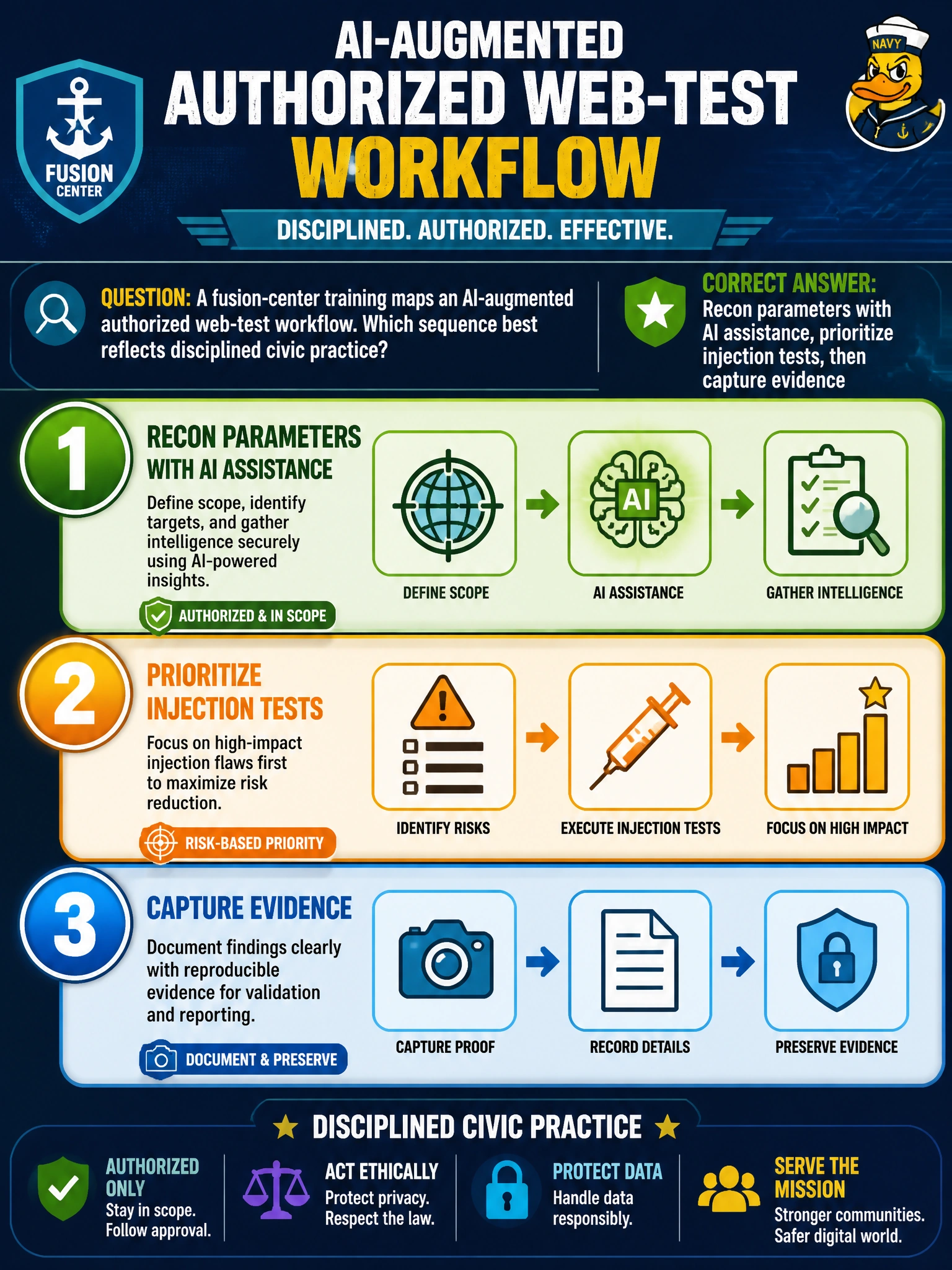
A fusion-center training maps an AI-augmented authorized web-test workflow. Which sequence best reflects disciplined civic practice?
Select an answer to reveal the explanation.
Short Explanation
Order matters: figure out the parameters, pick the injection tests that earn their keep, then bag the evidence. Exploit-first theater and after-the-fact ROE are fan fiction, not fusion-center tradecraft.
Full Explanation
Disciplined civic web-test workflows—especially in fusion-center training—follow a sequence: understand and recon parameters (AI may assist), prioritize injection tests that matter under ROE, then capture evidence of what was actually done. That order keeps AI in a supporting role for organization and prioritization while preserving authorization, impact control, and defensibility of findings. Sequence discipline is itself a learning outcome for AI-augmented municipal web exploitation because rushed exploit-first work produces unverifiable tickets and accidental outages.
Exploit-first approaches that invent parameters later and skip evidence capture reverse the workflow into chaos and unverifiable claims. Auto-exploiting production then asking AI to invent ROE after the fact inverts authorization: ROE must precede intrusive testing, not rationalize it afterward. Reporting imaginary successes before probing any parameters fabricates results and destroys trust in purple-team products used by city defenders.
Exam caveat: workflow-sequence items reward recon → prioritized testing → evidence, and punish exploit-first or post-hoc ROE stories. Operational check: list in-scope parameters with AI help if useful, prioritize injection cases under written ROE, execute only approved tests, and bag screenshots/logs before writing the finding narrative.