
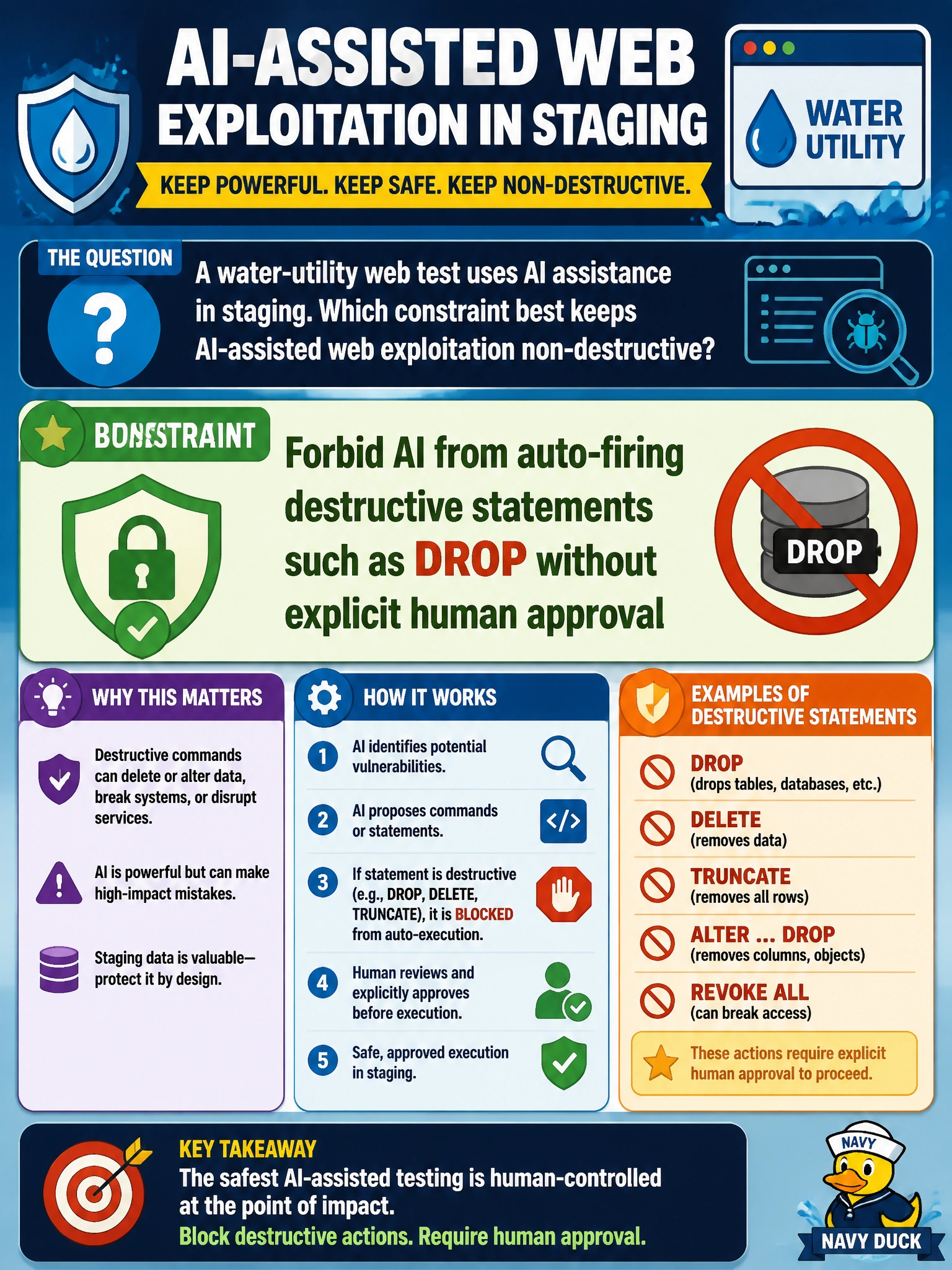
A water-utility web test uses AI assistance in staging. Which constraint best keeps AI-assisted web exploitation non-destructive?
Select an answer to reveal the explanation.
Short Explanation
Staging is still a real database with real feelings—don't let the bot auto-DROP tables for sport. High confidence and logo cosplay are not approvals. Humans green-light anything that can wreck data.
Full Explanation
AI assistance in a water-utility web test on staging still operates against real schemas and shared environments that other teams may rely on. Non-destructive practice forbids AI from auto-firing destructive statements such as DROP without explicit human approval. Humans remain the authorization gate for irreversible or high-impact database actions, even when the environment is labeled staging and even when a model proposes the statement confidently.
Letting an agent wipe staging schemas overnight to prove impact is needlessly destructive and undermines shared staging utility. Authorizing production DROP tests whenever the model is highly confident confuses confidence with change approval and endangers live utility operations. Skipping change tickets for destructive payloads because the utility logo appears in the prompt is theater: branding in a prompt is not change control.
Exam caveat: destructive-AI-web-test questions reward human approval gates for DROP-class actions and reject confidence- or logo-based shortcuts. Operational check: block auto-execution of destructive SQL, require named human approval and tickets for any high-impact statement, and keep production DROP entirely off the default menu.