
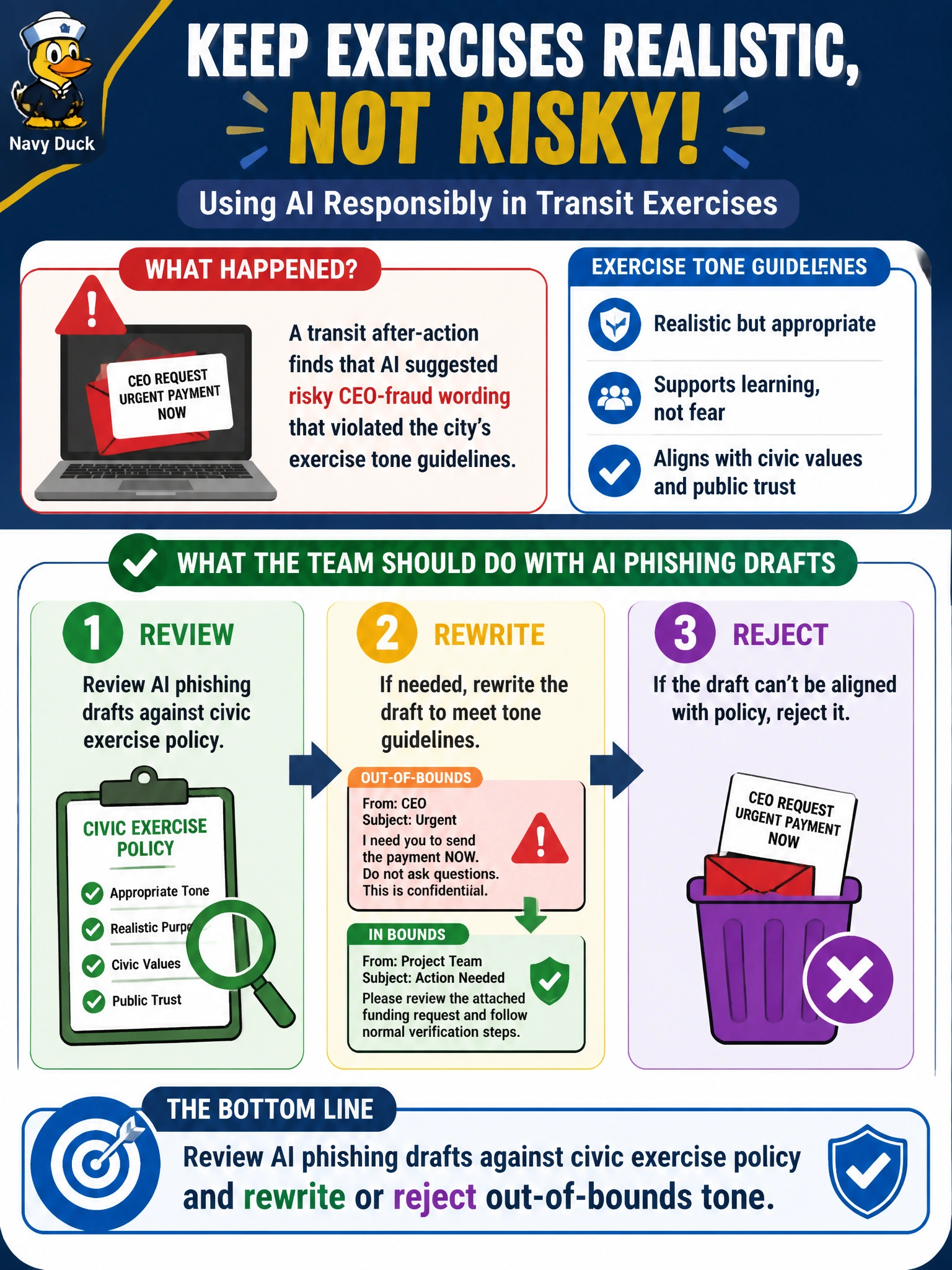
A transit after-action finds that AI suggested risky CEO-fraud wording that violated the city’s exercise tone guidelines. What should the team do with such drafts?
Select an answer to reveal the explanation.
Short Explanation
When the model goes full fake-CEO panic, the after-action answer is simple: check the city’s tone rules and rewrite or trash it. Unedited ‘model purity’ is not a civic value. Meaner is not better training.
Full Explanation
When a transit after-action finds that AI suggested risky CEO-fraud wording that violated the city’s exercise tone guidelines, the correct handling is to review AI phishing drafts against civic exercise policy and rewrite or reject out-of-bounds tone. Tone guidelines exist to keep authorized drills educational rather than abusively threatening or brand-damaging. Model suggestions are drafts, not mandates; policy gates remain human. Sending the AI wording unchanged to preserve statistical purity of unedited model output elevates experimental purity over municipal duty of care. Treating tone guidelines as optional once a generative model proposes executive-fraud language improperly lets model output override policy. Escalating by making the lure more threatening so staff remember the lesson longer doubles down on the policy violation and confuses fear with effective training. Exam caveat: GOAA after-action judgment items reward policy-aligned editing of AI phishing content, not unfiltered model fidelity. Operational check: compare drafts to the city’s tone and CEO-fraud rules, rewrite or reject violations, log the decision in the after-action, and update prompt guidance to reduce recurrence.