
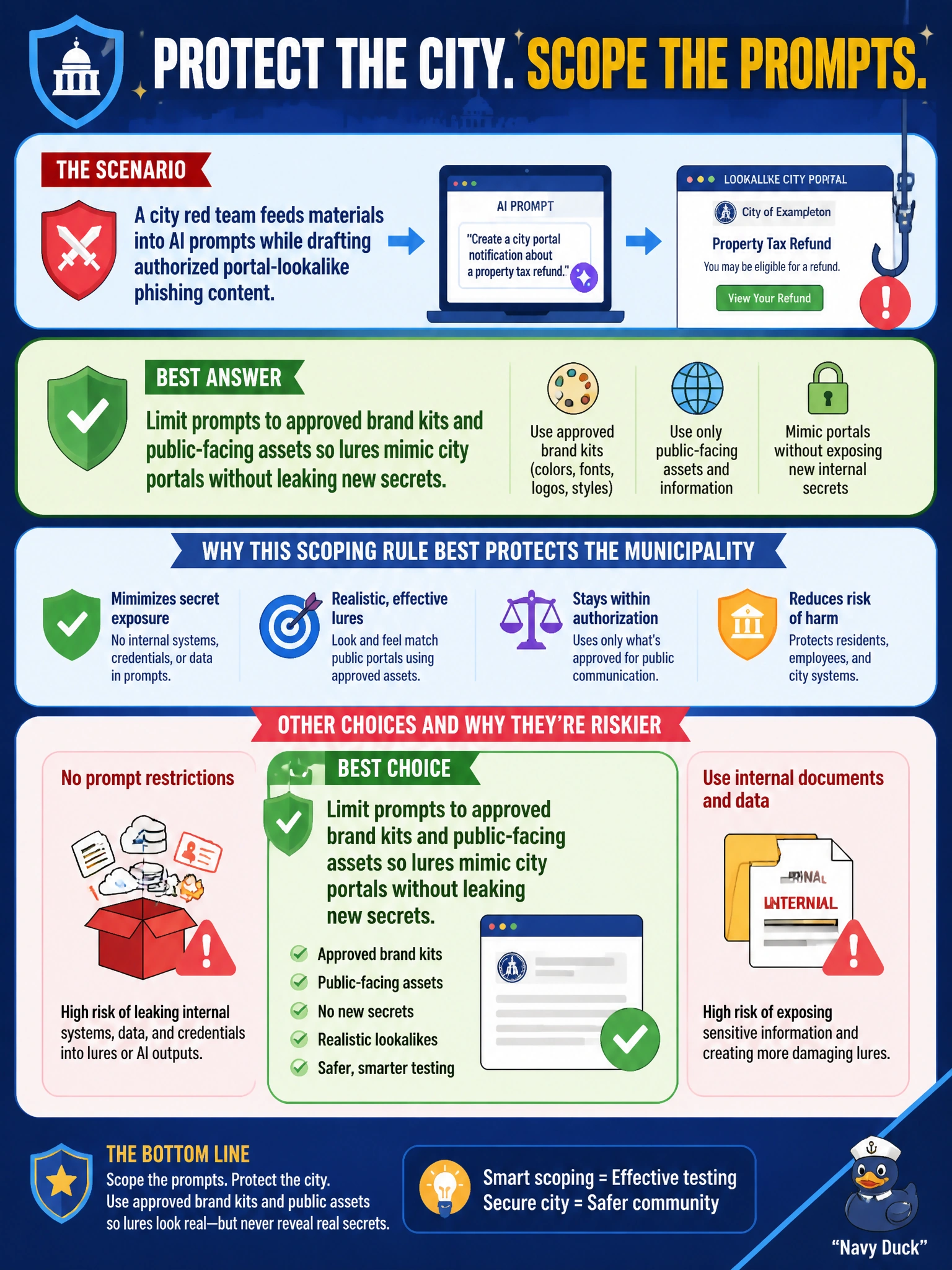
A city red team feeds materials into AI prompts while drafting authorized portal-lookalike phishing content. Which scoping rule best protects the municipality?
Select an answer to reveal the explanation.
Short Explanation
Give the model the approved city sticker pack—logos and public portal look—not the secret VPN diary. Mimic the front door for the drill without handing over new crown jewels. A magic phrase in the prompt does not equal data-handling clearance.
Full Explanation
When a city red team feeds materials into AI prompts while drafting authorized portal-lookalike phishing content, the scoping rule that best protects the municipality is to limit prompts to approved brand kits and public-facing assets so lures mimic city portals without leaking new secrets. Public logos, published portal screenshots, and approved brand guidance are usually sufficient to create a believable drill lure. Uploading unrestricted internal VPN runbooks so the model mirrors exact production wording discloses non-public operational detail into the generative workflow and can embed sensitive phrases into drafts and logs. Preferring live database exports of resident emails inside the prompt for personalization accuracy introduces bulk PII exposure that personalization rarely justifies for an awareness or purple-team mailer. Allowing any internal document if the prompt includes the phrase ‘authorized purple team’ is a magical-words fallacy; authorization to run an exercise is not blanket permission to paste crown-jewel documents into AI prompts. Exam caveat: GOAA stresses data-minimization in AI-assisted lure creation—mimic the public face of civic services without feeding internal secrets to the model. Operational check: maintain an approved prompt-pack of brand and public assets; DLP-block VPN runbooks and resident data exports from AI prompt channels used for phishing content generation.