
A parks IT purple team evaluates AI-generated offensive artifacts. What reliability limit should they brief stakeholders on?
Select an answer to reveal the explanation.
Short Explanation
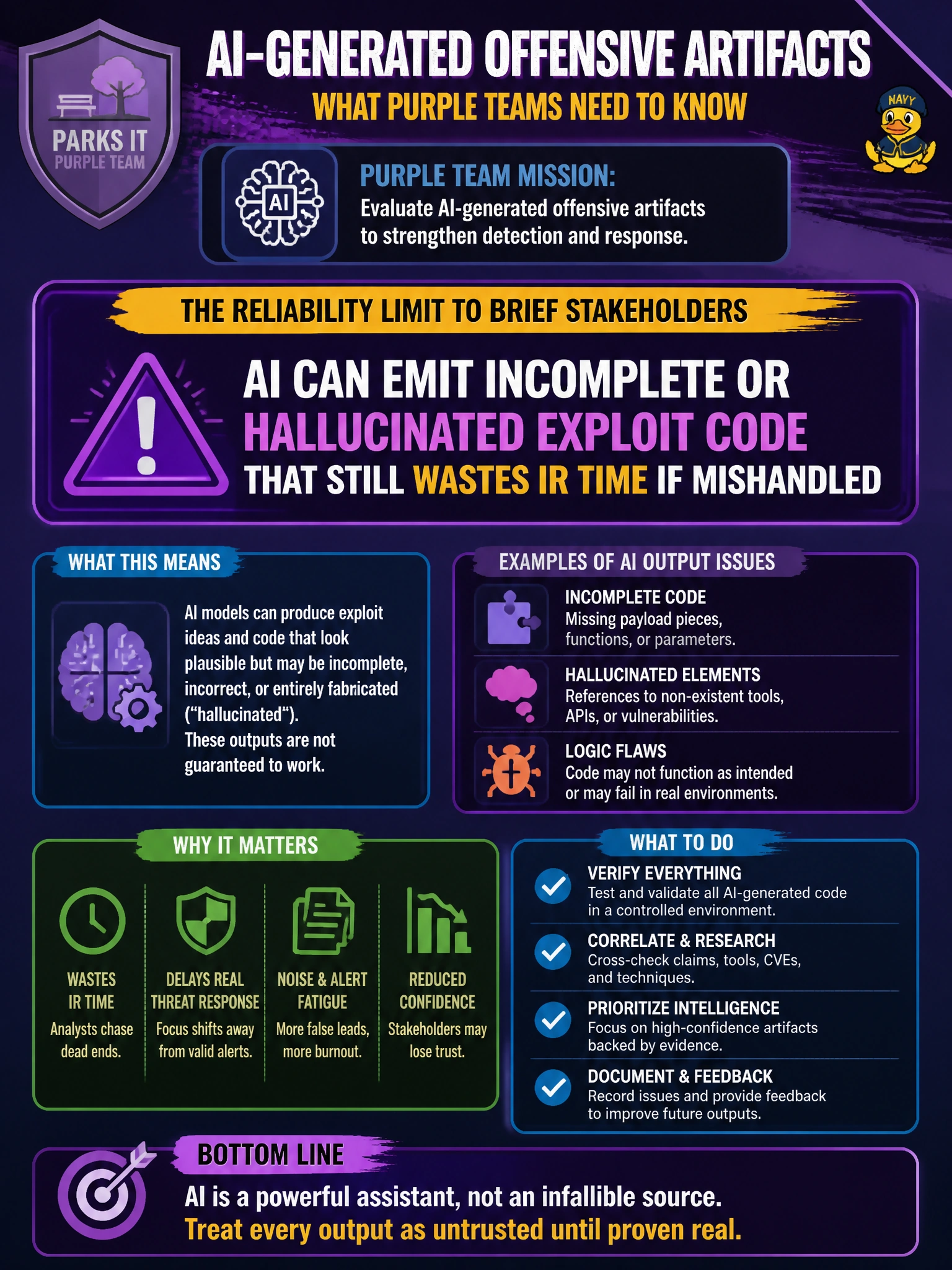
AI can hand you half-baked or made-up exploit soup that still burns IR hours if someone treats it like gospel. Parks purple team should brief that reliability limit up front. 'Municipal' in the prompt is not a quality seal.
Full Explanation
Parks IT purple teams evaluating AI-generated offensive artifacts should brief stakeholders that AI can emit incomplete or hallucinated exploit code that still wastes incident-response time if mishandled. Partial scripts, invented APIs, and non-functional but alarming snippets can trigger false crises, consume analyst hours, or cause hasty production changes when someone treats model output as authoritative. Reliability limits belong in the exercise briefing so leadership does not assume AI equals ready-to-run precision.
AI does not always produce perfect production-ready exploits needing no review. Hallucinated code is not impossible merely because prompts mention municipal parks. Incomplete AI output can and does consume IR time when mishandled—the opposite of the distractor's claim.
Exam caveat: the reliability limit to brief is incomplete/hallucinated output that still burns IR time if trusted blindly—not perfection guarantees or magical immunity from hallucination.
Operational check: require human validation of all AI offensive artifacts in parks labs, label outputs as untrusted until proven, keep them off production ticketing as 'confirmed incidents' without corroborating telemetry, and include a stakeholder slide on hallucination risk in every purple-team readout.