
An organization uses an intrusion prevention system (IPS) inline between the internet router and the core firewall. What risk does this introduce if not managed correctly?
Select an answer to reveal the explanation.
Short Explanation
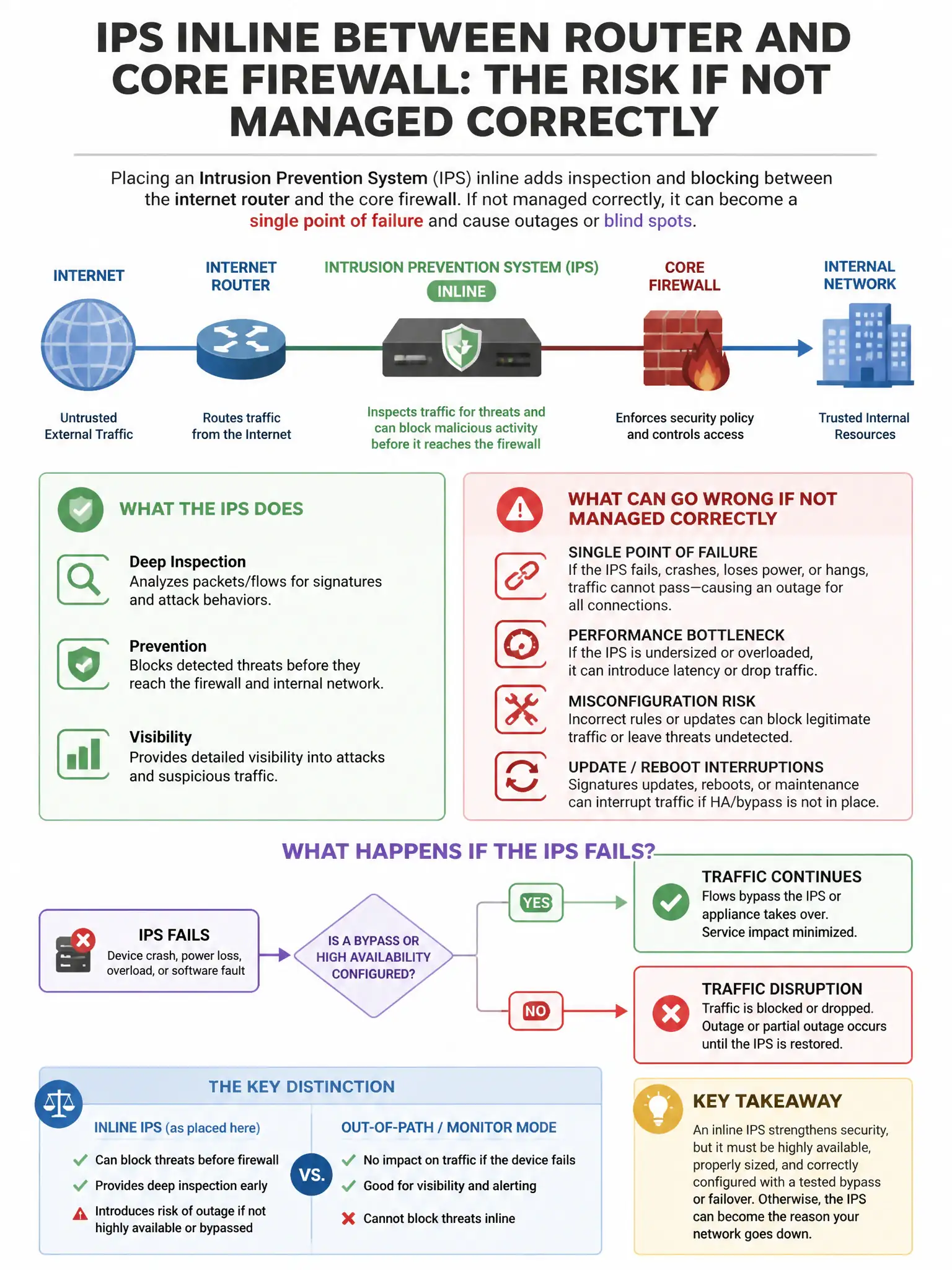
Here's the deal — an inline IPS can stop legitimate traffic if a rule is wrong or the device fails, so availability is the risk you're managing. TLS decryption, hardware cost, and internal IP exposure aren't the core issue here.
Full Explanation
An inline IPS sits in the traffic path and can block or drop packets based on its rules, so a misconfiguration, false positive, or hardware failure can interrupt legitimate business traffic and create an availability problem. The TLS-decryption option is wrong because TLS decryption is a separate feature that requires proper certificate management, and it does not cause browser warnings unless the certificate authority isn't trusted. The hardware-cost option is wrong because hardware cost isn't a security risk introduced by inline placement. The internal-IP-exposure option is wrong because IPS placement doesn't expose internal IP addresses; NAT at the firewall handles address hiding.