
An analyst receives a threat intelligence report describing a new APT group using a specific YARA signature pattern in their custom implant. The organization has a SIEM with endpoint telemetry. Which action most effectively operationalizes this intelligence?
Select an answer to reveal the explanation.
Short Explanation
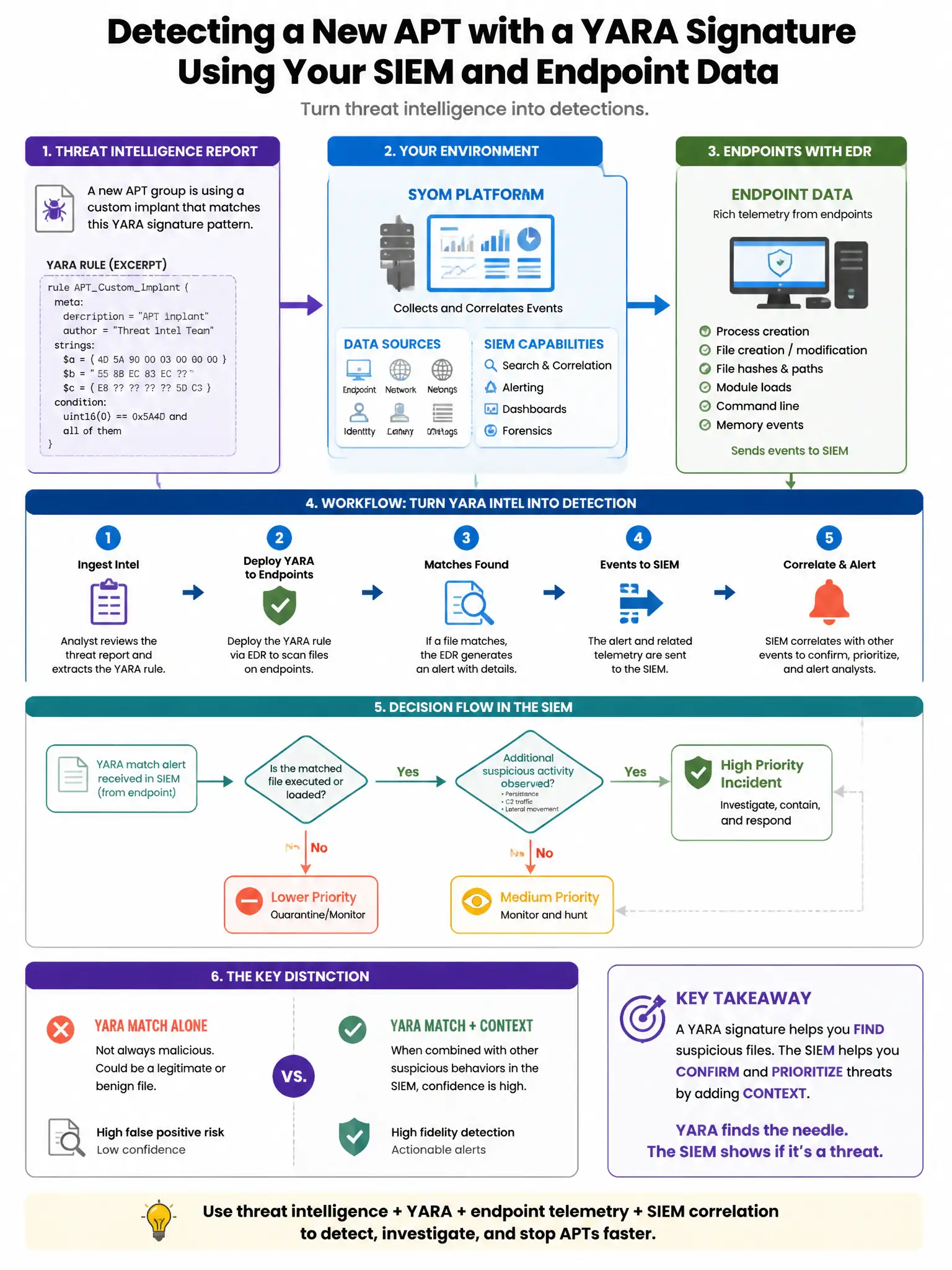
Here's the deal — operationalizing threat intelligence means converting indicators into active detections. You'll deploy the YARA rule to the EDR and SIEM for retrospective hunting across historical endpoint telemetry and configure a real-time alert for future matches. Filing the report for a quarterly review wastes actionable intelligence.
Full Explanation
Operationalizing threat intelligence means converting indicators, such as YARA signatures, into active detections. Deploying the YARA rule to the EDR and SIEM enables retrospective hunting across historical endpoint telemetry to reveal past compromise, while a real-time alert catches future matches. Filing the report in the threat intel database for quarterly review wastes actionable intelligence. Sending it to legal for liability assessment is unrelated to technical operationalization. Blocking the APT group's country of origin at the perimeter firewall is a blunt tool that the group can bypass using infrastructure in other countries.