
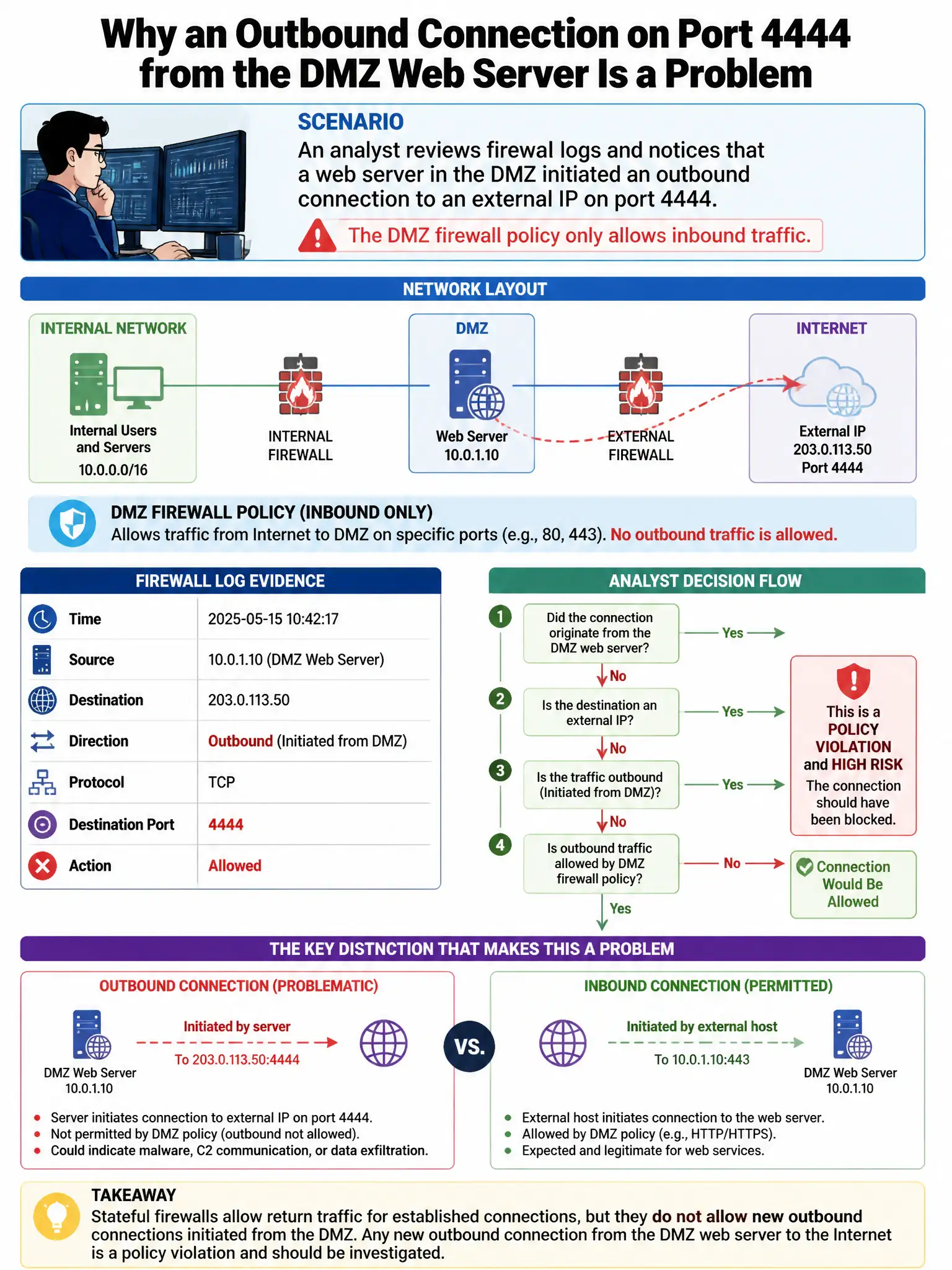
An analyst reviews firewall logs and notices that a web server in the DMZ initiated an outbound connection to an external IP on port 4444. The DMZ firewall policy only allows inbound connections to the web server. What does this event most likely indicate, and what log source should be examined next?
Select an answer to reveal the explanation.
Short Explanation
Here's the deal — an outbound connection from a DMZ web server to port 4444 is a red flag for a reverse shell. You should examine the web server's application logs and web access logs for the exploit request that came before the callback.
Full Explanation
An outbound connection from a DMZ web server to port 4444, a common reverse shell port, violates the expected traffic model and suggests successful exploitation followed by callback. The web server may have been compromised, so examine its application logs and web access logs for preceding exploitation activity. Normal web server update traffic with Windows Update logs is wrong because Windows Update uses ports 80/443, not 4444. A misconfigured firewall that allowed the outbound connection is wrong because the firewall apparently blocked or logged the attempt depending on policy, and even if it passed, the root cause is exploitation, not misconfiguration. Normal DNS resolution traffic is wrong because DNS uses ports 53 UDP/TCP, not 4444.