
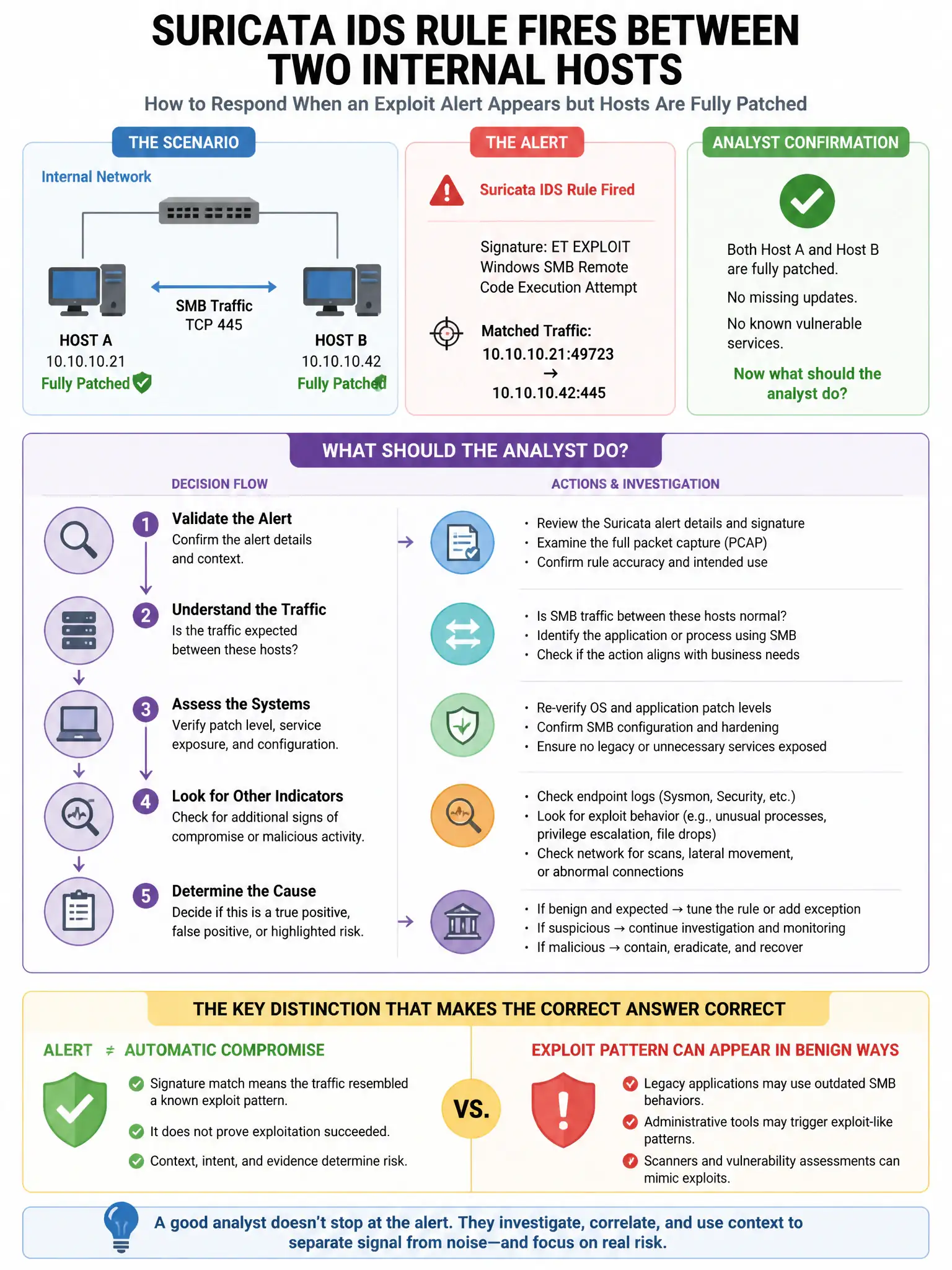
A Suricata IDS rule fires on traffic between two internal hosts. The signature matches a known SMB exploit. The analyst confirms both hosts are fully patched. What should the analyst conclude?
Select an answer to reveal the explanation.
Short Explanation
You can't assume patching means immunity. Exploits can bypass patches, patches can fail to apply, and this may be lateral movement reconnaissance. Investigate the alert instead of dismissing it.
Full Explanation
The conclusion to investigate further is correct because patched systems can still trigger exploit signatures via exploit scanners. Patching status does not guarantee immunity; exploits may bypass patches, patches may not have applied correctly, and the alert may indicate lateral movement reconnaissance. The conclusion that the alert is a false positive and should be permanently suppressed is wrong because suppressing without investigation could mask real incidents. The conclusion that the rule is outdated and should be deleted is wrong because deleting it removes detection capability without evidence the rule is wrong. The conclusion that encrypted traffic prevents Suricata detection is wrong because SMB traffic in enterprise environments is typically not TLS-encrypted in a way that prevents signature matching.