
A hospital network has medical devices running legacy operating systems that cannot be patched. Which network architecture control BEST reduces the risk these devices pose?
Select an answer to reveal the explanation.
Short Explanation
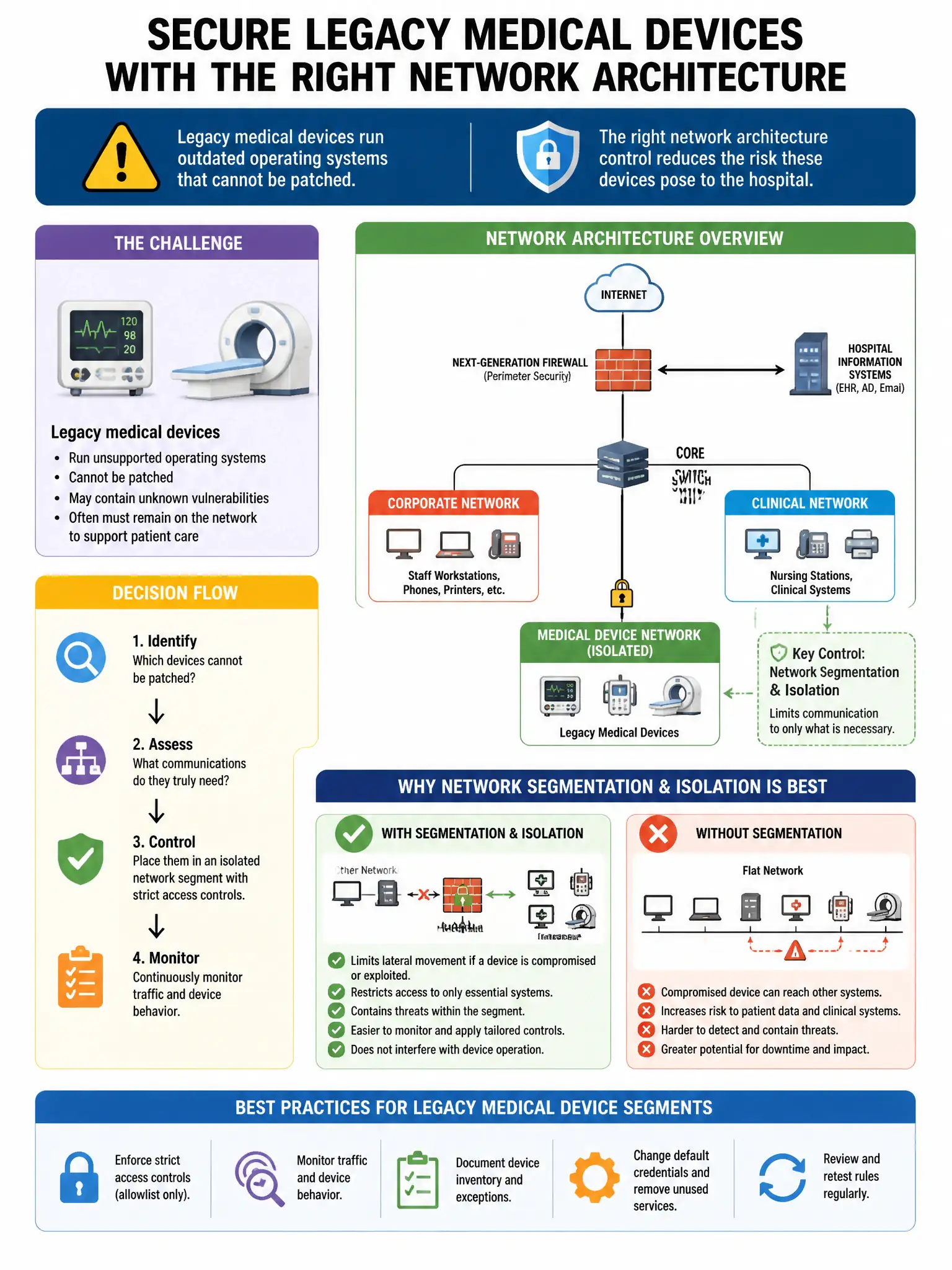
Here's the deal — you need to isolate unpatchable medical devices in a restricted VLAN with minimal firewall rules. That limits the blast radius if a device is compromised and cuts down network-based attack exposure. Antivirus, HTTPS, and MFA don't solve the network exposure problem.
Full Explanation
Isolating medical devices in an isolated VLAN with strict firewall rules allowing only necessary protocols to specific destinations is correct because it limits the blast radius if a device is compromised and reduces exposure to network-based attacks. Deploying an antivirus agent on each medical device is wrong because legacy OS devices often cannot support modern antivirus agents. Enabling HTTPS on all device management interfaces is wrong because HTTPS only secures management traffic but does not isolate the devices from network-based attacks. Requiring multi-factor authentication before accessing device management consoles is wrong because MFA protects administrative access but does not address network-level exposure of the devices themselves.