
A security engineer reviews a Windows system and finds that the built-in Administrator account (RID 500) is enabled and has no password set. What is the correct remediation?
Select an answer to reveal the explanation.
Short Explanation and Infographic
Here's the deal — a is correct because the built-in Administrator (RID 500) account is a well-known target; renaming it reduces automated attack success rates, setting a strong password addresses the immediate critical risk, and disabling it (when named accounts exist) eliminates the attack surface entirely. B is wrong because enabling the Guest account increases attack surface rather than reducing it.
Full explanation below image
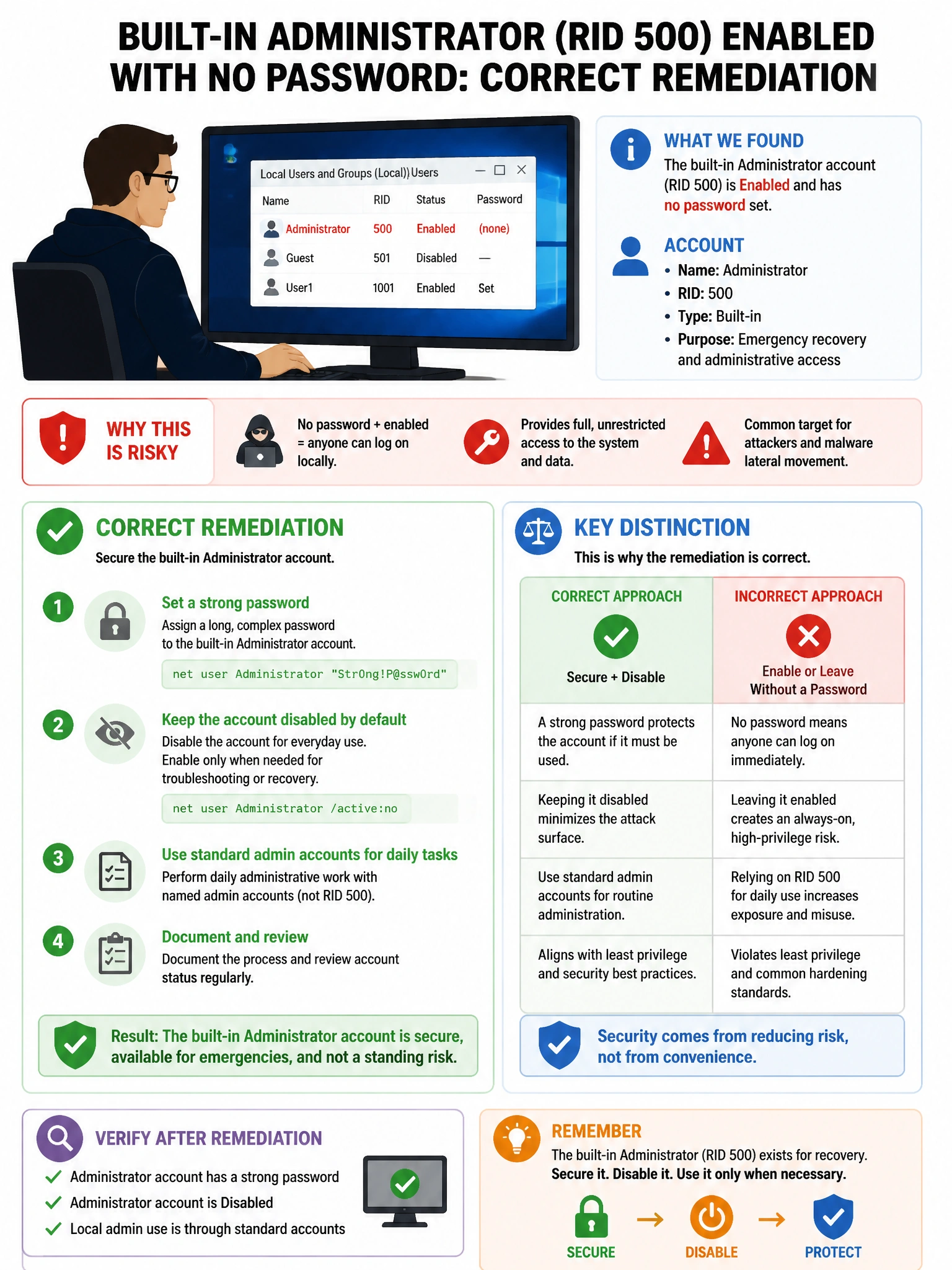
Full Explanation
A is correct because the built-in Administrator (RID 500) account is a well-known target; renaming it reduces automated attack success rates, setting a strong password addresses the immediate critical risk, and disabling it (when named accounts exist) eliminates the attack surface entirely. B is wrong because enabling the Guest account increases attack surface rather than reducing it. C is wrong because 'Admin123' is a trivially guessable weak password that provides minimal security improvement. D is wrong because moving the account to Domain Admins (if not already) is irrelevant to the local account security risk, and this action doesn't address the missing password.