
A network architect is implementing a zero-trust architecture. Which statement best describes the core principle of zero trust regarding network location?
Select an answer to reveal the explanation.
Short Explanation and Infographic
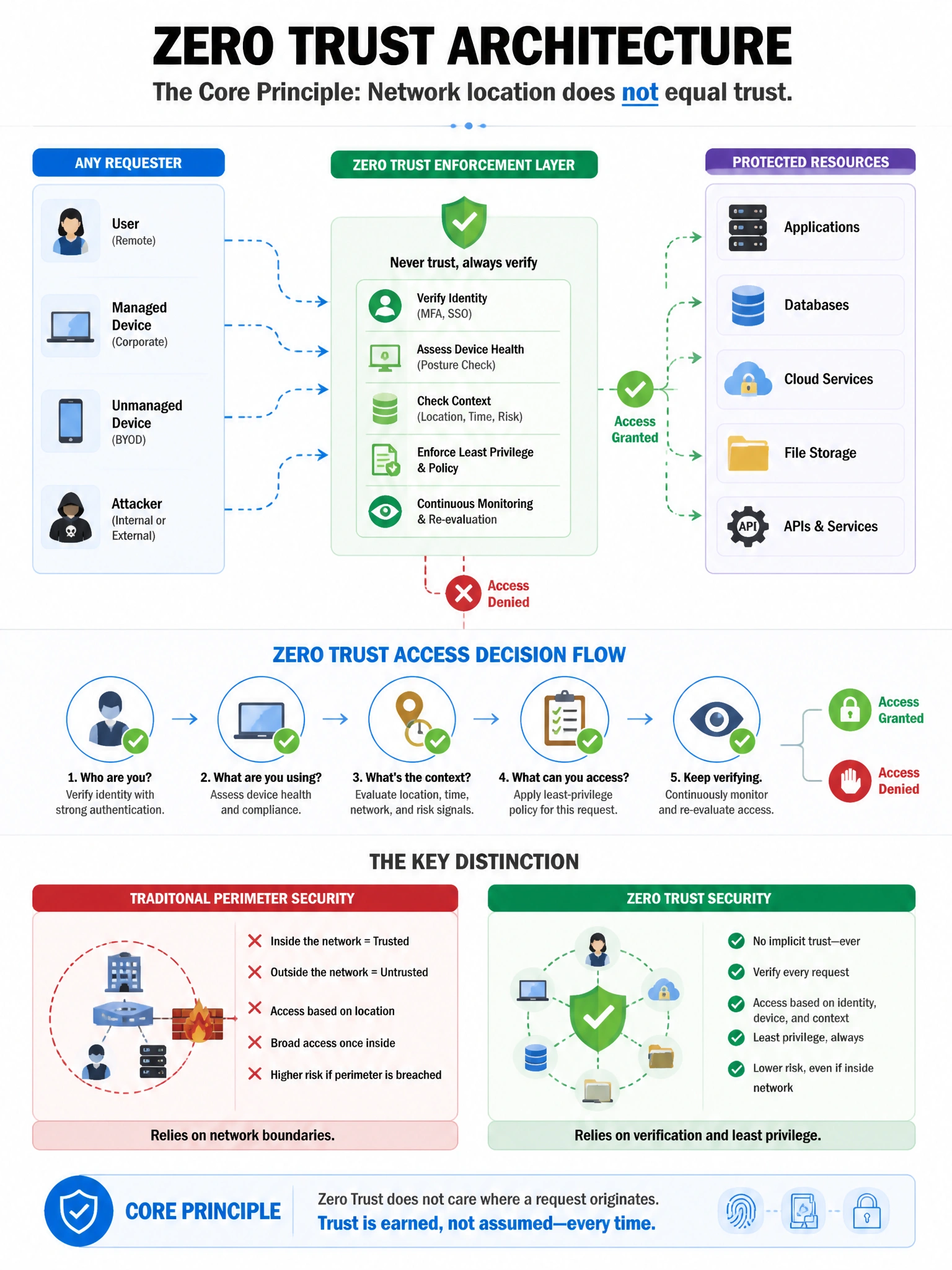
Here's the deal — b is correct because zero trust abandons the concept of a trusted internal network zone; instead, every user, device, and service must authenticate and be authorized before accessing any resource regardless of physical or network location. A is wrong because zero trust explicitly rejects the distinction between trusted internal and untrusted external — all requestors are treated as potentially untrusted.
Full explanation below image
Full Explanation
B is correct because zero trust abandons the concept of a trusted internal network zone; instead, every user, device, and service must authenticate and be authorized before accessing any resource regardless of physical or network location. A is wrong because zero trust explicitly rejects the distinction between trusted internal and untrusted external — all requestors are treated as potentially untrusted. C is wrong because while encryption is important in zero trust, it is not the defining principle; continuous verification of identity is. D is wrong because zero trust can include firewalls alongside identity-aware proxies; it does not mandate replacing all firewalls.