
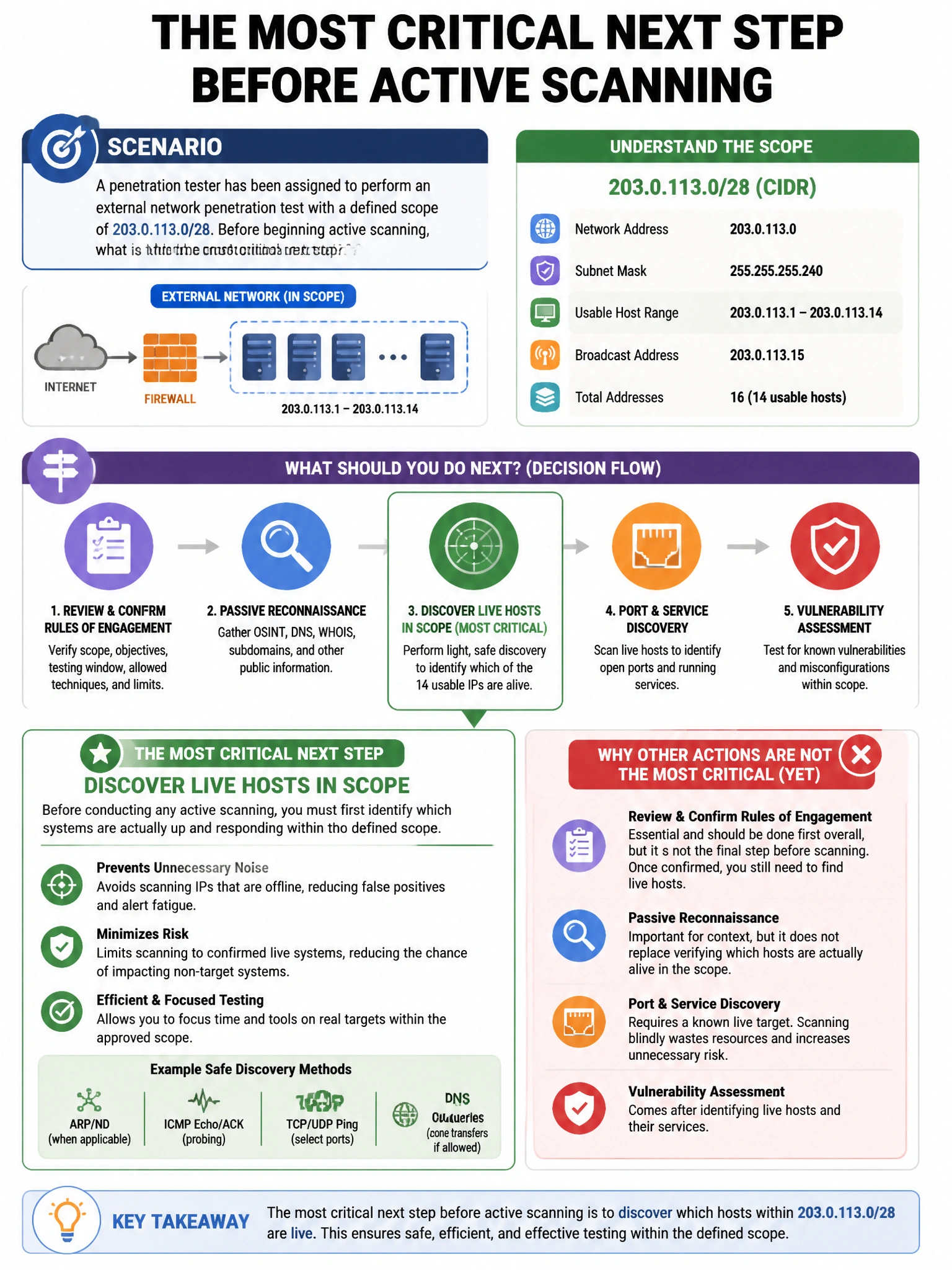
A penetration tester has been assigned to perform an external network penetration test with a defined scope of 203.0.113.0/28. Before beginning active scanning, what is the most critical pre-engagement step?
Select an answer to reveal the explanation.
Short Explanation and Infographic
Here's the deal — b is correct because written authorization (Rules of Engagement / Statement of Work) is a legal requirement that defines scope, timing, liability, and emergency procedures. Verifying IP ownership is critical because testing IPs that are not the client's (e.g., cloud IPs reassigned to another tenant) is unauthorized access.
Full explanation below image
Full Explanation
B is correct because written authorization (Rules of Engagement / Statement of Work) is a legal requirement that defines scope, timing, liability, and emergency procedures. Verifying IP ownership is critical because testing IPs that are not the client's (e.g., cloud IPs reassigned to another tenant) is unauthorized access. A is wrong because scanning without authorization is illegal regardless of intent. C is wrong because OSINT does not substitute for legal authorization. D is wrong because ISP notification is typically not required for authorized penetration tests targeting the client's own assets.