
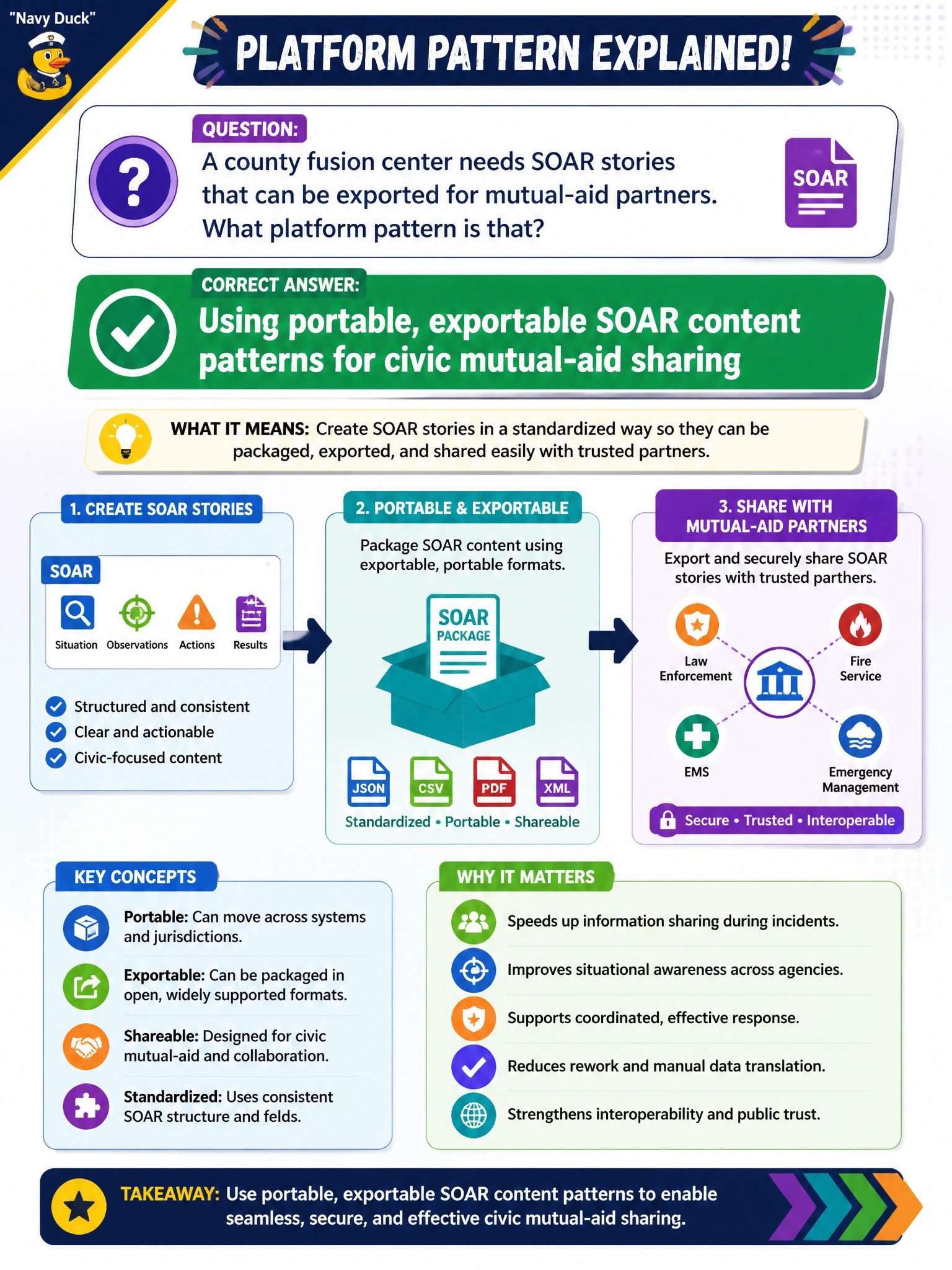
A county fusion center needs SOAR stories that can be exported for mutual-aid partners. What platform pattern is that?
Select an answer to reveal the explanation.
Short Explanation
Mutual aid means the playbook has to travel—you'll want exportable stories, not just triage dashboards. Sharing audit log archives or sensor polling configs isn't a runnable SOAR handoff. Portable SOAR content keeps fusion centers useful to partners.
Full Explanation
A county fusion center that needs SOAR stories exportable for mutual-aid partners is adopting portable content patterns. During regional incidents, partners must receive runnable or clearly transferable playbook logic and case schemas—not triage dashboards, audit log archives, or sensor polling configs that don't export SOAR stories. Exportable content speeds shared response across cities and counties that may not share the same SOAR product while preserving a common civic IR approach.
Why the other options fail by concept: Using portable, exportable SOAR triage dashboards for civic mutual-aid sharing shares queue views and visualizations rather than delivering runnable SOAR stories and playbook logic partners can execute. Using portable, exportable SOAR audit log archives for civic mutual-aid sharing moves historical records for review rather than delivering runnable SOAR playbooks and case schemas partners can use. Using portable, exportable SOAR sensor polling configs for civic mutual-aid sharing supports collection timing, not the exportable SOAR stories mutual aid requires.
Exam caveat: Portability does not erase local secrets—sanitize credentials, tenant IDs, and sensitive civic data before export, and agree on how partners re-bind connectors. Operational check: prefer exportable playbook and schema formats, document connector rebinding steps for partners, and rehearse a mutual-aid content handoff in a tabletop before hurricane or cyber surge season.
Prefer to study offline? Printable PDF study book + test engine ($7.50, unofficial). These questions stay free here.