
A city evaluates low-code SOAR versus custom Python workers for high-volume phishing. What platform decision is that?
Select an answer to reveal the explanation.
Short Explanation
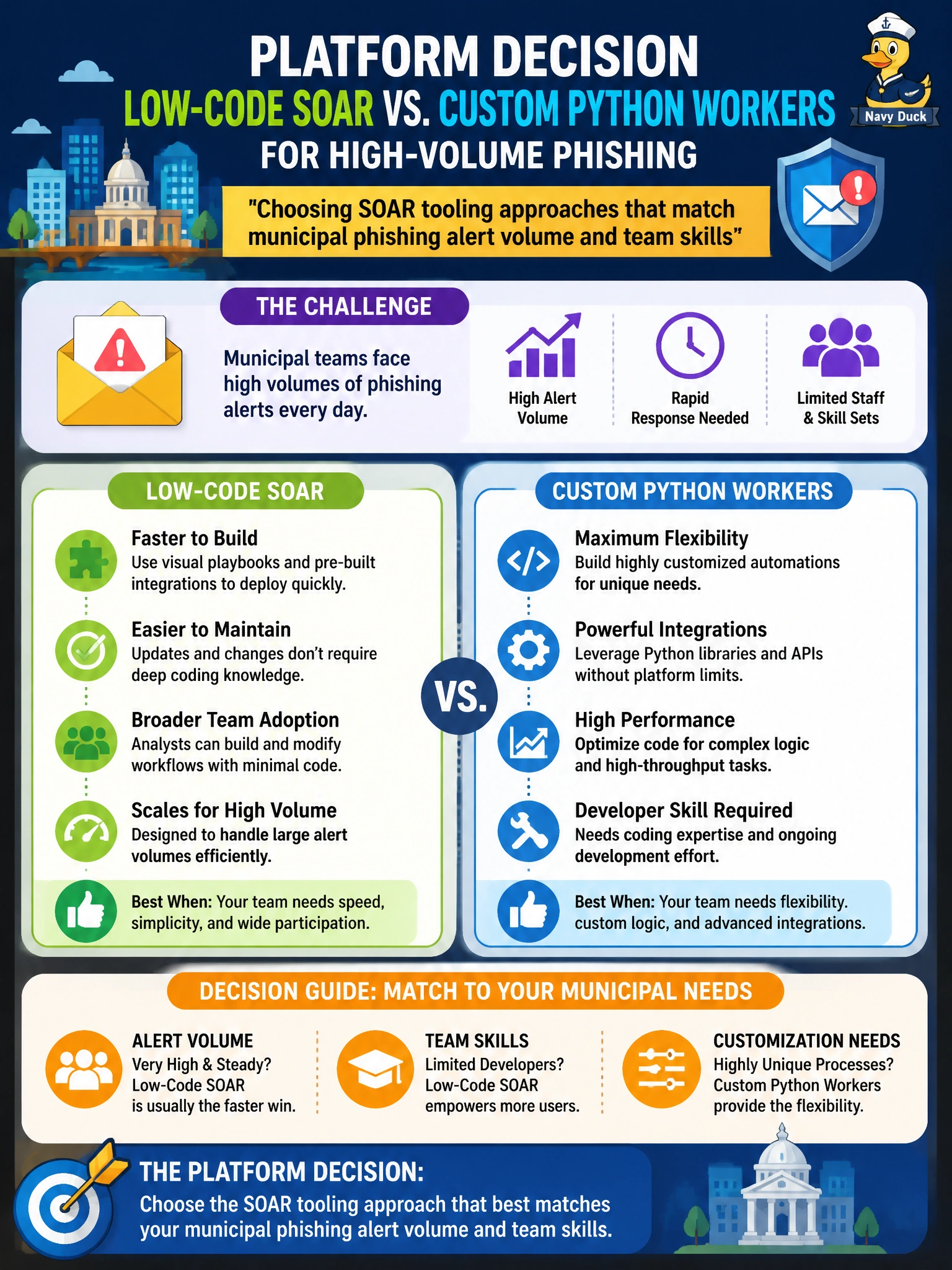
Match the tool to the flood—and to who can keep it alive. You don't choose deployment models for retention and shift coverage, buy support tiers for alert load and on-call, or track triage pace and workload metrics and call that a tooling choice. Cities pick low-code or Python based on phishing load and skills.
Full Explanation
A city that evaluates low-code SOAR versus custom Python workers for high-volume phishing is choosing tooling to match alert volume and team skills. Low-code platforms can accelerate common playbooks when analysts own maintenance; custom workers may fit extreme volume or unique integrations if engineering capacity exists to operate them. The decision is an ownership and sustainability choice for municipal IR, not a selection of SOAR deployment models to fit municipal phishing data retention and team shift coverage. Matching platform to skills prevents orphaned automation that dies when the one Python-savvy contractor leaves.
Why the other options fail by concept: Selecting SOAR deployment models that fit municipal phishing data retention and team shift coverage addresses hosting and retention, not whether low-code or custom Python fits alert volume and team skills. Evaluating SOAR vendor support tiers that suit municipal phishing alert load and team on-call needs picks a support contract for load and on-call coverage, without choosing low-code versus custom workers to match volume and skills. Assessing SOAR performance metrics that reflect municipal phishing triage pace and analyst workload measures triage pace and workload, without choosing low-code versus custom tooling to match volume and skills.
Exam caveat: Volume and skills fit can change; revisit the choice as phishing volume, staffing, and integration needs evolve rather than locking forever to the first purchase. Operational check: estimate peak phishing volume, map required connectors, inventory team skills, run a time-boxed pilot on the leading approach, and select the platform the city can operate for at least the next budget cycle.
Prefer to study offline? Printable PDF study book + test engine ($7.50, unofficial). These questions stay free here.