
Parks department GenAI success metrics push maximizing personal data retention while privacy goals demand minimization. How should strategy resolve the conflict?
Select an answer to reveal the explanation.
Short Explanation
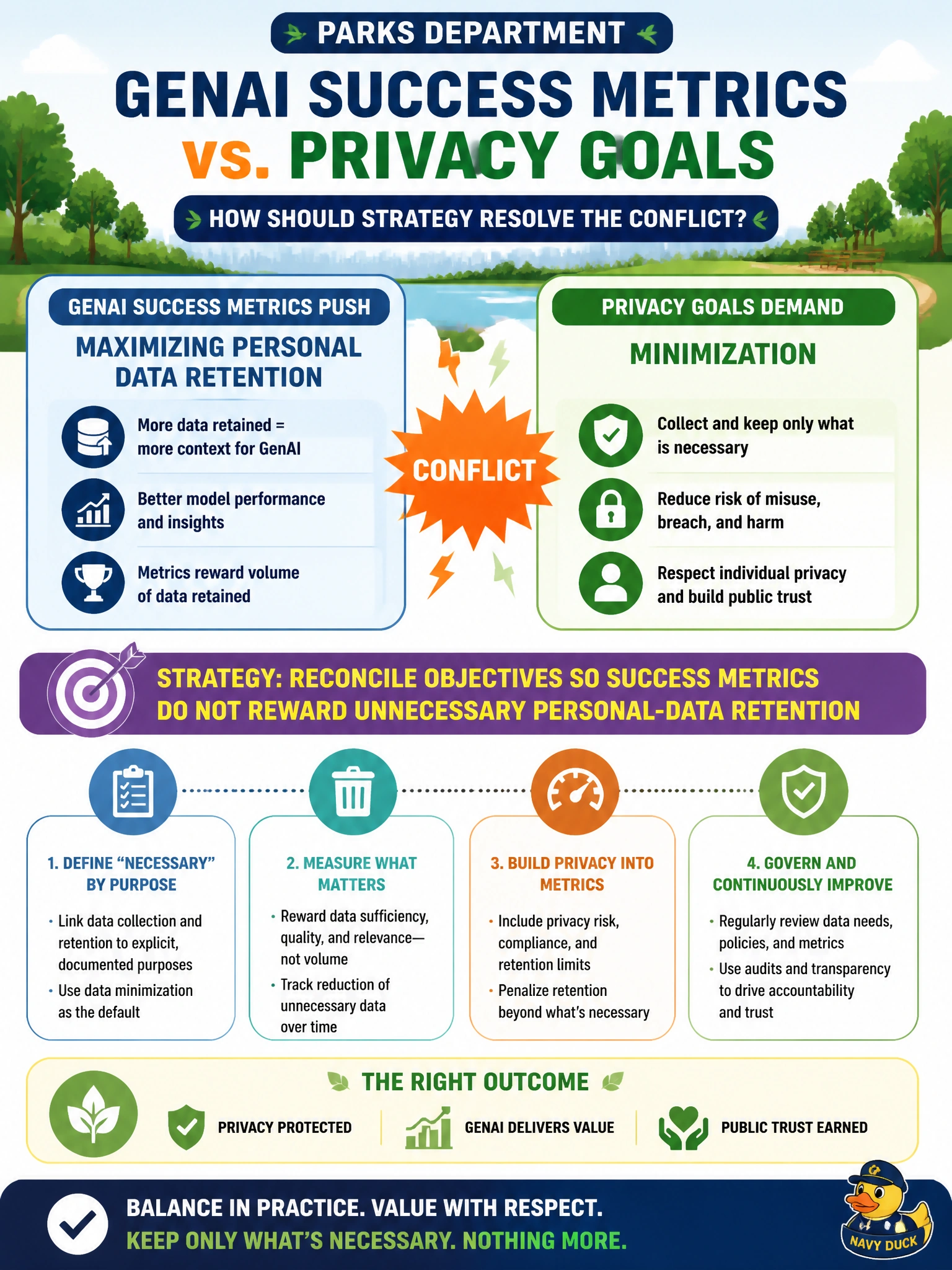
If your success scoreboard pays you to hoard personal data, it fights privacy minimization. Align metrics with the privacy goal. Demo-driven hoarding and “keep IDs forever” are the conflict, not the fix.
Full Explanation
Strategic conflict between GenAI success metrics and privacy minimization must be reconciled so KPIs do not reward unnecessary personal-data retention. Parks (or any department) should define success via outcomes that do not depend on hoarding visitor identifiers—e.g., task completion with minimized data, retention aligned to purpose, and deletion or aggregation milestones. Otherwise “innovation” metrics systematically undermine privacy goals and DPIA commitments.
Always maximizing retention because bigger datasets look innovative in demos optimizes for theater and expands breach and misuse blast radius. Ignoring privacy goals whenever a dashboard KPI turns green subordinates rights to vanity metrics. Storing every visitor’s full ID indefinitely “just in case the model needs it later” is speculative retention incompatible with minimization and purpose limitation.
Exam caveat: some retention may be justified and documented; the failure is metrics that incentivize unbounded personal-data accumulation without purpose. Operational check: rewrite GenAI success metrics to remove rewards for excess PII retention, align retention schedules with privacy policy, and have privacy review sign off on the metric set.