
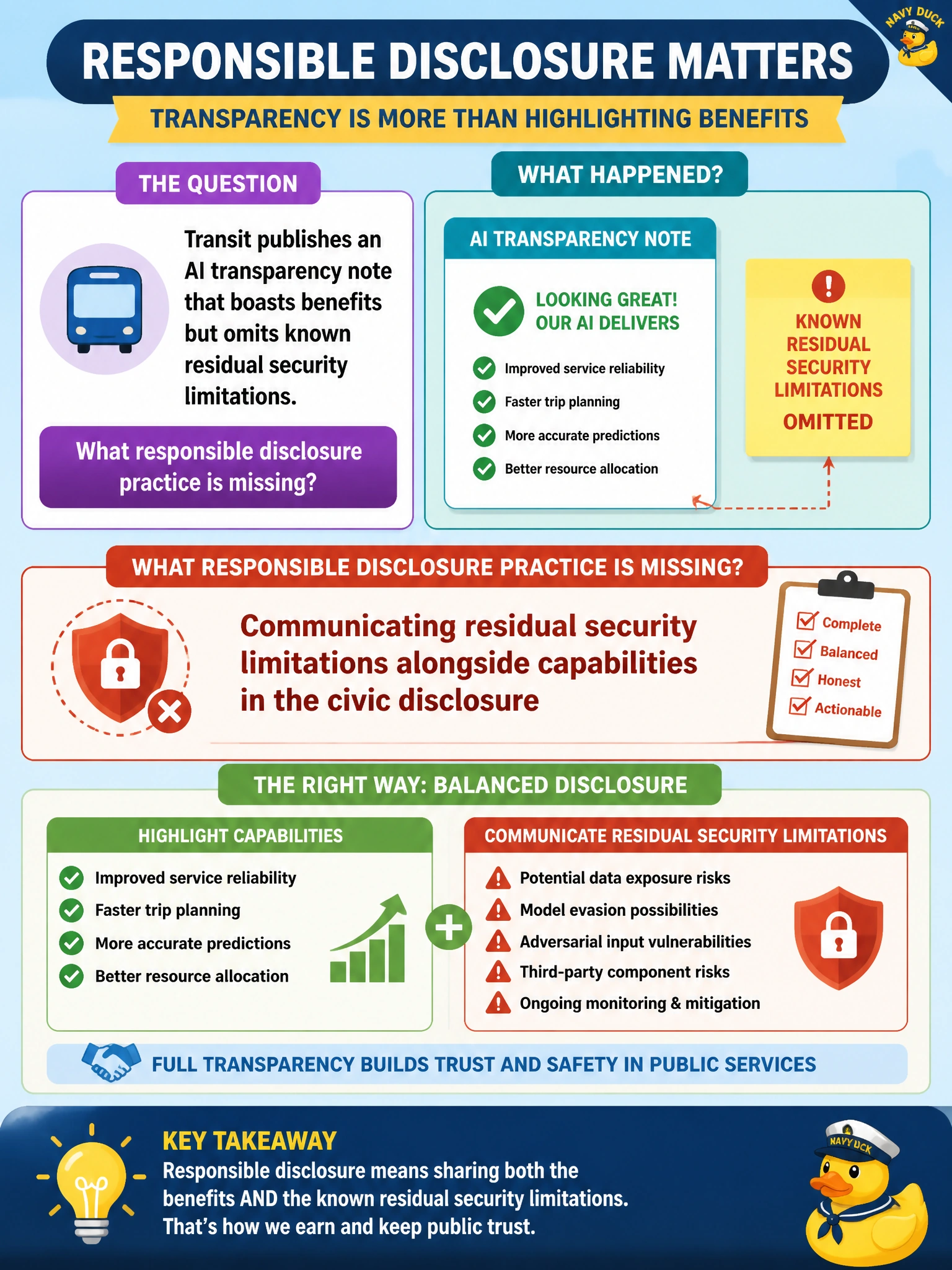
Transit publishes an AI transparency note that boasts benefits but omits known residual security limitations. What responsible disclosure practice is missing?
Select an answer to reveal the explanation.
Short Explanation
Transparency that only sells sunshine is PR, not responsible AI. Tell residents the leftover security limits too. Stock photos, “zero residual risk” slogans, and buried notes miss the point.
Full Explanation
Responsible civic AI disclosure communicates residual security limitations alongside capabilities. A transit transparency note that only boasts benefits without known residual limits misleads riders and oversight bodies. Good practice states what the system does, what data it uses, known failure modes or security residual risks (for example, hallucination under outage conditions, logging scope, human override expectations), and how residents escalate issues. That honesty is part of Domain 8 responsible-AI planning and trust.
Adding more stock photos of smiling trains improves marketing visuals, not risk communication. Claiming zero residual risk because marketing approved the copy is false assurance—residual risk is rarely zero after real controls. Hiding the note behind an unindexed intranet folder forever defeats public transparency even if the text were complete.
Exam caveat: transparency is not a full penetration-test dump; it is accurate disclosure of material limitations and governance contact points without creating gratuitous exploit recipes. Operational check: revise the transit AI note to include a residual-limitations section reviewed by security and counsel, publish it where riders can find it, and version it when the risk posture changes.