
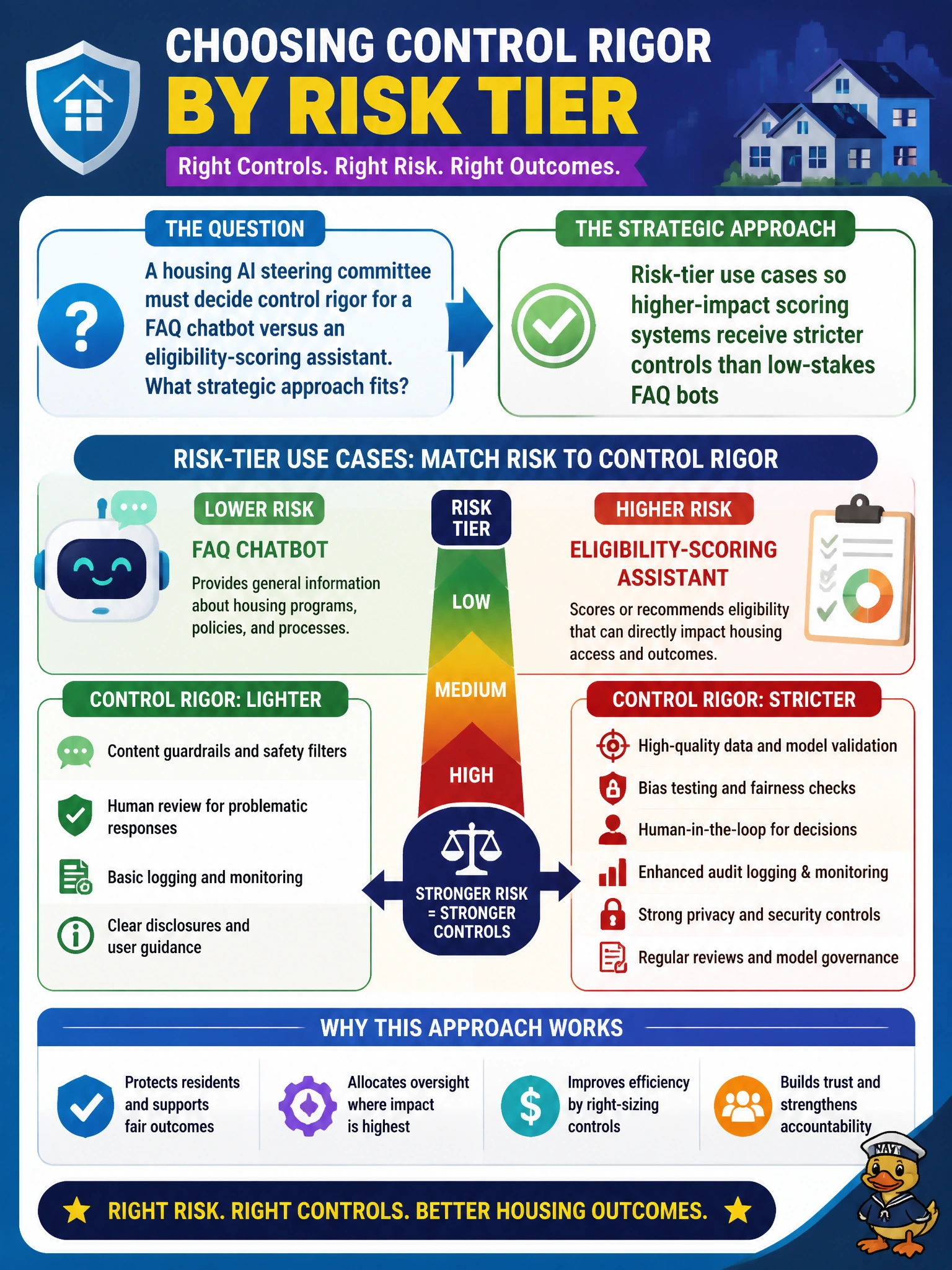
A housing AI steering committee must decide control rigor for a FAQ chatbot versus an eligibility-scoring assistant. What strategic approach fits?
Select an answer to reveal the explanation.
Short Explanation
Not every civic bot is equally dangerous—FAQ help is not eligibility scoring. Tier the rigor to the stakes. Same max controls on everything, zero controls on scoring, or coin flips are not risk-tiering.
Full Explanation
Strategic GenAI governance risk-tiers use cases so control rigor matches impact. A FAQ chatbot that answers published housing information is lower stakes than an eligibility-scoring assistant that influences benefits or housing outcomes. Higher-impact scoring systems warrant stricter evaluation, human oversight, fairness review, logging, access control, and change management than low-stakes FAQ bots. Tiering allocates scarce security and compliance effort where resident harm potential is highest.
Applying identical maximum controls to every toy demo and production decision system alike wastes resources and delays low-risk learning without improving high-risk assurance. Skipping all controls on eligibility scoring because it “only suggests” outcomes ignores how suggestions become de facto decisions in busy housing workflows. Letting interns decide tiers by coin flip each Monday replaces risk methodology with randomness and destroys consistency for auditors and operators.
Exam caveat: “suggestion-only” systems can still be high risk if humans rubber-stamp outputs; tiering should consider realistic operational use, not marketing labels. Operational check: classify the FAQ bot and eligibility scorer into documented tiers with required controls per tier, and verify the scorer’s tier mandates stricter evaluation and oversight before production.