
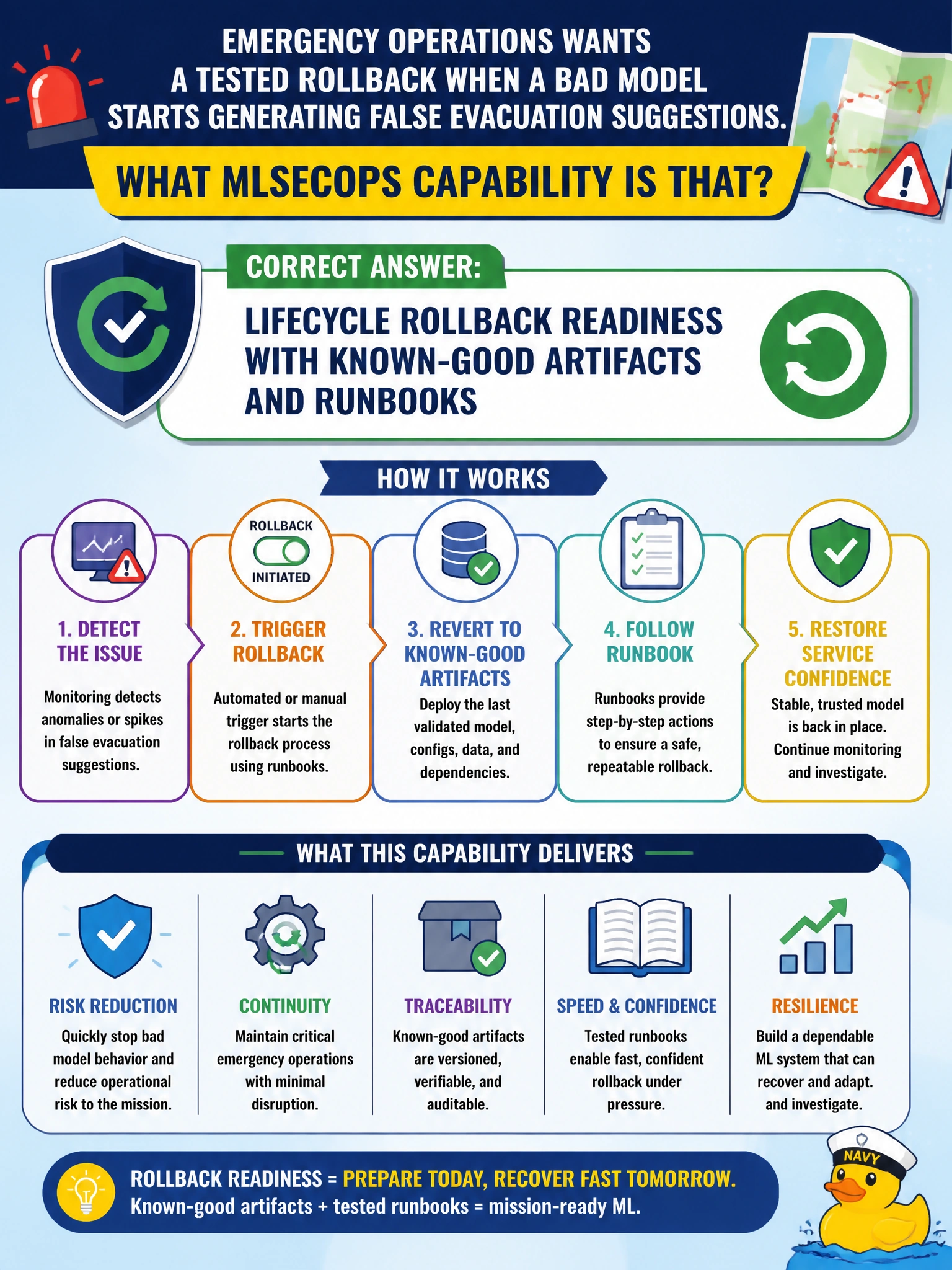
Emergency operations wants a tested rollback when a bad model starts generating false evacuation suggestions. What MLSecOps capability is that?
Select an answer to reveal the explanation.
Short Explanation
When a bad model yells “evacuate” wrongly, you need a practiced reverse gear, not a pep talk. Keep known-good artifacts and rollback runbooks. Deleting priors, prompt-only fixes, and muted alerts leave you stuck.
Full Explanation
Emergency operations wanting a tested rollback when a bad model starts generating false evacuation suggestions is asking for lifecycle rollback readiness with known-good artifacts and runbooks. When a civic GenAI system emits unsafe guidance, operators need a practiced reverse gear: pinned known-good versions, validated restore steps, and clear authority to execute. Rollback readiness is an MLSecOps lifecycle capability, not a prompt-engineering consolation prize after residents are already misdirected.
Permanent deletion of prior model versions after each deploy fails because it removes the artifacts required to roll back. Relying solely on longer system prompts after an incident fails because prompt edits may be slow, incomplete, or ineffective against a deeply wrong model. Disabling operator alerts during model-related emergencies fails because it blinds the people who must initiate rollback.
Exam caveat: for emergency-management GenAI, exams expect preserved priors plus runbooks; deleting history or muting alerts is opposite of readiness.
Operational check: keep signed known-good artifacts; document and drill rollback with EOC staff; verify monitoring alerts on evacuation-suggestion anomaly rates; time the restore in a tabletop and fix runbook gaps.