
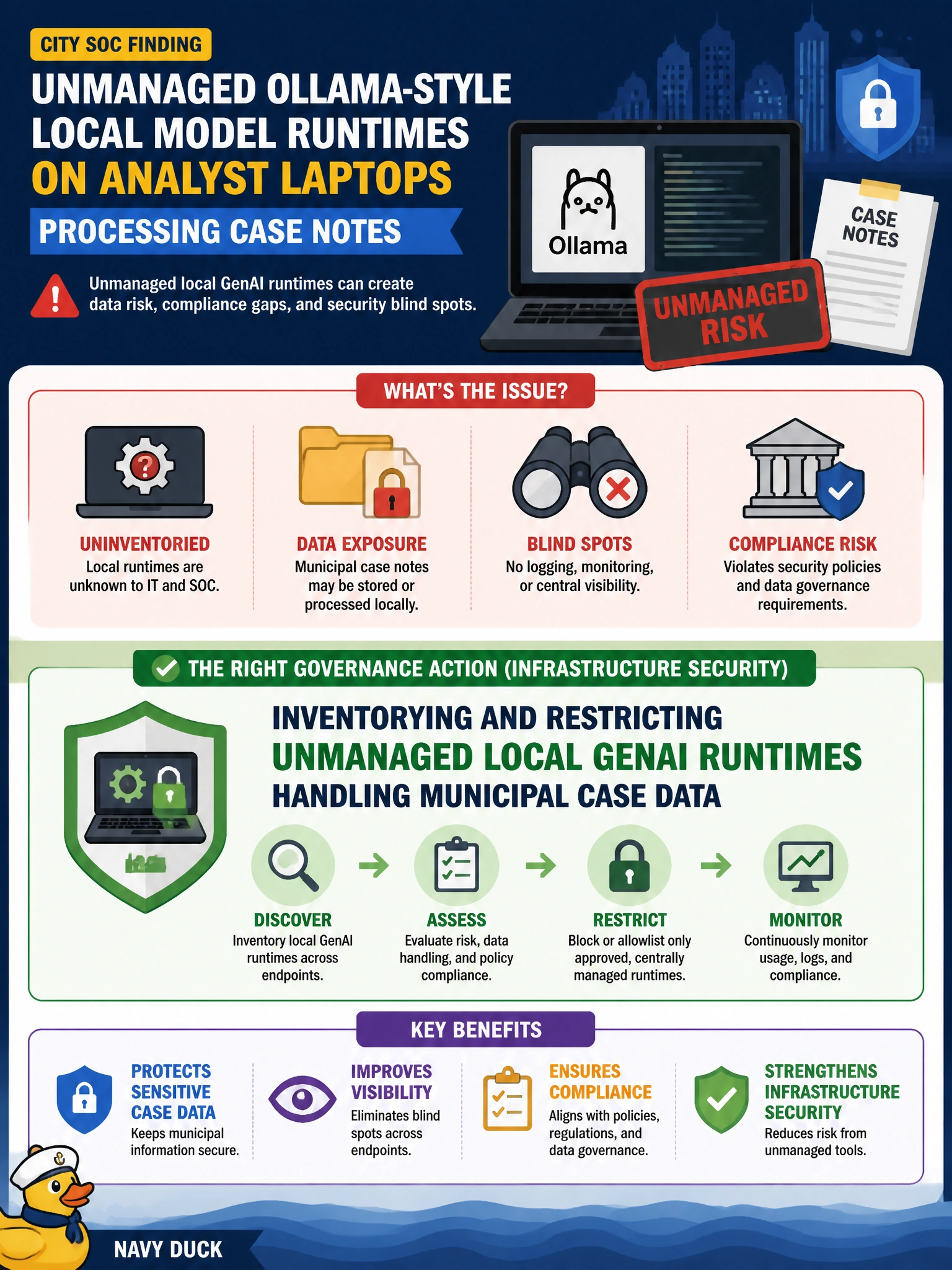
City SOC finds unmanaged Ollama-style local model runtimes on analyst laptops processing case notes. What governance action fits infrastructure security?
Select an answer to reveal the explanation.
Short Explanation
Shadow laptop models chewing case notes are like unsanctioned mini-servers under desks. Find them and rein them in. Bigger downloads, open-source-only free passes, and silent browser API leaks make governance worse.
Full Explanation
Unmanaged Ollama-style local model runtimes on analyst laptops that process case notes place sensitive municipal case data on endpoint-hosted GenAI outside approved infrastructure, inventory, and logging. The fitting governance action is inventorying and restricting unmanaged local GenAI runtimes that handle civic case data—discover shadow inference, decide approved patterns, and block or contain unapproved ones through endpoint policy and awareness.
Requiring every laptop to download larger models increases local data gravity and attack surface without governance. Whitelisting all local runtimes solely because a model card says open source ignores data-handling risk: open weights do not authorize uncontrolled processing of case notes. Moving case notes into browser extensions that call public AI APIs silently creates covert exfiltration to unmanaged providers.
Exam caveat: some approved offline GenAI on hardened endpoints may be legitimate; the issue is unmanaged runtimes processing municipal case data without inventory and policy. Operational check: scan endpoints for local model servers and weight caches, correlate with DLP or EDR alerts on case-note paths, and publish an approved-use list for civic GenAI on workstations.