
Water-utility inference nodes lack disk encryption, and crash dumps may contain prompt fragments from resident service chats. What host control addresses residual GenAI data?
Select an answer to reveal the explanation.
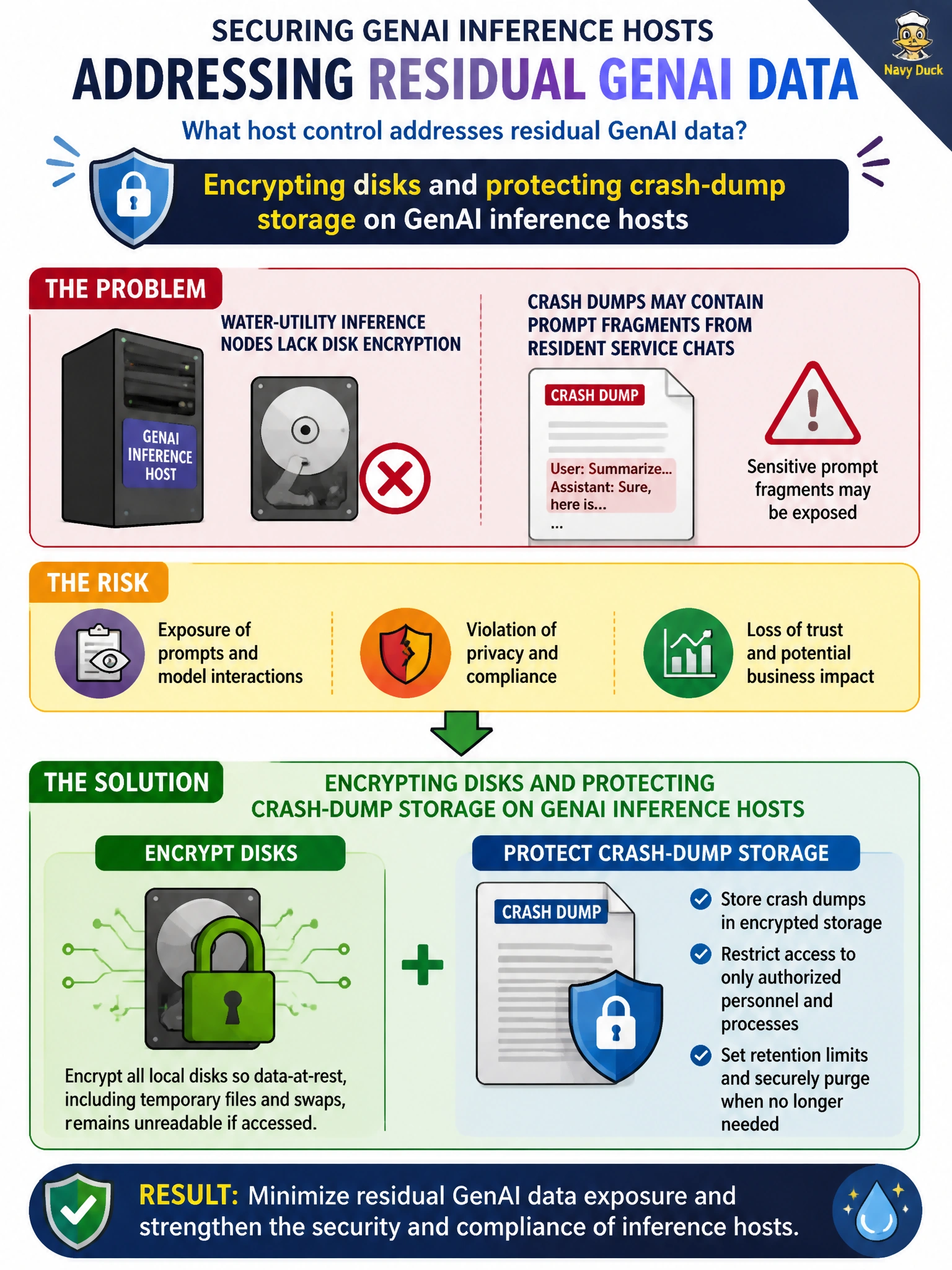
Short Explanation
Unencrypted disks mean prompt leftovers can ride out on a stolen drive or dump file. Encrypt the disks and lock down crash-dump storage. Lobby printouts, killing all logs, and world-readable NFS are not protections.
Full Explanation
Water-utility inference nodes without disk encryption may retain prompt fragments from resident service chats in swap, scratch, or crash dumps. If disks or dump files leave the host—through theft, failed-disk handling, or broad filesystem shares—those residual GenAI artifacts can expose municipal conversation content. Encrypting disks and protecting crash-dump storage on GenAI inference hosts addresses residual data at rest and constrains who can read dumps when hosts fail.
Printing crash dumps to a lobby kiosk for transparency publishes potentially sensitive prompt fragments and is not a host control. Disabling all logging so dumps never form removes operational visibility needed for reliability and incident response; dumps and logs should be controlled, not abolished wholesale. Storing dumps on world-readable NFS accelerates unauthorized access under the guise of forensics speed.
Exam caveat: encryption-at-rest does not replace memory hygiene, secure deletion of scratch, or access control on dump locations—it is one layer for residual host data. Operational check: confirm full-disk or volume encryption on inference nodes, restrict dump paths to admin-only storage, and test that a decommissioned disk cannot yield readable prompt fragments without keys.