
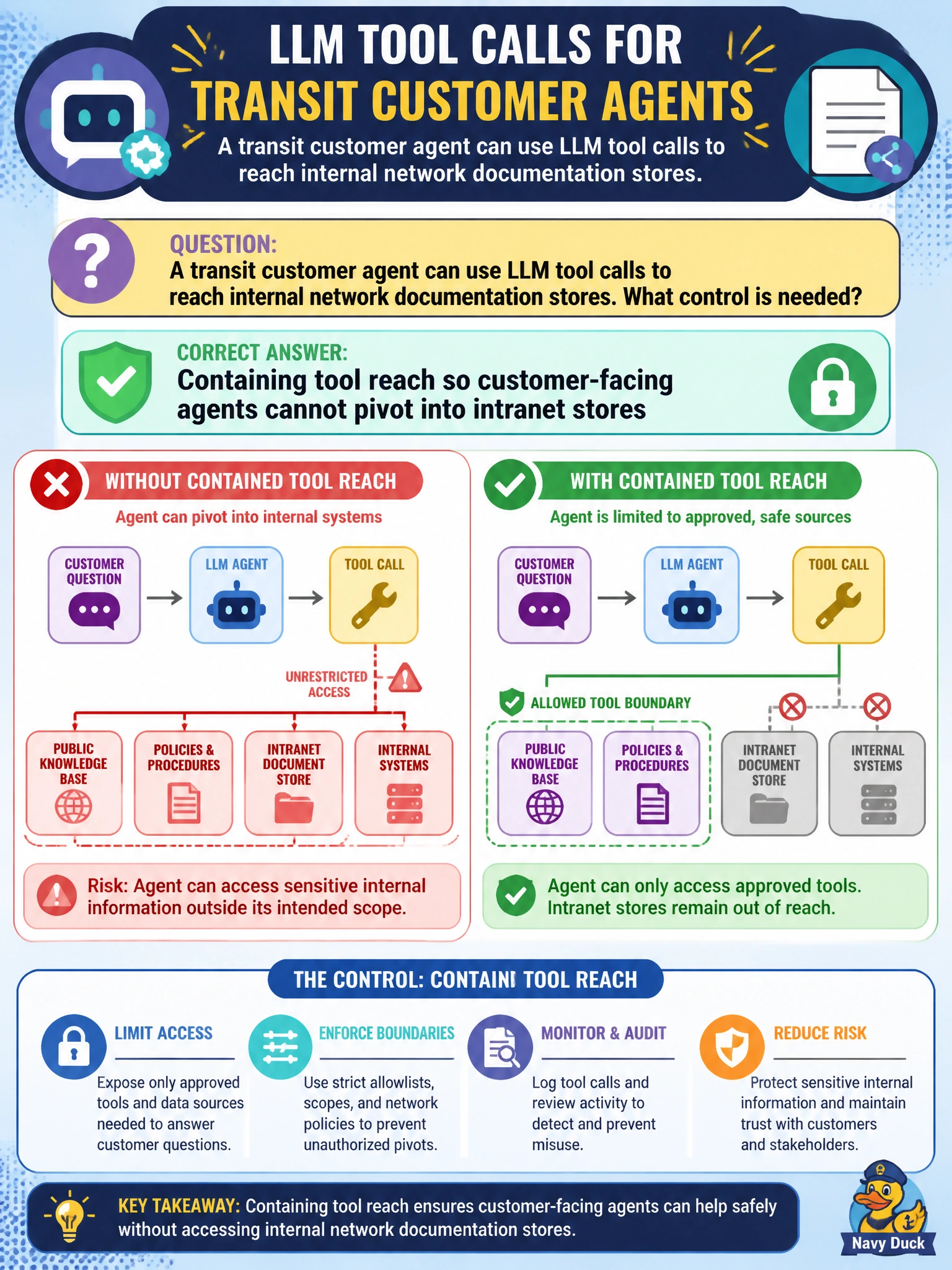
A transit customer agent can use LLM tool calls to reach internal network documentation stores. What control is needed?
Select an answer to reveal the explanation.
Short Explanation
You want the customer agent’s tools to stay on the rider-facing side of the fence, not wander into internal documentation. Containment keeps the agent from pivoting into intranet stores while it helps riders.
Full Explanation
The needed control is containing tool reach so customer-facing agents cannot pivot into intranet stores. An LLM tool call can carry a rider-facing session across a trust boundary into internal documentation, where it may expose operational content. Keep the transit customer agent limited to approved public or customer-tier knowledge, and separate internal wikis and Ops runbooks behind distinct agent roles and network boundaries. Placing intranet wiki credentials in the public mobile app banner fails because it exposes internal credentials to rider clients. Allowing the agent to VPN into SCADA from the customer chat channel fails because it creates a dangerous trust-boundary jump from public chat to industrial systems. Granting the customer agent read-write access to all Ops runbooks by default fails because it gives a rider-facing agent excessive permissions over internal operational content. Exam caveat: tool-reach containment is network and authorization segmentation for agents; retrieval over curated public FAQs is appropriate, but the customer agent must not hold credentials or tool adapters for intranet stores. Practical check: test the customer agent session against intranet wiki and Ops documentation endpoints and confirm access is denied, verify VPN and SCADA tools are not registered to its role, and review tool allowlists after releases.