
Transit ops embed official GTFS feeds plus unofficial blog posts, and the rider assistant prefers the blog for detour advice. What knowledge-source control should security prioritize?
Select an answer to reveal the explanation.
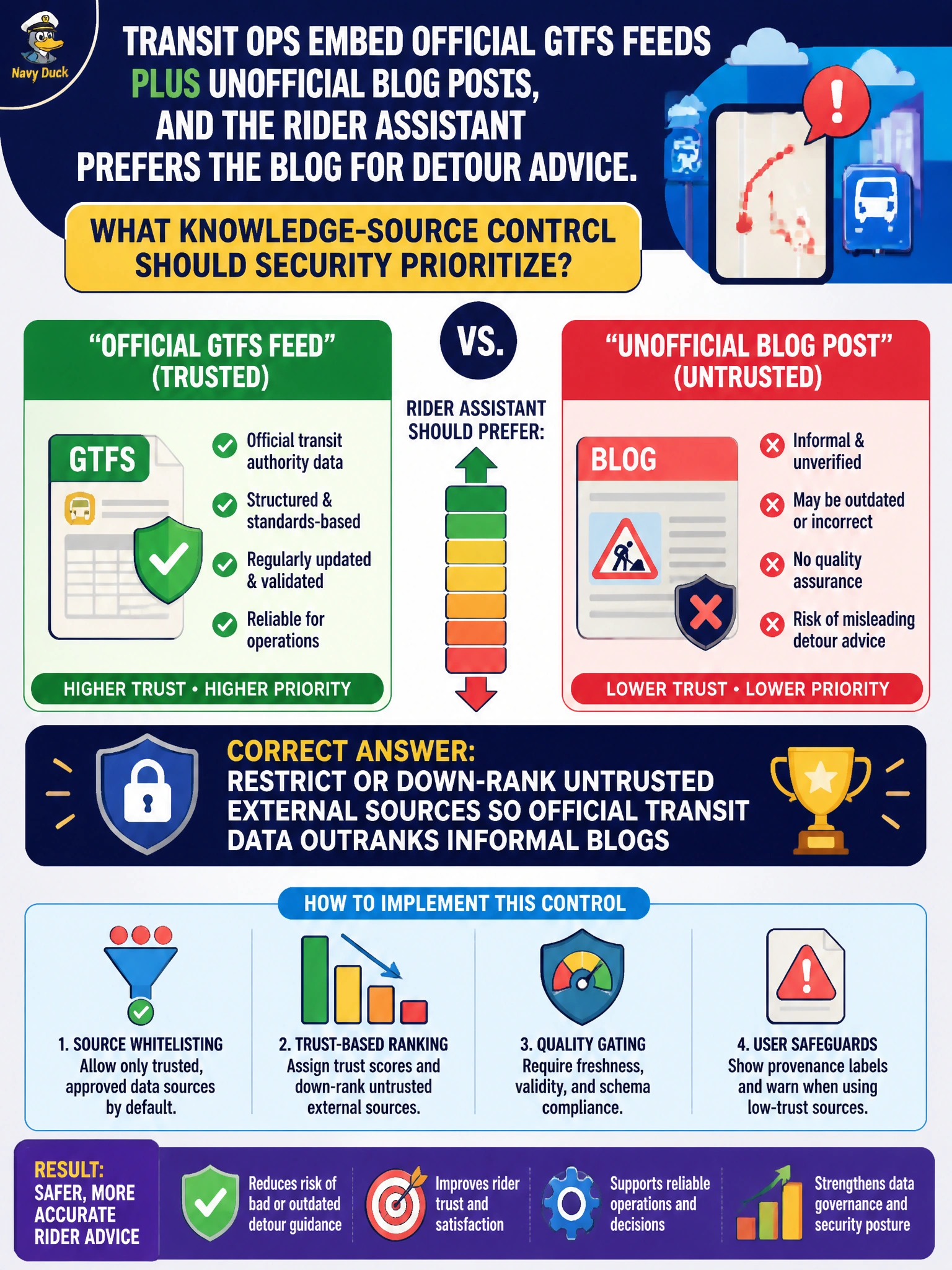
Short Explanation
Mixing official GTFS with random blog posts is like putting gossip next to the signed detour order on the same clipboard. Prefer—and often exclusively use—trusted municipal sources for rider advice.
Full Explanation
Restricting or down-ranking untrusted external sources so official transit data outranks informal blogs is the knowledge-source control to prioritize. Rider assistants should ground detour advice in official GTFS and agency notices. When unofficial blog posts share the same retrieval pool and win ranking, the assistant can prefer rumor over signed operations data, sending riders to wrong stops or unsafe routes. Trust tiers, allowlists, and ranking bias toward official municipal feeds protect operational correctness and public safety messaging.
Raising temperature so blog and GTFS answers “average out” fails by concept: temperature does not adjudicate source trust and can make unsafe advice more fluent. Blocking all GTFS ingestion because structured feeds are “unsafe for RAG” fails because GTFS is the authoritative transit schedule source; discarding it leaves weaker informal content. Fine-tuning exclusively on blog posts fails by amplifying untrusted narrative style and content instead of privileging official civic data.
Exam caveat: For transit and other safety-adjacent municipal RAG, source trustworthiness outranks conversational tone. Prefer official feeds; treat blogs as untrusted unless explicitly curated.
Operational check: Tag GTFS and agency notices as authoritative, exclude or heavily down-rank untrusted blogs from the rider index, run detour queries and confirm official sources dominate citations, and monitor ranking for informal pages that keyword-match service alerts.