
An agent that generates pull request descriptions was producing descriptions that were too brief — averaging 2 sentences. The team modified the system prompt to strongly emphasize detailed explanations. After the change, the agent began producing descriptions averaging 800 words that reviewers find too verbose and time-consuming to read. What tuning mistake was made?
Select an answer to reveal the explanation.
Short Explanation and Infographic
Fixing 'too quiet' by turning the volume all the way up is not calibration — it's just trading one problem for another. Tuning should be surgical: diagnose which specific cases were too brief, identify what was missing, and add targeted guidance for those patterns rather than globally amplifying verbosity across all outputs.
Full explanation below image
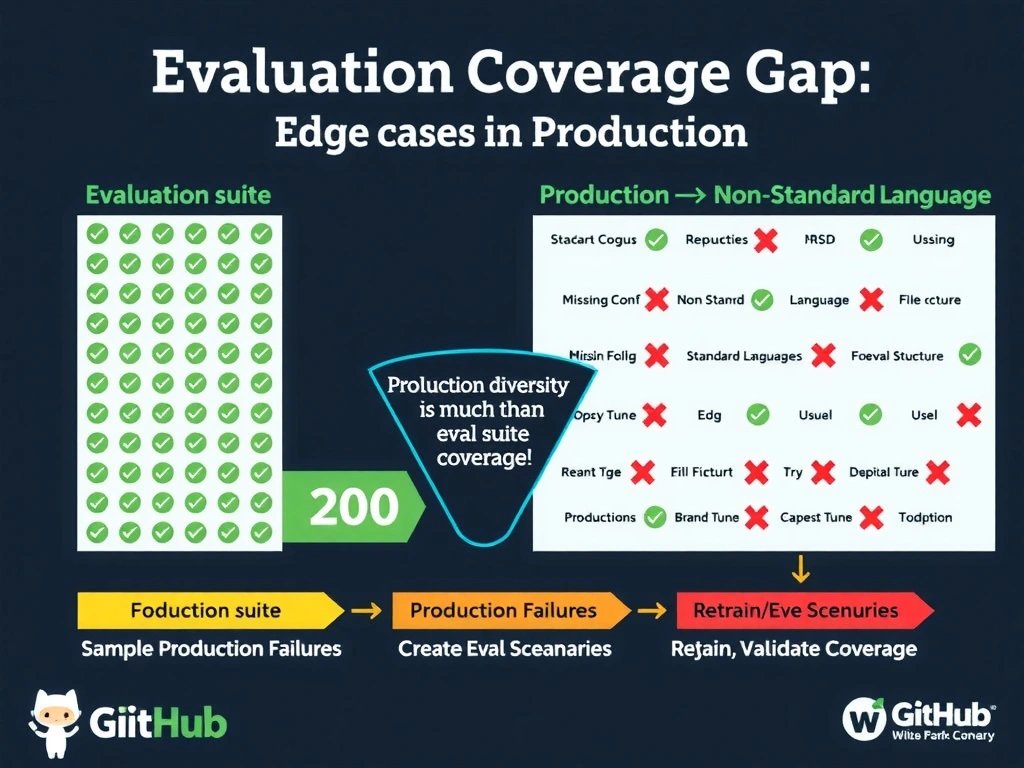
Full Explanation
Over-correction is a common tuning failure where a valid problem is addressed with changes that are too broad or too strong, causing the behavior to swing past the target to the opposite extreme. In this case, 'too brief' was the diagnosed problem, and 'strongly emphasize detailed explanations' was the blunt instrument applied globally.
Surgical tuning looks different: examine the actual failing examples (the 2-sentence descriptions), identify what they were missing (context about the change's purpose, affected components, testing notes), and add specific guidance about those elements. For example: 'Include the following sections in each PR description: Summary (1-2 sentences), Changes Made (bullet list of affected files/functions), Testing Approach, and Known Limitations if any.'
This structured guidance provides a floor without an open-ended directive to be 'detailed,' which the model interprets as 'more is better.'
Option A (temperature change) affects randomness and diversity in outputs, not output length. Temperature would not address the brevity problem.
Option C (larger context window) determines how much input the model can process, not the length of its output. Context window size is not the cause of 2-sentence outputs and would not fix the verbosity problem.
Option D (different base model) is an expensive architectural change that should be a last resort, not the first response to a tuning failure. The problem is identifiable as a prompt configuration issue, not a fundamental model capability gap.