
How can Dependabot auto-triage rules help security teams manage high volumes of dependency alerts across an enterprise?
Select an answer to reveal the explanation.
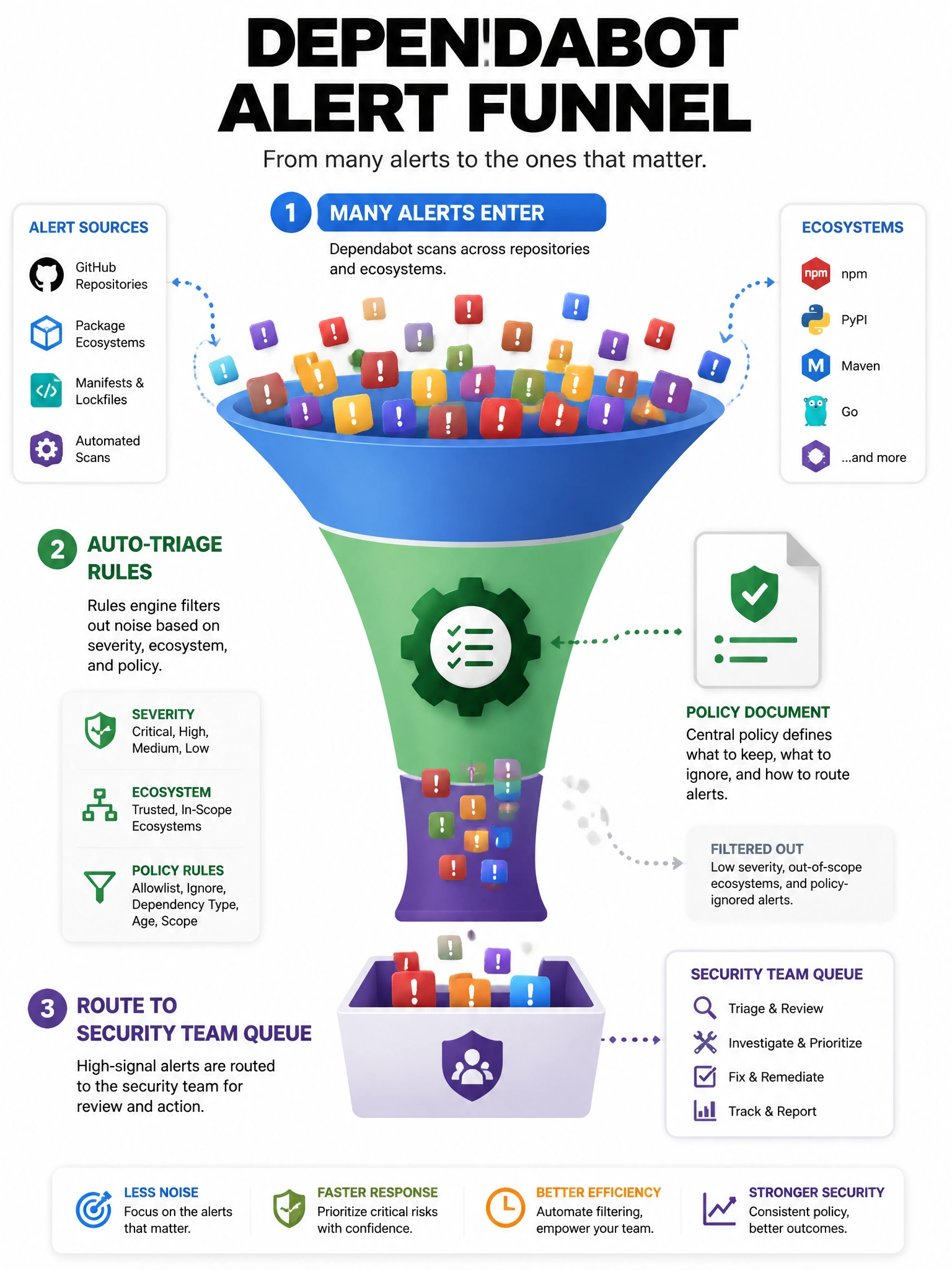
Short Explanation and Infographic
Dependabot auto-triage rules dismiss or prioritize alerts that match criteria you define so humans focus on real residual risk. They do not disable the dependency graph enterprise-wide or force-push fixes.
Full explanation below image
Full Explanation
Enterprises often face thousands of Dependabot alerts, many of which are low risk, out of scope, or already accepted under policy. Auto-triage rules let administrators automatically dismiss or otherwise handle alerts that match criteria such as package ecosystem, severity, or other supported conditions, shrinking the queue without turning off Dependabot entirely. Rules do not disable the dependency graph enterprise-wide, do not force-push remediations without review, and do not eliminate the need for broader software composition governance. Security teams should document which dismissals are allowed, review rule effectiveness periodically, and keep high-severity production alerts under mandatory human ownership. Pair auto-triage with Security Overview dashboards so residual risk remains visible to leadership.