
What is the GitHub Enterprise Server 'nomad' and 'consul' service and why are they important?
Select an answer to reveal the explanation.
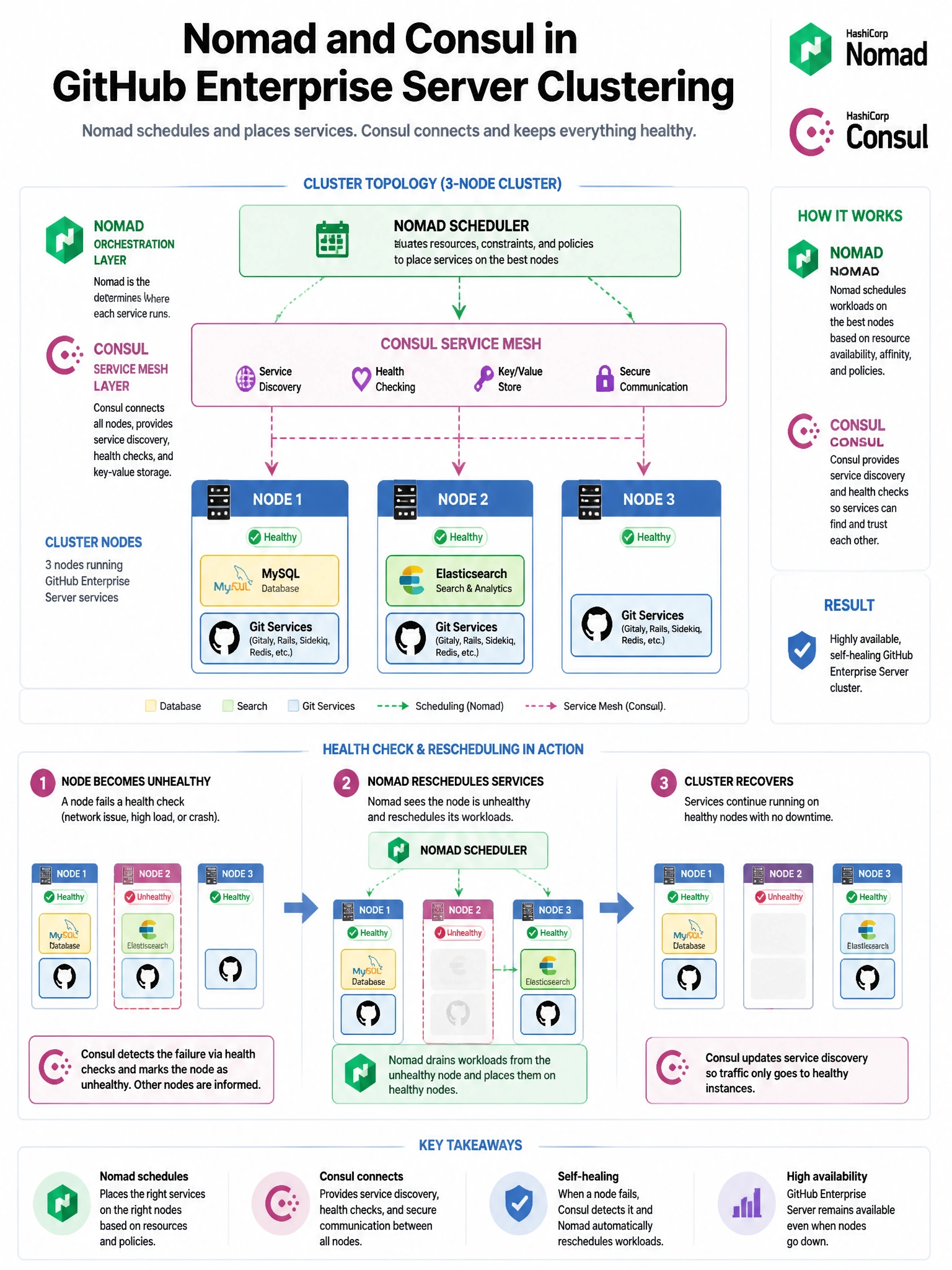
Short Explanation and Infographic
Nomad and Consul are infrastructure tools embedded in GHES for clustering. Nomad schedules which services run on which nodes; Consul handles service discovery so nodes can find each other. When a cluster node has issues, you might see Nomad/Consul errors in the admin console.
Full explanation below image
Full Explanation
GitHub Enterprise Server uses HashiCorp's Nomad and Consul as internal infrastructure components for cluster management: (1) Nomad — a workload orchestrator that schedules and manages GitHub's internal services across cluster nodes. It determines which services run on which nodes and handles rescheduling when nodes fail. (2) Consul — a service mesh tool providing service discovery and health checking. Services register with Consul so other services can find their location dynamically, enabling the cluster to route requests appropriately. These are embedded in GHES and not separate installations — they're internal implementation details of GHES clustering. Administrators might encounter them when: reading cluster status output, troubleshooting node failures, or reviewing GHES system logs. Understanding their roles helps diagnose clustering issues.