
What is the GitHub Enterprise Server 'replica' node and how does it differ from a cluster node?
Select an answer to reveal the explanation.
Short Explanation and Infographic
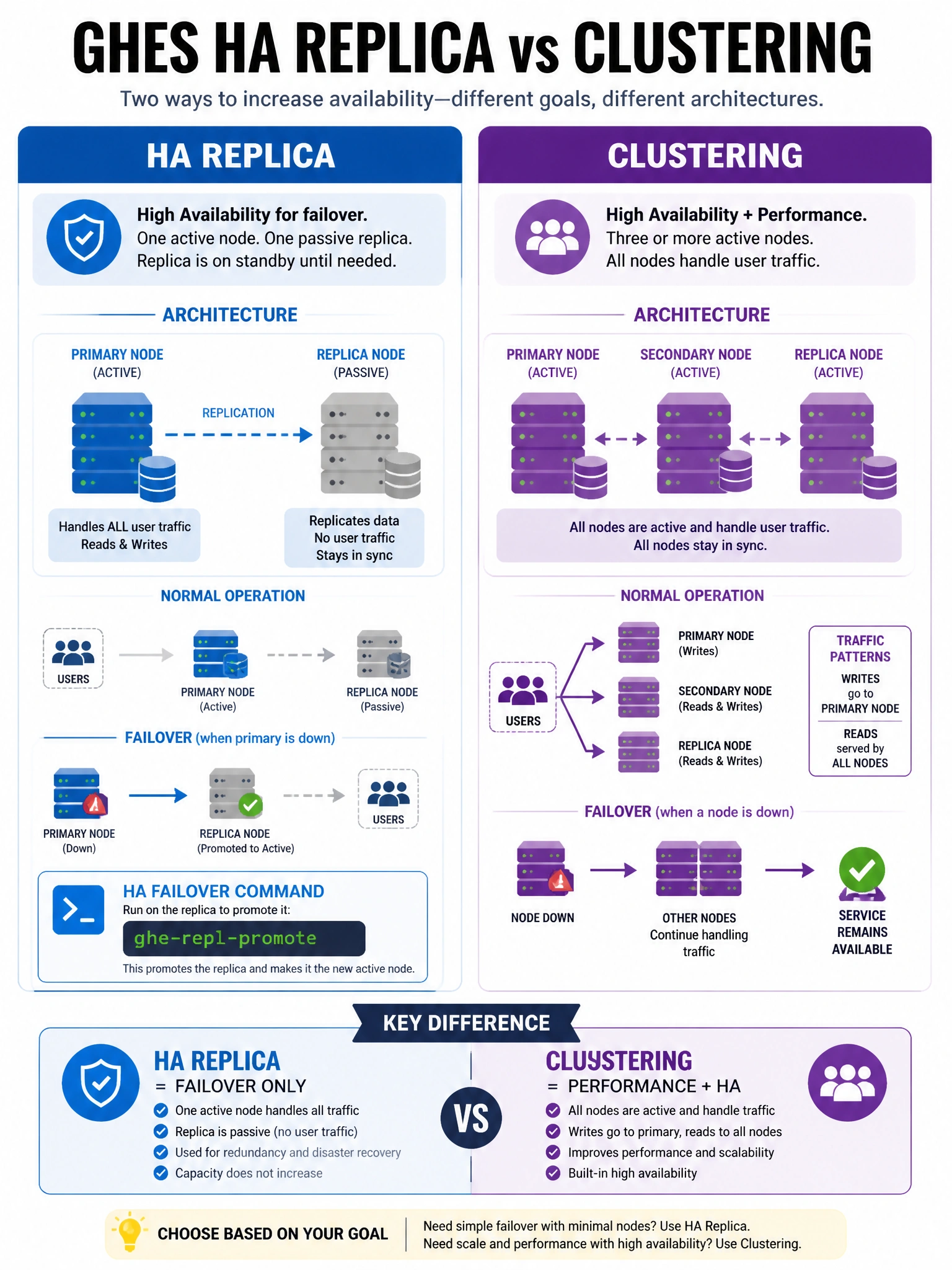
The HA replica is your hot standby. It mirrors everything from the primary in real time but stays dark — it doesn't serve users. If the primary fails, you promote the replica and it takes over. Cluster nodes are different: they actively serve traffic together.
Full explanation below image
Full Explanation
In GitHub Enterprise Server High Availability (HA), a replica node is a passive standby that: (1) Continuously receives replicated data from the primary via streaming replication. (2) Does NOT serve user traffic under normal conditions. (3) Can be promoted to primary if the primary fails (using 'ghe-repl-promote'). (4) Provides geographic redundancy if placed in a different datacenter. This is fundamentally different from cluster nodes where multiple active nodes collectively serve traffic. In HA: 2 nodes total (1 active primary, 1 passive replica). In clustering: 3+ nodes all serving traffic (writes to primary, reads possibly distributed). The distinction: HA=warm standby for failover; Clustering=active-active for performance and resilience.