
How do GitHub Actions 'workflow templates' benefit organizations?
Select an answer to reveal the explanation.
Short Explanation and Infographic
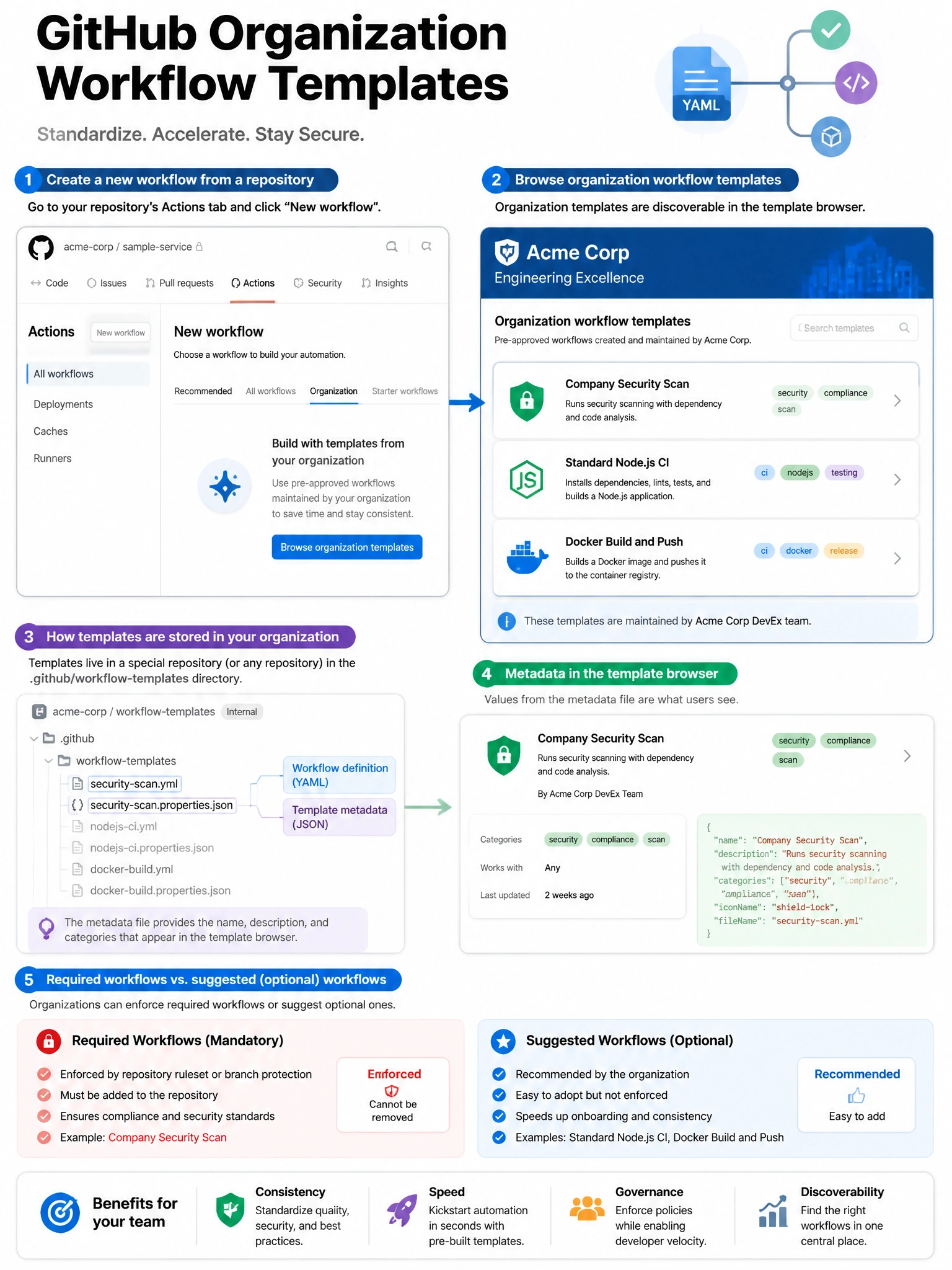
Workflow templates are your org's suggested starting points for CI/CD. When a developer clicks 'New workflow' in a repo, your org's templates show up alongside GitHub's suggestions. It's a gentle governance nudge — here's how we like to do things here.
Full explanation below image
Full Explanation
GitHub organization workflow templates are predefined workflow files stored in the organization's .github repository (under the workflow-templates directory). When a user creates a new workflow file in any repository within the organization, these templates appear as suggestions alongside GitHub's built-in workflow templates. Benefits: (1) Consistency — teams start from approved, organization-specific CI/CD patterns. (2) Discoverability — engineers don't need to copy workflows from other repos. (3) Best practices — templates can include security scanning, testing requirements, and deployment patterns. (4) Metadata — templates can include category, name, and description for easy browsing. Templates are suggestions, not mandatory (for mandatory enforcement, use Required Workflows). They require a .github repository with proper file structure in the organization.