
Which GitHub feature allows organizations to define template repositories that users can use as starting points for new repositories?
Select an answer to reveal the explanation.
Short Explanation and Infographic
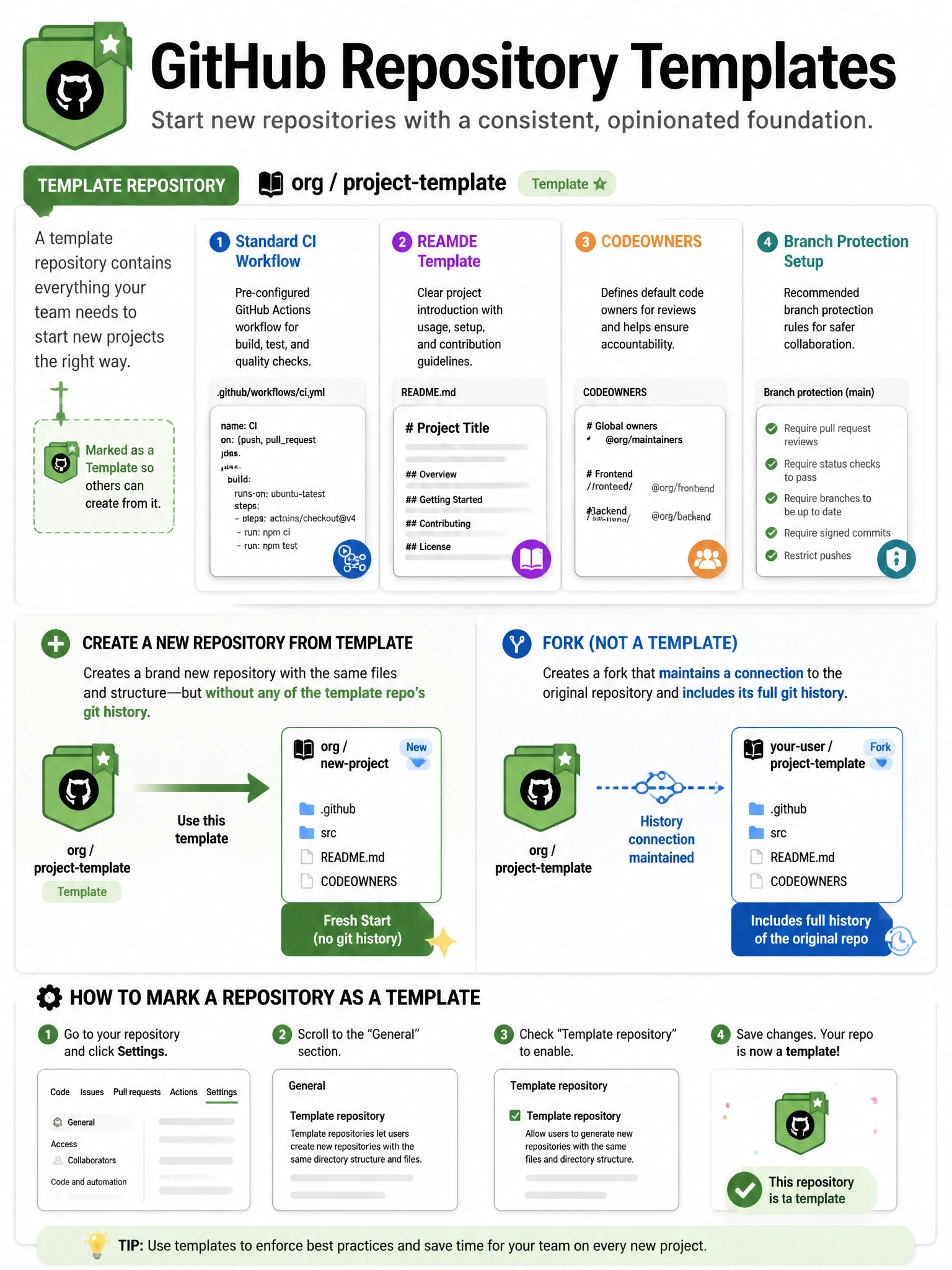
Template repositories are your org's standardized starting blocks. Mark a repo as a template and anyone can spin up a new repo from it — with your preferred structure, CI workflows, and docs already in place. No more copy-pasting project skeletons.
Full explanation below image
Full Explanation
GitHub's Repository Templates feature allows any repository to be marked as a template. When a user creates a new repository, they can select a template repository as the starting point. The new repository gets a copy of all files and directory structure from the template. Key differences from forking: (1) Template-based repositories are not forks and have no upstream connection. (2) The entire commit history is NOT copied — the new repo starts with a single commit. (3) Template repos can be organization-owned for standardized project initialization. Common uses include starter projects, CI/CD boilerplate, documentation templates, and security/compliance baseline configurations. Clones and forks maintain git history connections.