
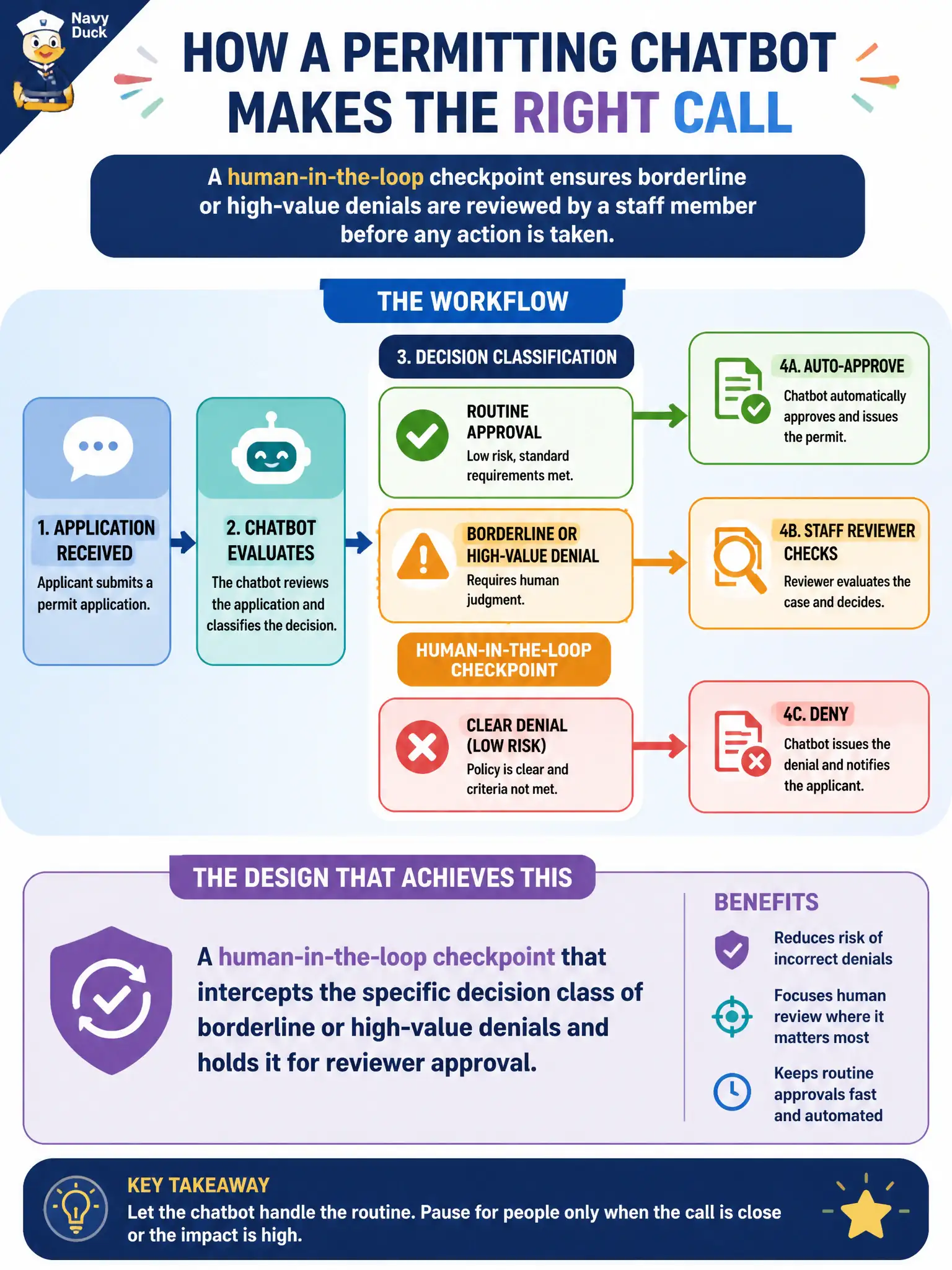
A permitting chatbot is authorized to auto-approve routine applications but must pause and route borderline or high-value permit denials to a staff reviewer before acting. What design achieves this?
Select an answer to reveal the explanation.
Short Explanation
Think of a HITL checkpoint like a drawbridge that only comes up for the big trucks — routine cars drive straight through, but anything oversized gets held for the operator to check first. Reviewing everything after the fact is like letting every truck cross and inspecting the bridge afterward: too late if it fails. And stopping every single vehicle, big or small, just creates a jam nobody asked for.
Full Explanation
A human-in-the-loop checkpoint targeted at the specific decision class the scenario cares about, borderline or high-value denials, holds exactly those consequential actions for review before they execute, which matches the requirement to pause before acting rather than after. Letting the agent issue every denial and generating a post-hoc summary report inverts the control: by the time staff review it, the denial has already reached the applicant, so the review can no longer prevent a wrong outcome, only document it. Raising the agent's confidence threshold uniformly affects every decision type, including the routine approvals that were never supposed to need review, which slows the whole system down without targeting the actual risk the board cares about. Routing every decision through a reviewer, including routine approvals, technically satisfies safety but abandons the stated goal of letting routine cases auto-approve, creating a reviewer bottleneck that defeats the purpose of automating the routine path at all. A scope caveat: the checkpoint's effectiveness depends on the criteria for "borderline or high-value" being defined precisely enough that genuinely risky cases aren't misclassified as routine. As an operational check, an architect can submit a synthetic high-value denial through the pipeline and confirm it is held for reviewer action rather than auto-issued.