
A housing authority wants caseworker phone-call recordings transcribed and indexed so the agent can answer staff FAQs about common casework scenarios. What should the team configure?
Select an answer to reveal the explanation.
Short Explanation
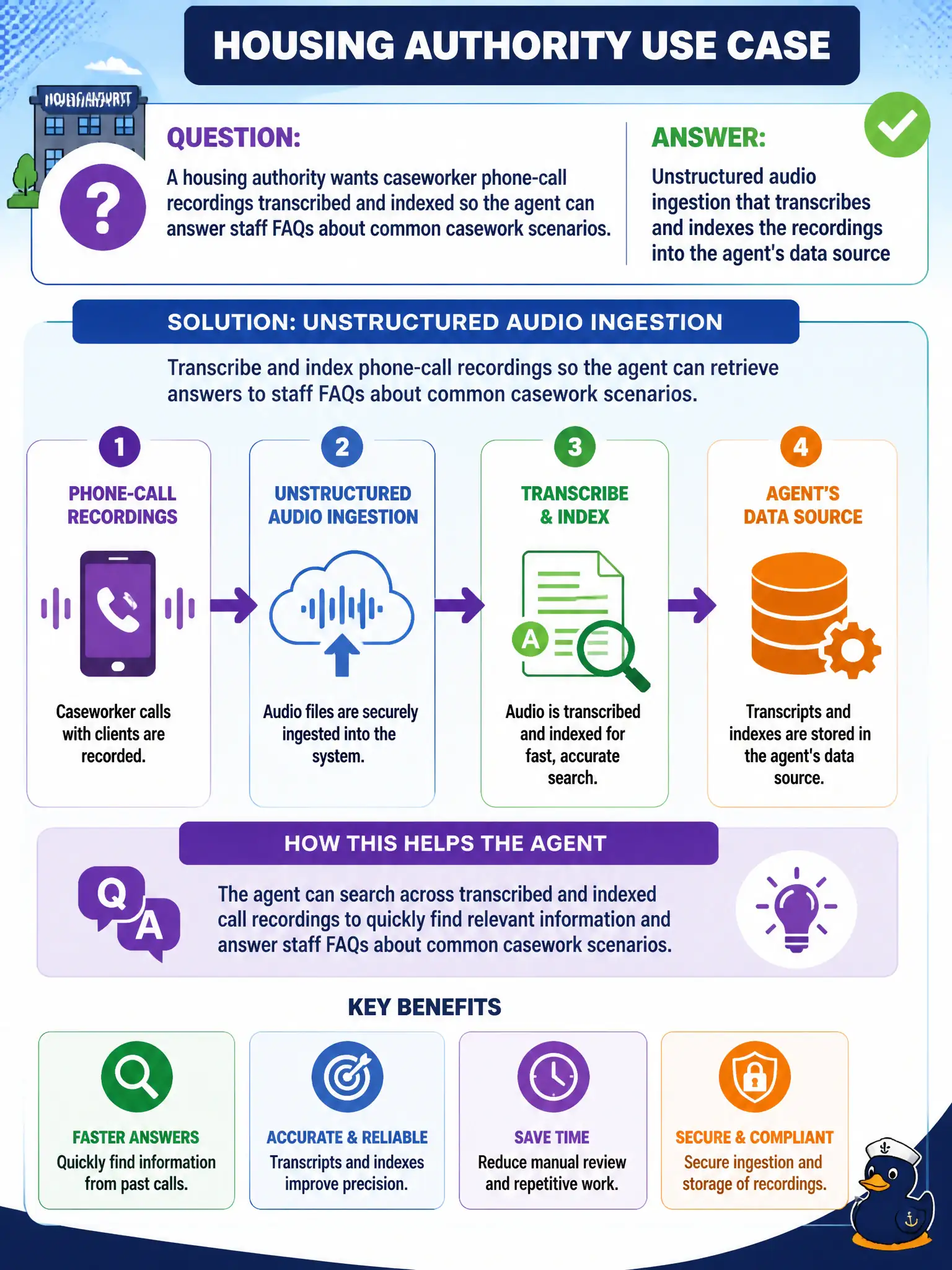
A pile of call recordings is only useful once it's turned into text an agent can actually search, much like a stack of unlabeled cassette tapes only helps once someone transcribes what's on them. Unstructured audio ingestion does that transcription-and-indexing work automatically, turning the calls into a real knowledge source.
Full Explanation
Unstructured audio ingestion transcribes recorded audio and indexes the resulting text into the agent's data source, which is the mechanism that turns raw caseworker call recordings into something staff can query for answers about common scenarios, rather than leaving that knowledge locked inside untranscribed files. A transition route that plays back the original recording for each FAQ requires staff to already know which recording to find and then listen through it themselves, which defeats the purpose of giving the agent searchable knowledge in the first place. System instructions summarizing call outcomes from memory rely on someone manually authoring and maintaining those summaries, which doesn't scale across a growing archive of calls and can drift out of sync with what was actually said. A no-input event handler tuned to phone-call silence addresses live conversational timeouts, not the separate task of processing an existing archive of past recordings. Scope caveat: transcription accuracy should be spot-checked, especially for calls with background noise or multiple speakers, before staff rely on the indexed answers. Operational check: ask the agent about a specific casework scenario known to appear in one of the recordings and confirm the answer reflects that call's actual content.