
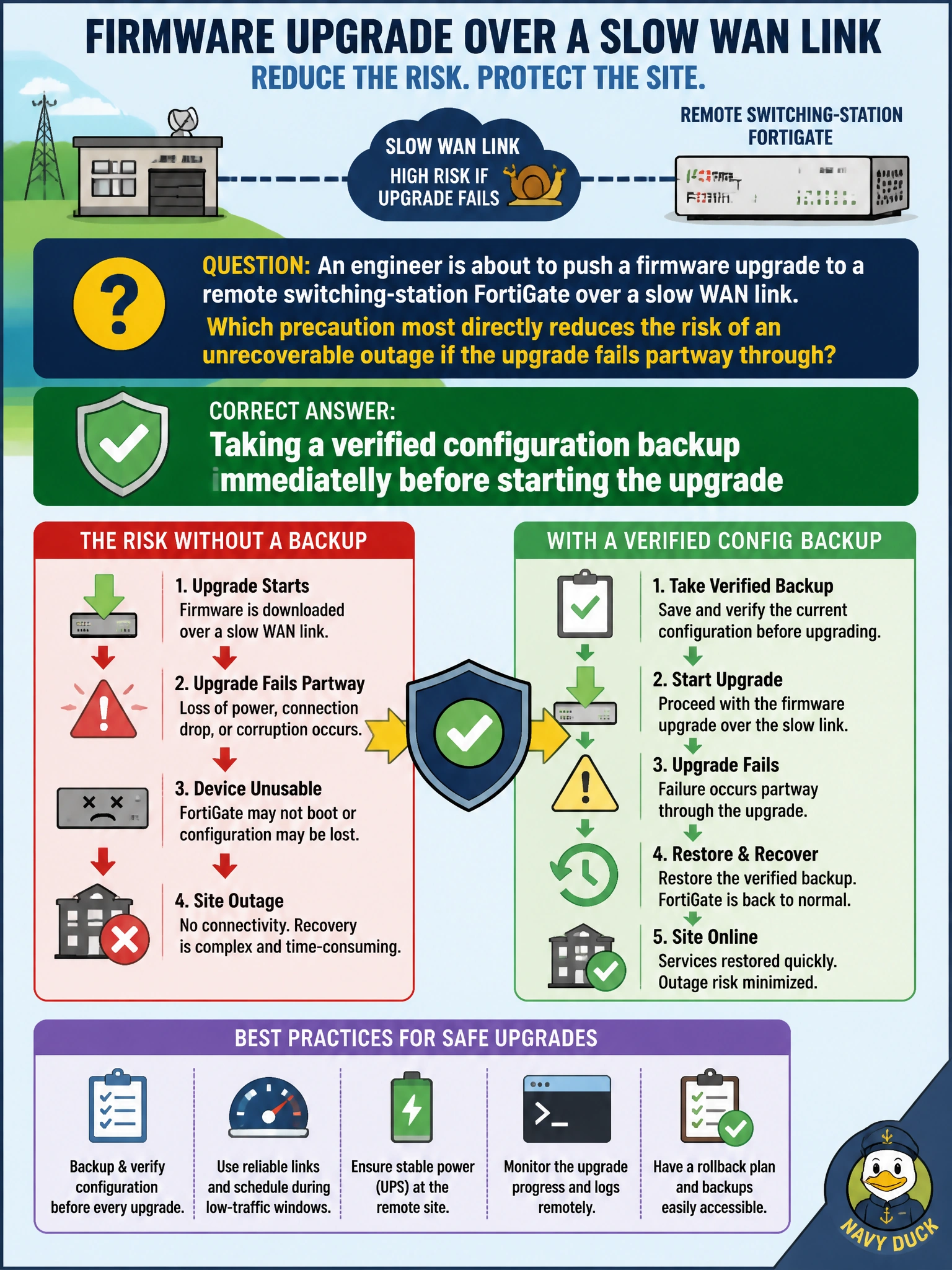
An engineer is about to push a firmware upgrade to a remote switching-station FortiGate over a slow WAN link. Which precaution most directly reduces the risk of an unrecoverable outage if the upgrade fails partway through?
Select an answer to reveal the explanation.
Short Explanation
A firmware upgrade over a shaky link is exactly when things can go sideways, and a fresh, verified backup taken right before starting is the difference between a quick recovery and rebuilding a remote box's configuration from scratch. It's the one precaution aimed directly at the failure scenario, not a side concern.
Full Explanation
A verified configuration backup taken immediately before a firmware upgrade gives the engineer a known-good recovery point that matches the device's exact pre-upgrade state, which is what actually shortens recovery time if the upgrade process fails or the device needs to be reset and reconfigured, a precaution aimed squarely at the failure mode described. Increasing FortiGuard polling frequency affects how often signature content refreshes and has no relationship to firmware upgrade risk or recovery. Disabling SNMP polling during the window might reduce monitoring noise or false alerts, but it doesn't reduce the actual risk of an unrecoverable outage; if anything, it removes visibility exactly when it might be useful. Raising the local logging severity threshold changes what gets recorded to disk during the window, which could help with post-incident review but does nothing to protect against losing the configuration itself. The operational caveat: a backup is only as good as its verification, so confirming the backup file completed successfully and is stored somewhere reachable after the upgrade, not solely on the device being upgraded, is the practical check before proceeding.