
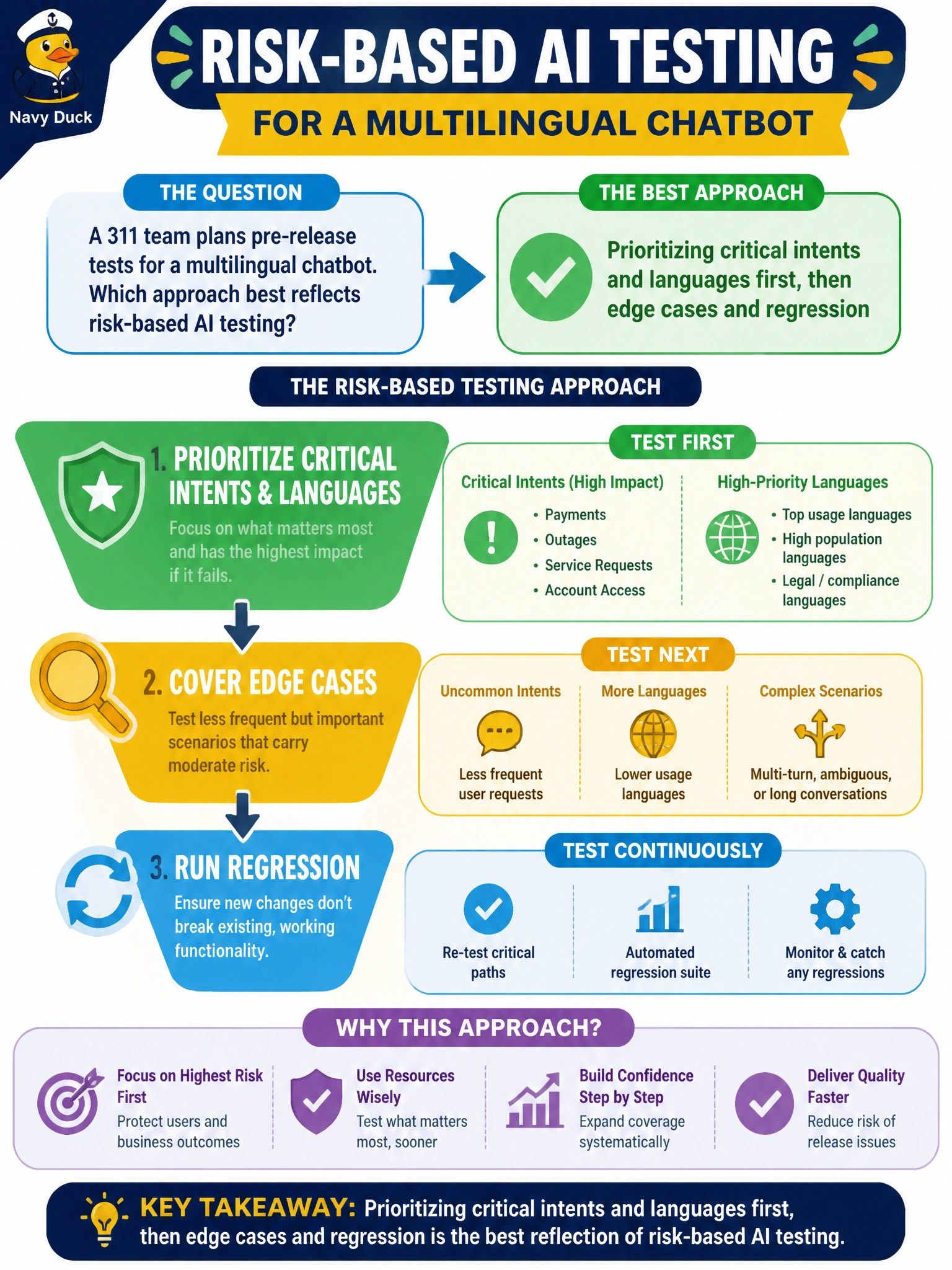
A 311 team plans pre-release tests for a multilingual chatbot. Which approach best reflects risk-based AI testing?
Select an answer to reveal the explanation.
Short Explanation
Test the calls that matter first—trash pickup, emergencies, top languages—then chase edge cases. It’s like fixing the main water main before polishing a decorative fountain.
Full Explanation
A 311 team planning pre-release tests for a multilingual chatbot should apply risk-based AI testing: prioritize critical intents and languages first, then expand to edge cases and regression. Trash pickup, emergency redirects, accessibility needs, and high-volume languages carry greater resident harm if wrong; testing them early concentrates limited QA where municipal risk is highest before chasing rare joke prompts.
Testing only rare joke prompts while ignoring common service intents inverts risk and leaves the journeys residents actually use unvalidated. Skipping language coverage because English volume is highest today excludes communities the chatbot claims to serve and can hide unequal failure modes. Running no regression tests after each model or content update ignores how retrieval corpora and prompts change behavior between releases.
Exam caveat: risk-based civic AI testing sequences coverage by resident harm and service criticality, not by novelty or ease. Operational check: build a prioritized intent/language matrix, execute critical cases before release gates, and require regression on those same cases after every model or content change—with failures blocking go-live.