
A city PIO must brief media after a resident-facing bot gaffe. Which communications approach best fits AI incident response?
Select an answer to reveal the explanation.
Short Explanation
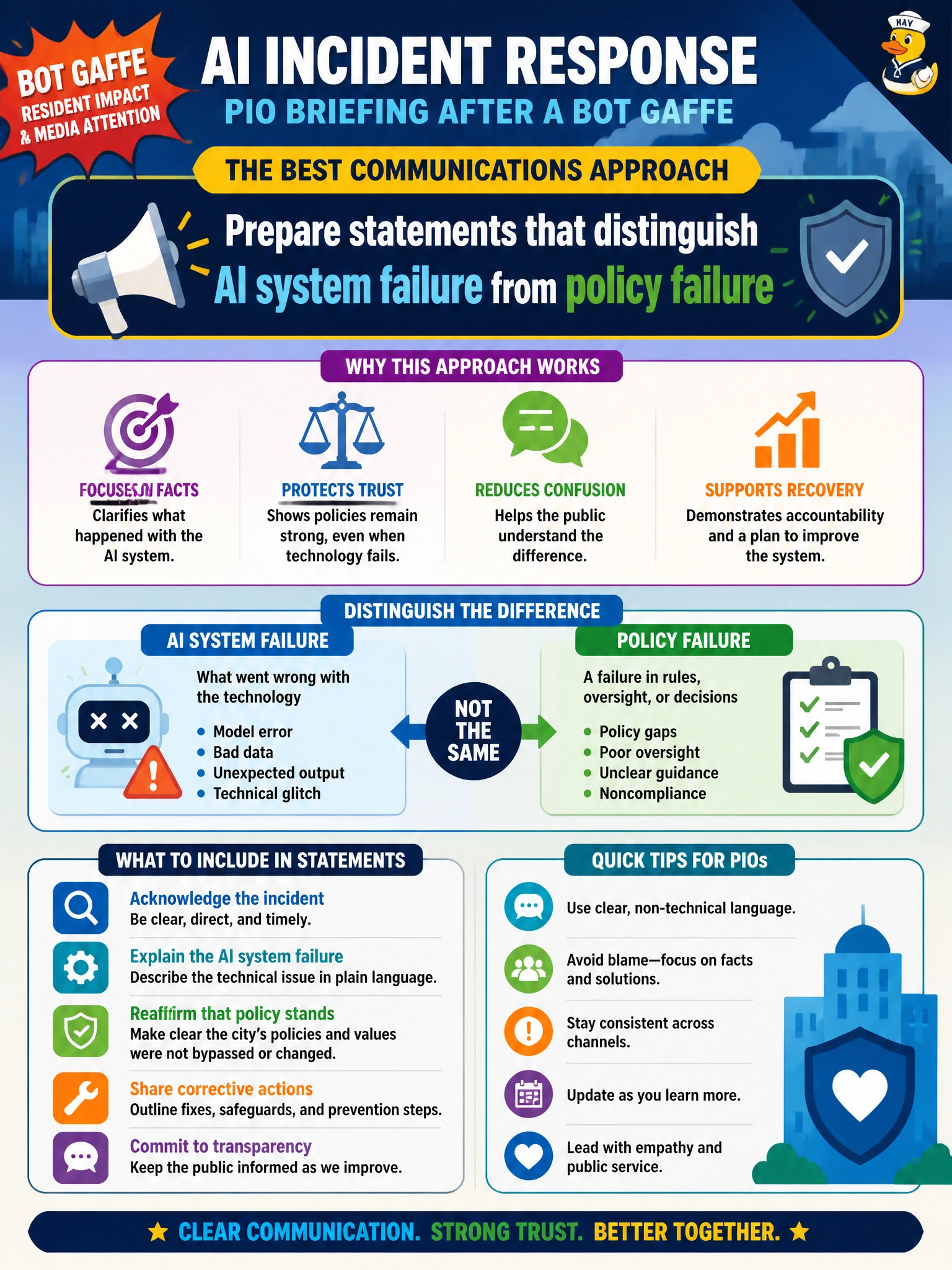
When a bot trips in public, the PIO’s job is clear talk: was it the system misfiring or a policy call? Separate those so the city doesn’t look like it’s spinning or hiding.
Full Explanation
When a city PIO briefs media after a resident-facing bot gaffe, AI incident communications must separate technical failure from policy failure. Preparing statements that distinguish whether the system misfired (hallucination, retrieval error, wrong grounding) from whether the city chose a contested policy clarifies causes, remedies, and accountability for residents and reporters. That framing reduces spin perceptions and supports corrective action without collapsing every error into either denial or scapegoating.
Claiming the city has no AI systems and refusing factual clarification fails transparency and usually collapses under evidence, damaging trust further. Blaming individual residents for misunderstanding every automated reply shifts responsibility onto the public and ignores design, testing, and oversight duties. Releasing raw model weights to the press as the primary corrective action confuses disclosure theater with remediation; weights rarely explain a specific gaffe and can create new security and privacy risks.
Exam caveat: effective civic AI incident communications explain what failed, why it matters to residents, and what changes—systemic or policy—are underway. Operational check: before the briefing, draft two sentence templates (system failure vs policy choice), align with legal and service owners, and verify the public FAQ does not contradict the PIO narrative.