
311 designs business continuity for its AI assistant. What BC planning step comes first?
Select an answer to reveal the explanation.
Short Explanation
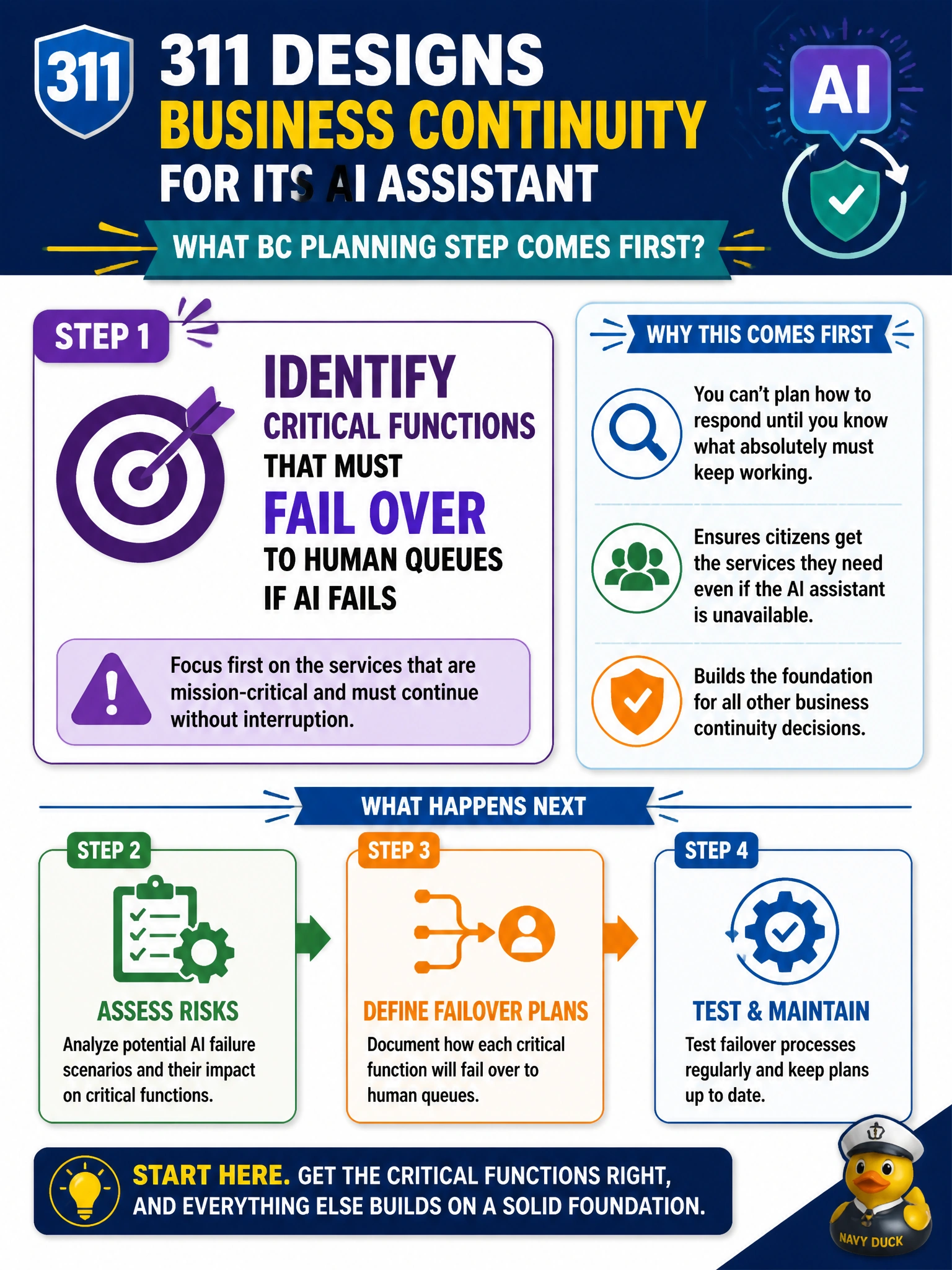
BC starts by naming what must keep moving. List critical 311 functions that flip to human queues when AI dies—hope isn’t a failover plan.
Full Explanation
Business continuity for a 311 AI assistant starts by identifying critical functions that must fail over to human queues if AI fails—intake of urgent service requests, accessibility-assisted filing, language access, and high-risk categories that cannot wait. Naming critical functions first drives staffing, telephony, and queue design; without that inventory, failover is wishful.
Assuming AI never fails so no failover list is needed fails BC fundamentals: every component fails eventually. Failing over only marketing dashboards and ignoring resident queues fails priority: resident service queues are the critical path, not internal vanity metrics. Deleting human staffing plans to force AI-only continuity fails by removing the very resilience BC requires.
Exam caveat: BC for civic AI begins with business-impact style identification of critical resident functions, then maps AI dependencies and human failover. Operational check: maintain a critical-function list with AI dependency flags, defined human-queue failover procedures, staff surge plans, and periodic tests that simulate AI assistant unavailability during peak 311 load. Rank functions by resident harm if delayed, note peak-hour staffing minimums for human queues, and ensure contracts with AI vendors include outage notification duties that feed the city’s BC activation criteria.