
After a utility AI outage, what post-incident metrics should the review capture?
Select an answer to reveal the explanation.
Short Explanation
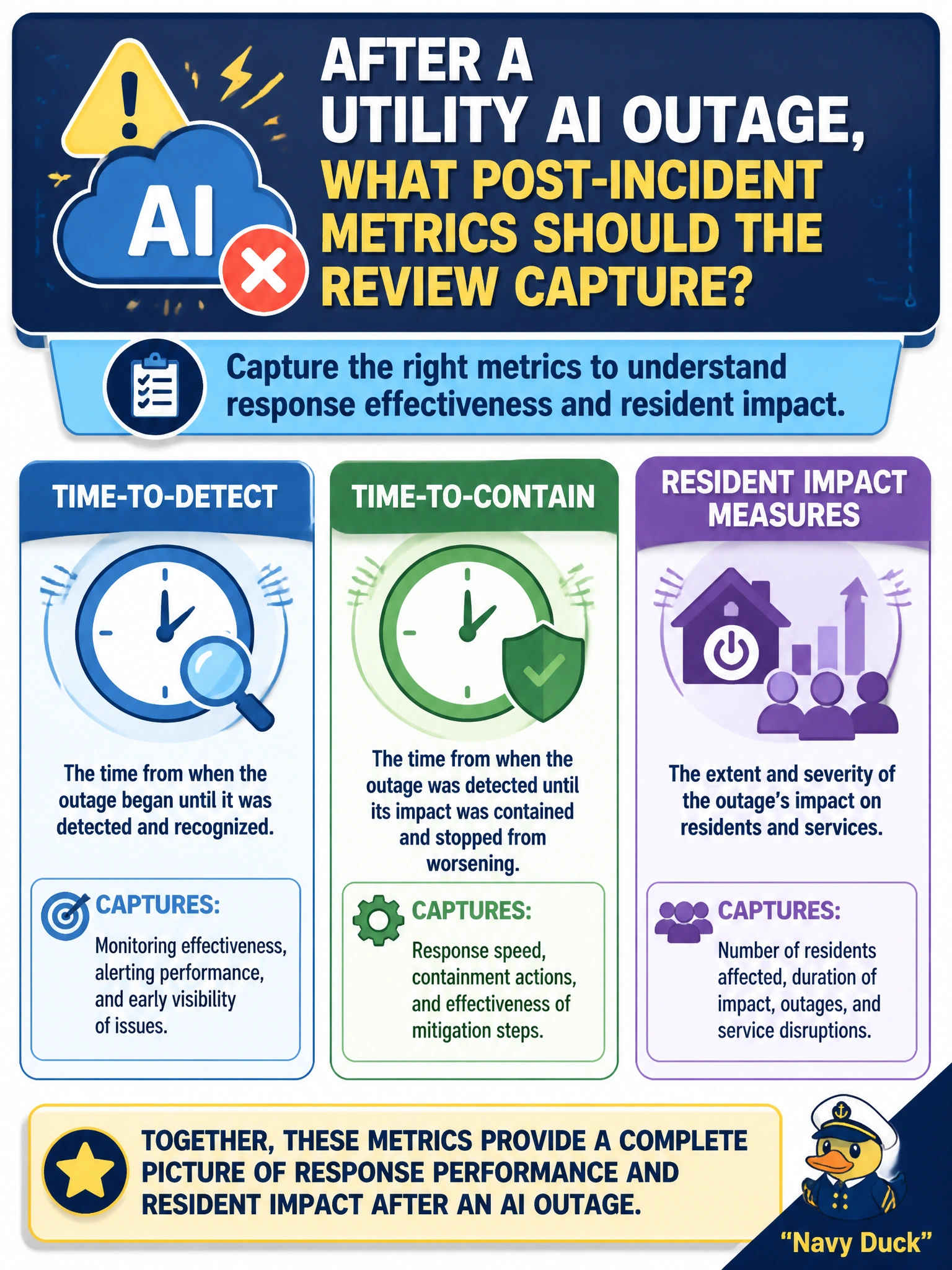
After the smoke clears, clock the response. Capture time-to-detect, time-to-contain, and resident impact—coffee counts aren’t IR metrics.
Full Explanation
Post-incident review after a utility AI outage should capture time-to-detect, time-to-contain, and resident impact measures—outage duration affecting billing, outage maps, leak alerts, or customer chat; volume of failed interactions; and equity of impact across districts. Those metrics drive learning and investment; they are the operational truth of the event.
Counting only coffee cups consumed by on-call staff fails as an IR metric: morale trivia is not detection or impact measurement. Capturing only the vendor’s marketing NPS unrelated to the outage fails relevance; vendor brand surveys do not describe this incident’s performance. Claiming no metrics because AI incidents cannot be measured fails conceptually: AI services have clocks, logs, and resident outcomes like any other critical system.
Exam caveat: classic IR KPIs (detect/contain) still apply to AI, supplemented by resident-impact framing for civic utilities. Operational check: require post-incident reports to include TTD, TTC, and resident-impact fields pulled from monitoring and 311/utility contact systems; trend them across incidents to justify detection tooling and failover investment. Compare those metrics against playbook targets, assign corrective actions with due dates, and brief utility leadership on whether detection tooling, paging, or human failover staffing needs investment before the next peak season.