
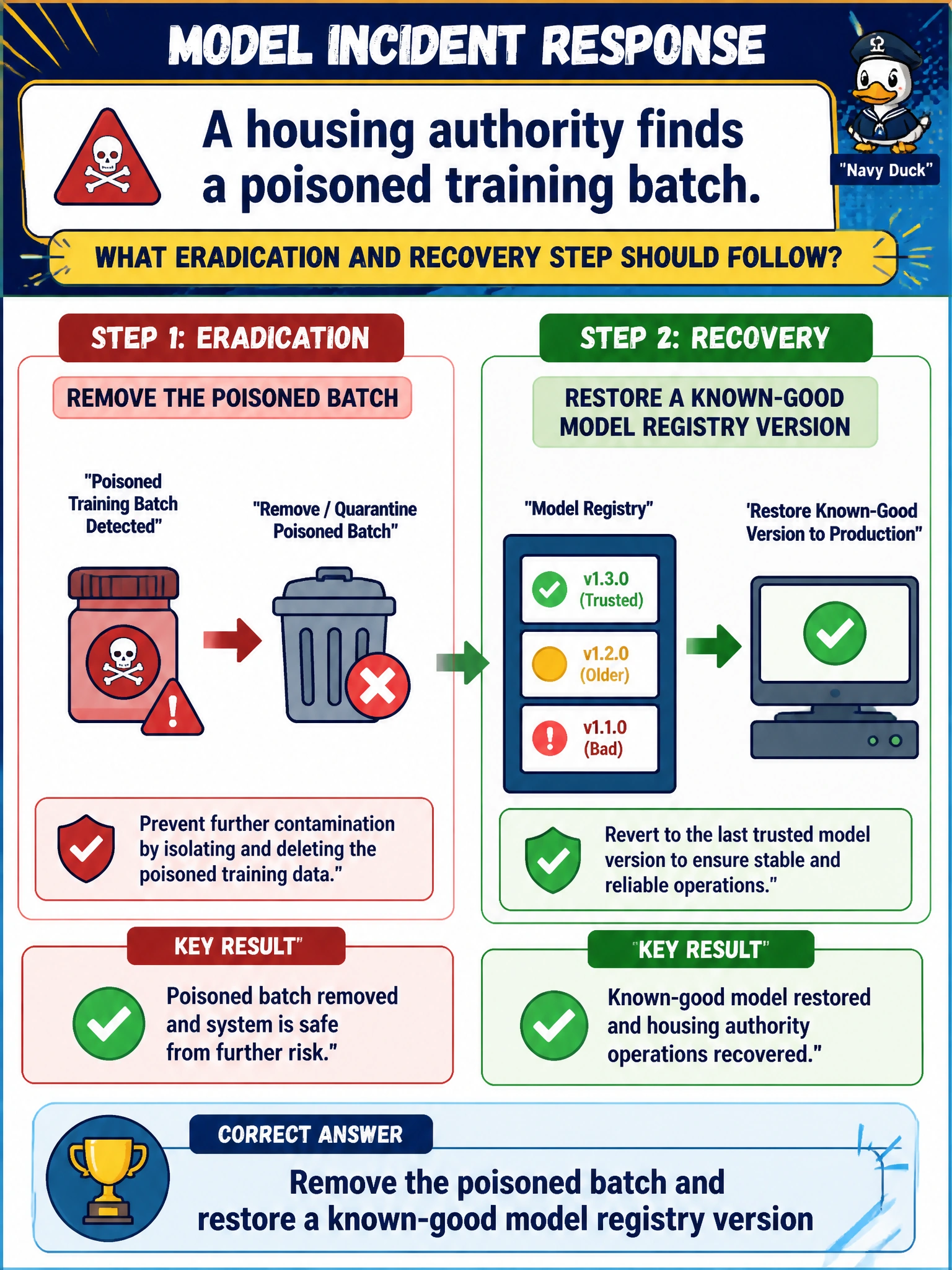
A housing authority finds a poisoned training batch. What eradication and recovery step should follow?
Select an answer to reveal the explanation.
Short Explanation
Poison in the dough means toss the loaf and pull the good one from the freezer. Eradicate the bad batch and restore a known-good registry version.
Full Explanation
A poisoned training batch in a housing authority model is an integrity incident against the learning pipeline. Eradication and recovery mean removing the poisoned batch from training/data lakes used for rebuilds and restoring a known-good model registry version so production returns to a validated artifact. Lowering standards or rushing the bad model back merely re-embeds the attack.
Keeping the poisoned batch and lowering accuracy thresholds only fails eradication: the contaminant remains and thresholds hide rather than remove integrity failure. Redeploying the poisoned model faster to overwrite complaints fails recovery logic and can amplify harm. Deleting the model registry so versions cannot be compared fails governance and recoverability; registries exist precisely to support known-good rollback.
Exam caveat: AI recovery often mirrors secure SDLC—quarantine bad data, rebuild or roll back to signed good versions. Operational check: quarantine the poisoned batch with forensic hold as needed, restore the last known-good registry model and feature-store snapshot, validate evaluation metrics before traffic return, and patch pipeline controls that allowed poison ingress. Record the control in the municipal AI inventory with an owner and next review date so the practice remains testable.