
A city library logs GenAI chat sessions with patrons. What privacy control should leadership set first for those logs?
Select an answer to reveal the explanation.
Short Explanation
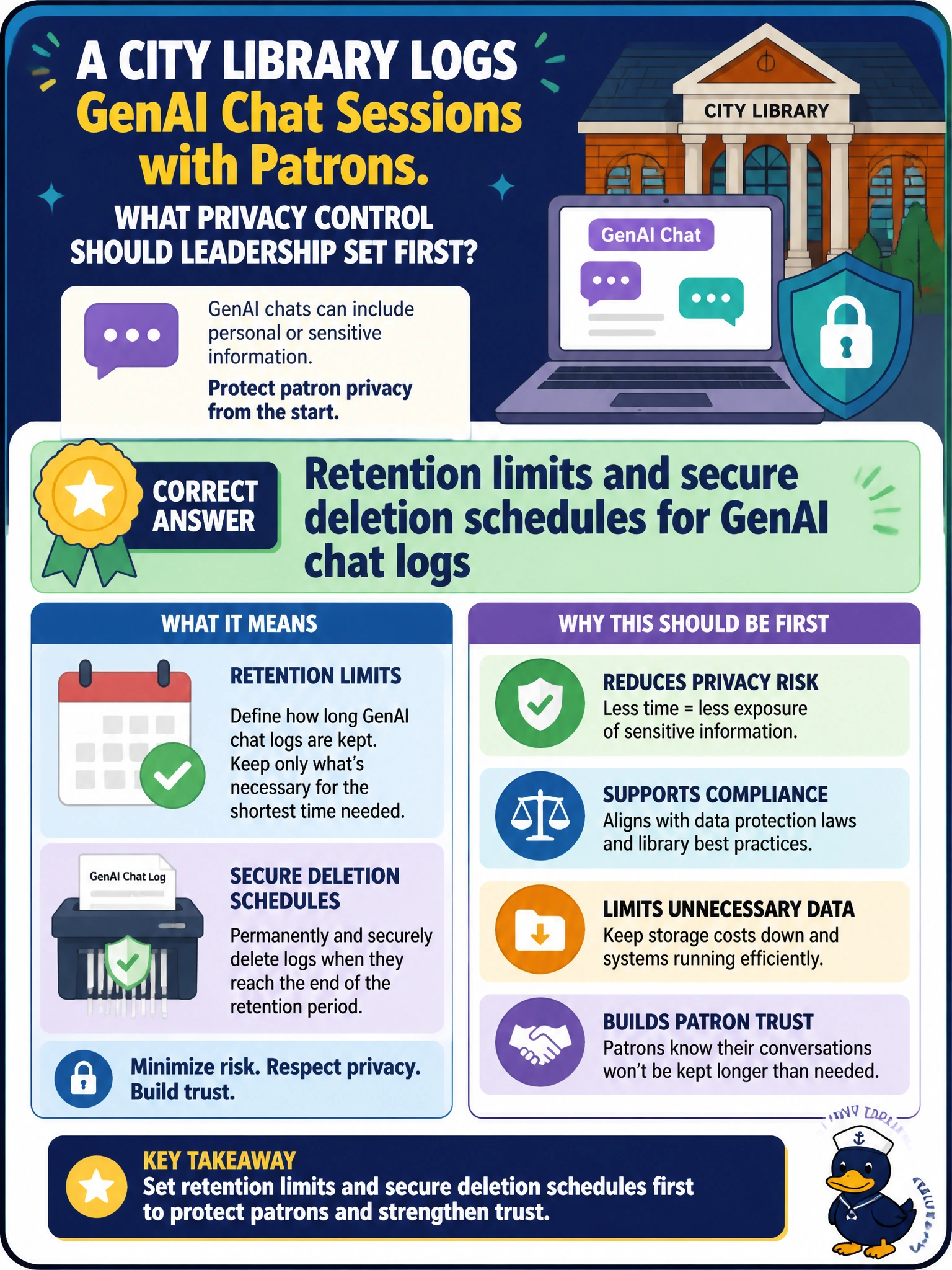
Chat logs are leftovers that can still identify a patron. Put a keep-and-shred schedule on them—like clearing the reference desk notepad—so privacy stays real after the answer is given.
Full Explanation
Library GenAI chat logs routinely contain searchable free text that can identify a patron, describe a research need, reveal a legal concern, or otherwise function as personal data even when the library did not intend to collect a formal intake form. Leadership should therefore set retention limits and secure deletion schedules before marketing, analytics, or model-retraining teams treat the transcript store as an unbounded archive. A keep-and-shred policy mirrors ordinary reference-desk hygiene: keep what operations need for quality review and complaint handling, then delete on a documented cadence with access controls and audit trails.
Keeping every chat forever so marketing can retrain anytime fails because indefinite retention expands breach impact, weakens purpose limitation, and invites secondary uses the patron never expected when they asked a simple catalog question. Storing logs only on a public shared drive with no expiry fails because public or broadly shared storage lacks confidentiality, integrity controls, and lifecycle enforcement; a municipal library cannot treat patron dialogue as open intranet fodder. Skipping deletion because library chats are supposedly never personal data fails conceptually: chat content often includes names, card numbers, addresses, or highly identifying subject matter, so the “not personal data” claim is factually unsafe for policy design.
Exam caveat: privacy programs rarely start with the flashiest AI control; they start with inventory, purpose, retention, and deletion for the artifacts AI creates. Operational check: confirm a written retention schedule for GenAI chat logs, named owners for deletion jobs, encryption and least-privilege access on the log store, and a test that expired sessions are actually purged rather than merely marked inactive.