
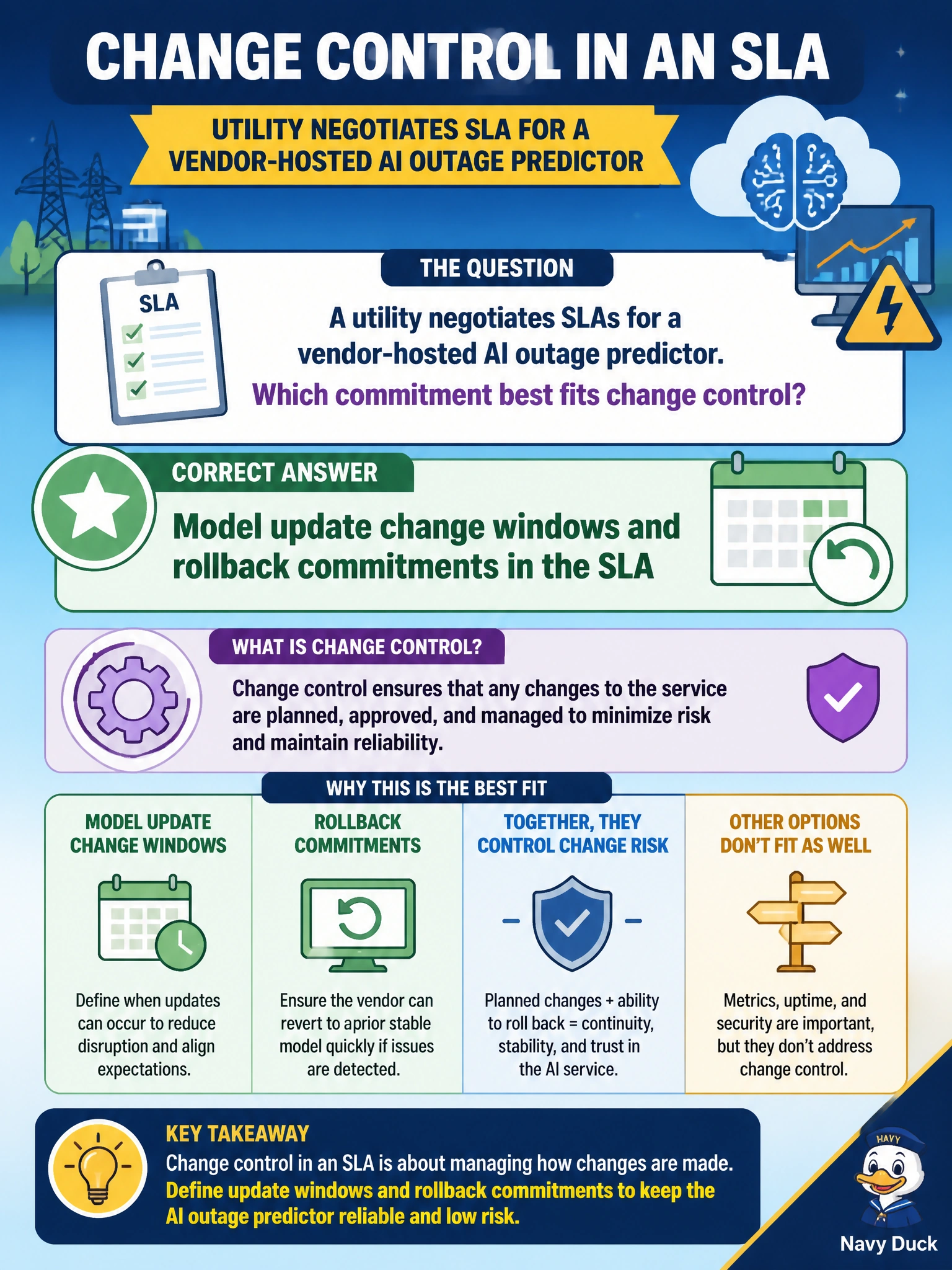
A utility negotiates SLAs for a vendor-hosted AI outage predictor. Which commitment best fits change control?
Select an answer to reveal the explanation.
Short Explanation
You don’t want model updates arriving like surprise fireworks. Put change windows and rollback commitments in the SLA so you can test, staff, and recover if a release goes sideways.
Full Explanation
A utility negotiating an SLA for a vendor-hosted AI outage predictor must bind model changes to operable change control. Model update change windows and rollback commitments best fit because updates can alter predictions that drive utility operations: scheduled windows enable testing and staffing, while rollback provides a recovery path if a release harms accuracy or stability. These terms help keep AI change risk manageable. Silent midweek model swaps with no notice or rollback path fail because they deny the utility change control and recovery. Allowing the vendor to deploy updates at any time without notice or rollback approval gives unbounded change rights, preventing municipal testing and acceptance. An SLA that forbids any rollback after a harmful model update removes the primary recovery control after a bad release. Exam caveat: make the terms realistic for hosted AI by clarifying whether rollback means restoring a prior model version or prompt/configuration, or shifting traffic, and how quickly it can be invoked. Notice alone, without a testing window, may still be insufficient for critical outage prediction. Practical check: specify update windows, advance notice, and rollback commitments in the SLA; align the internal change calendar to those windows; and run a tabletop exercise for invoking rollback after a harmful update. Reject drafts permitting silent, unrestricted updates or forbidding rollback after harm.