
A 311 product risk workshop adapts structured threat modeling to AI. Which approach best fits?
Select an answer to reveal the explanation.
Short Explanation
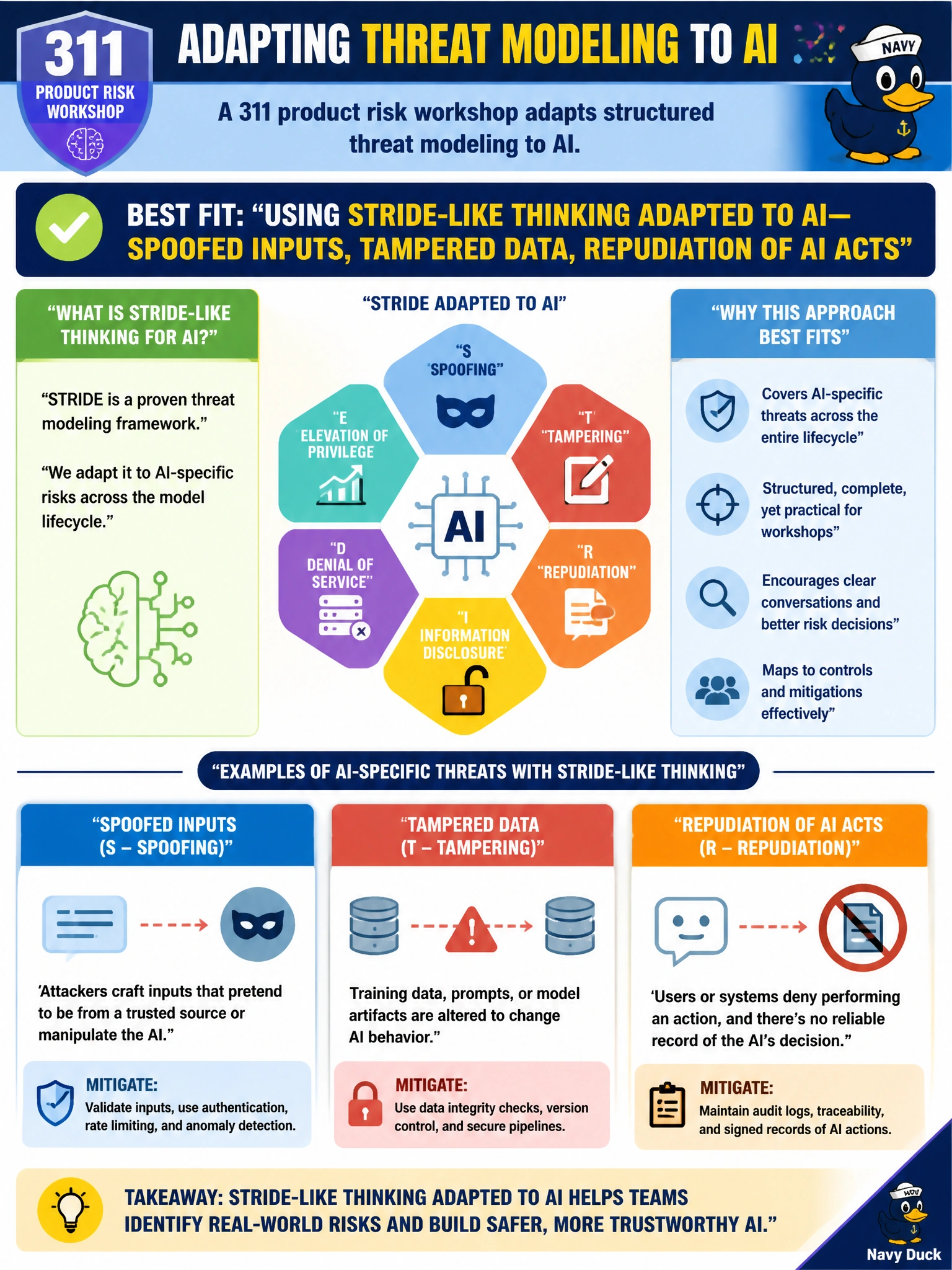
Threat modeling for 311 AI isn’t font shopping. Use STRIDE-like structure—spoofed inputs, tampered data, repudiation of AI acts—not wait for the outage postmortem.
Full Explanation
A 311 product risk workshop adapting structured threat modeling to AI should use STRIDE-like thinking adapted to AI—spoofed inputs, tampered data, repudiation of AI acts. Structured methods scale better than unstructured worry lists: spoofing captures fake resident or system identity in prompts/tickets; tampering covers poisoned or altered training and context data; repudiation covers inability to prove whether an AI or human performed an action. Adapting STRIDE-like categories keeps municipal workshops disciplined while covering GenAI-specific pathways.
Brainstorming only after a major outage with no method fails by concept because post-incident-only ideation is reactive and incomplete. Listing only UI fonts as threats fails because presentation details are not AI threat categories. Assuming structured methods cannot apply to GenAI fails because GenAI still faces spoofing, tampering, repudiation, information disclosure, denial of service, and elevation issues expressible in adapted STRIDE-like analysis.
Exam caveat: adaptation matters—classic STRIDE examples must be reinterpreted for prompts, tools, RAG corpora, and model APIs rather than copied verbatim from network diagrams. Operational check: run the workshop with an AI-adapted STRIDE-like checklist, record threats with owners, and feed outcomes into the 311 AI risk register before the next release.