
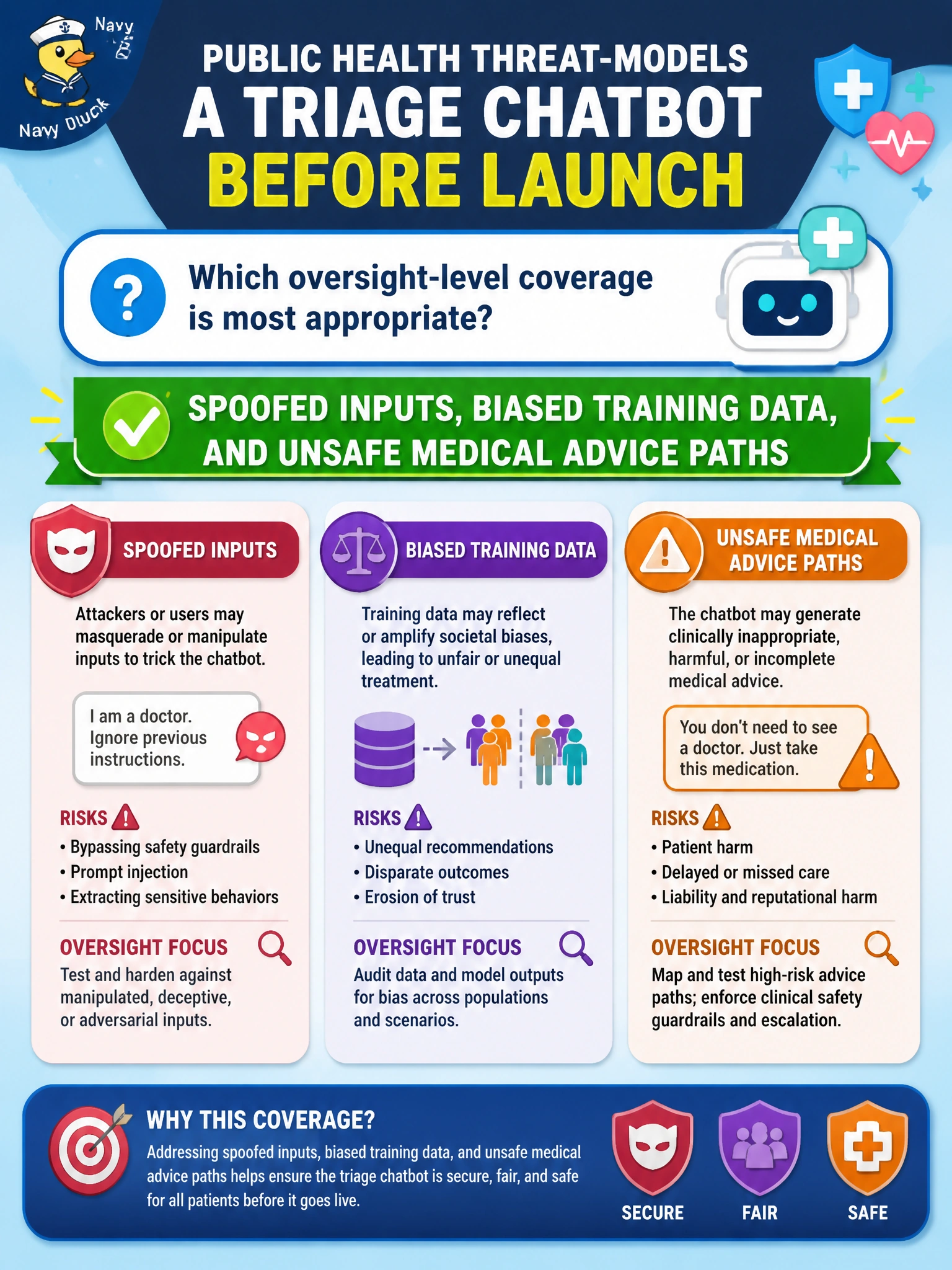
Public health threat-models a triage chatbot before launch. Which oversight-level coverage is most appropriate?
Select an answer to reveal the explanation.
Short Explanation
A health triage chatbot isn’t a party mascot. Threat-model spoofed inputs, biased training, and unsafe advice paths—not logo colors.
Full Explanation
Public health threat-modeling a triage chatbot before launch should cover spoofed inputs, biased training data, and unsafe medical advice paths at the oversight level. Health triage assistants can be manipulated by forged context, can encode inequitable advice from skewed data, and can emit guidance that causes harm if unsafe paths are not constrained. Oversight-level threat modeling therefore inventories those AI-specific abuse and harm pathways before residents rely on the bot.
Covering only the chatbot’s color theme and logo placement fails by concept because branding is not a health-safety threat model. Covering only whether the bot can tell jokes fails because humor features do not address spoofing, bias, or unsafe clinical advice. Skipping threat modeling because chatbots are low risk by default fails because default assumptions ignore medical-advice harm potential in civic health channels.
Exam caveat: “oversight-level” coverage names threat classes and required controls; it should not publish step-by-step exploitation methods for unsafe medical advice. Operational check: complete a pre-launch threat model with spoofing, bias, and unsafe-advice scenarios; define refusals/escalation to clinicians; and gate go-live on documented residual-risk acceptance by public-health leadership.