
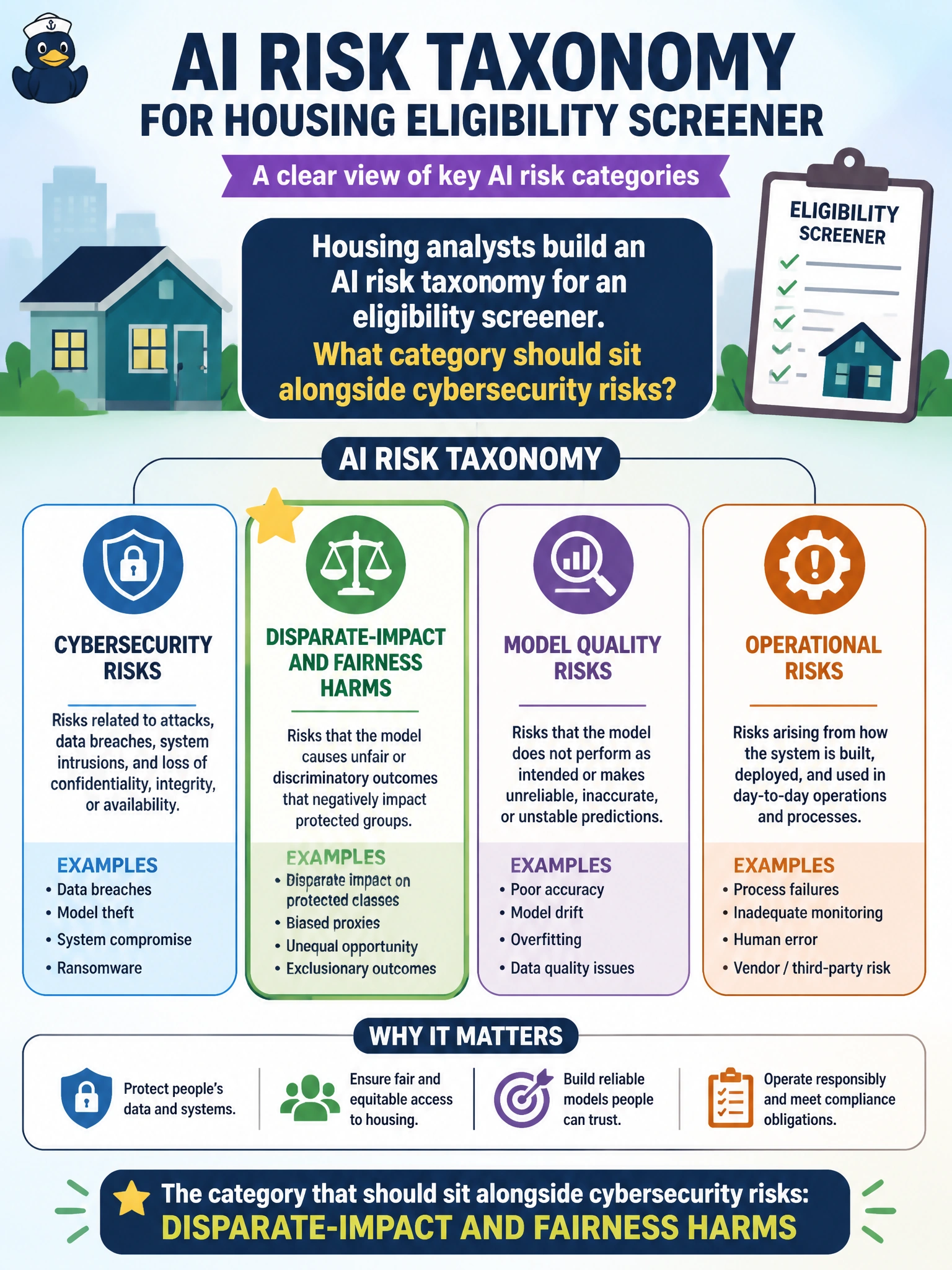
Housing analysts build an AI risk taxonomy for an eligibility screener. What category should sit alongside cybersecurity risks?
Select an answer to reveal the explanation.
Short Explanation
Eligibility AI can hurt people unfairly even when the firewall is fine. Put disparate-impact and fairness harms in the risk taxonomy next to cyber risks.
Full Explanation
Housing analysts building an AI risk taxonomy for an eligibility screener should place disparate-impact and fairness harms alongside cybersecurity risks. Eligibility screening can allocate scarce housing benefits; systematic subgroup error or biased proxies can unlawfully or unjustly deny access even when networks are patched. A complete municipal AI risk taxonomy therefore includes fairness/civil-rights harm categories with equal visibility to confidentiality and integrity threats.
Including only printer toner shortages fails by concept because office supply issues are not AI harm categories for eligibility decisions. Including only risks that cannot harm residents fails because the purpose of the taxonomy is to surface resident-affecting harms, not to exclude them. Including only risks that IT can patch overnight fails because fairness harms often require data, process, and oversight treatments beyond a quick CVE patch.
Exam caveat: fairness harms can arise from proxy variables and historical labels even when no explicit protected-class field is used; taxonomy entries must allow that pathway. Operational check: define fairness metrics and review cadence for the screener, assign a business owner for disparate-impact findings, and escalate material subgroup gaps before expanding automated recommendations.