
A municipal utility uses AI that can influence credit and shutoff-adjacent decisions. What operational practice best supports reporting obligations?
Select an answer to reveal the explanation.
Short Explanation
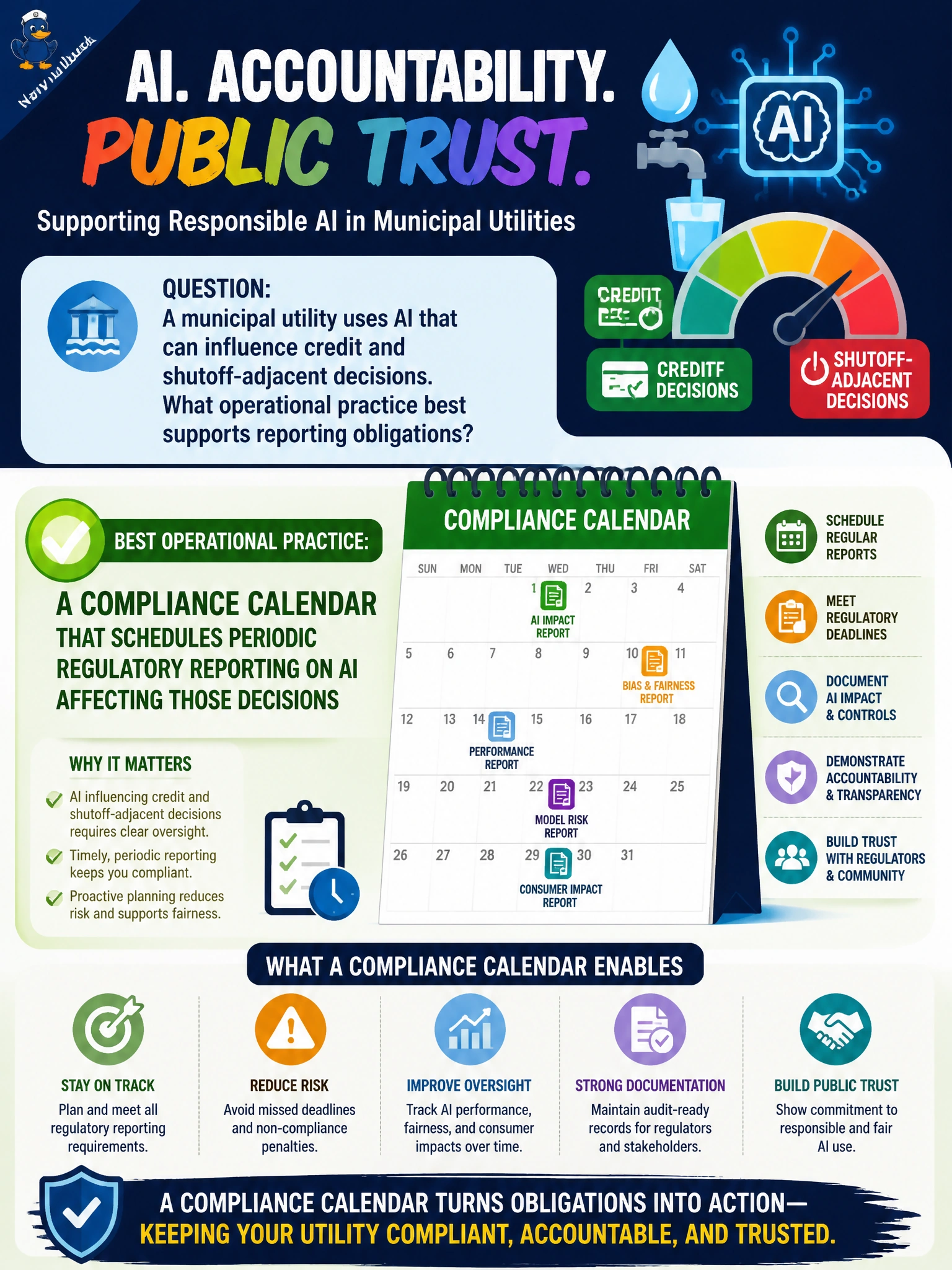
If AI can nudge credit or shutoff paths, put reporting on a calendar—don’t wait for a surprise demand letter. Utilities need scheduled compliance reporting, not wishful invisibility.
Full Explanation
When a municipal utility uses AI that can influence credit and shutoff-adjacent decisions, reporting obligations are best supported by a compliance calendar that schedules periodic regulatory reporting on that AI use. Credit and service-termination pathways are high-impact civic outcomes; regulators and oversight bodies expect recurring, structured reporting rather than ad hoc storytelling. A calendar forces ownership, due dates, evidence packaging, and continuity when staff change—core operational compliance for utility AI legal-risk management.
Waiting until a regulator surprises the utility with a demand letter fails by concept because surprise-driven reporting is reactive and often incomplete under time pressure. Reporting only marketing success stories with no risk content fails because promotional narratives are not regulatory risk reporting and omit the controls, incidents, and decision impacts oversight needs. Keeping AI use entirely off any official calendar fails because invisibility prevents scheduled fulfillment and signals unmanaged deployment of consequential systems.
Exam caveat: a calendar alone is insufficient if reports omit material AI decision influence; content must cover how AI affects credit or shutoff-adjacent workflows, not merely that a model exists. Operational check: map each credit/shutoff-touching AI system to named report owners, evidence sources, and filing dates; rehearse one dry-run package before the first live due date.